


English football to trial new goalkeeper rule aimed at stopping tactical injury timeouts
- Jul 28
- 3 min read
English football will introduce an innovative new rule during the 2026/27 season in an effort to eliminate tactical goalkeeper stoppages, after the Premier League, EFL, FA, Women's Super League, National League and Professional Game Match Officials Limited (PGMOL) unanimously backed a new trial approved by the International Football Association Board (IFAB).
The proposed measure is designed to discourage goalkeepers from using injury breaks as an opportunity for coaches to reorganize tactics or slow the momentum of a match.
New rule targets time-wasting tactics

Under the trial, whenever a referee allows medical staff onto the field to treat a goalkeeper, the goalkeeper's team must temporarily play with one fewer outfield player.
The coach will have just 10 seconds to nominate an outfield player to leave the pitch. If no player is selected within that time, the team captain will automatically be required to leave the field.
The chosen player must remain off the pitch for at least one minute after play resumes, regardless of whether the goalkeeper has already returned.
Officials hope the rule will remove any competitive advantage associated with unnecessary stoppages while ensuring genuinely injured goalkeepers still receive immediate medical attention.
Trial could begin in the Carabao Cup

The first competitive use of the new regulation could come as early as the preliminary round of this season's Carabao Cup.
Football authorities will closely monitor the trial throughout the campaign alongside IFAB to evaluate its impact on game flow, sporting fairness and player welfare before deciding whether it should become a permanent part of the Laws of the Game.
Controversial incidents sparked the proposal
Calls for change have grown louder following several high-profile incidents in recent seasons where managers accused goalkeepers of deliberately interrupting play.
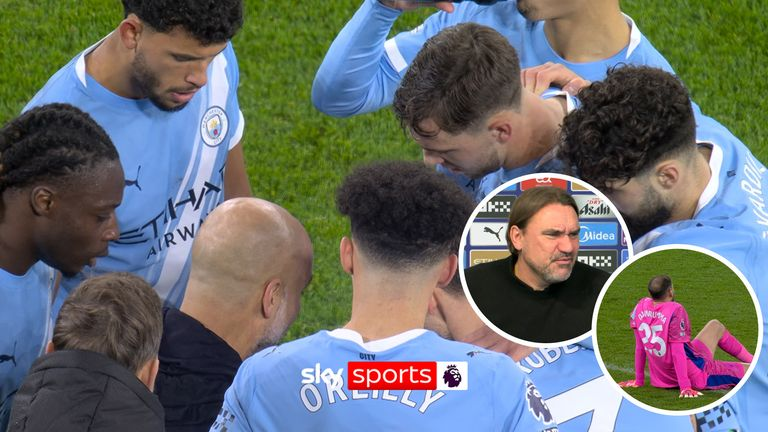
Last November, Leeds United manager Daniel Farke publicly criticized Manchester City goalkeeper Gianluigi Donnarumma, accusing him of feigning injury to waste time and allow Pep Guardiola to deliver tactical instructions during a crucial Premier League match.
The incident reignited debate about whether teams were exploiting current injury protocols.
Gary Neville questioned Newcastle's tactics
Former Manchester United defender Gary Neville also raised concerns during Newcastle United's clash with Manchester United in December.
Neville suggested that goalkeeper Aaron Ramsdale's apparent injury may have been orchestrated after Newcastle full-back Lewis Hall appeared to relay instructions from manager Eddie Howe moments before Ramsdale went to ground.
The stoppage interrupted Manchester United's attacking momentum and fueled further discussion about tactical injury breaks.
Although Howe never admitted to any such tactic, the incident became one of the season's most debated refereeing moments.
Brighton also voiced frustrations
The controversy continued later in the campaign when Brighton manager Fabian Hurzeler questioned Arsenal goalkeeper David Raya after another lengthy stoppage that many observers believed had tactical motives.
With similar incidents occurring across multiple competitions, football's governing bodies agreed stronger deterrents were necessary.
Balancing player welfare with fair play
Football authorities insist the new rule is not intended to discourage treatment for genuine injuries.
Instead, the objective is to remove the tactical incentive behind unnecessary stoppages while protecting the integrity and rhythm of matches.
By forcing teams to temporarily sacrifice an outfield player whenever a goalkeeper receives on-field treatment, officials believe clubs will think twice before using medical breaks as a strategic tool.
If the trial proves successful throughout the season, the regulation could become one of the most significant changes to football's injury management rules in recent years.



Comments