


Twenty years later, the trio from “The Devil Wears Prada” reunites with jaw-dropping salaries and a behind-the-scenes story few people saw coming.
- May 25
- 7 min read
Nearly twenty years after the original film became a defining fashion-era classic, The Devil Wears Prada has returned to theaters with a sequel that is already dominating the global box office. But while audiences have been obsessing over the return of Miranda Priestly, Andy Sachs and Emily Charlton, another story unfolding behind the scenes has captured just as much attention in Hollywood: the extraordinary salary negotiations that reunited Meryl Streep, Anne Hathaway and Emily Blunt for one of the most anticipated sequels of the decade.
According to multiple industry insiders, all three actresses reportedly earned identical upfront salaries of $12.5 million each to reprise their iconic roles in “The Devil Wears Prada 2.” The arrangement immediately drew attention because of one particular detail: Meryl Streep, whose portrayal of Miranda Priestly remains the defining performance of the franchise, could reportedly have demanded significantly more money than her co-stars. Instead, sources claimed the Oscar-winning actress agreed to a so-called “favored nations” deal with distributor 20th Century Studios, ensuring that Hathaway and Blunt would receive exactly the same amount.
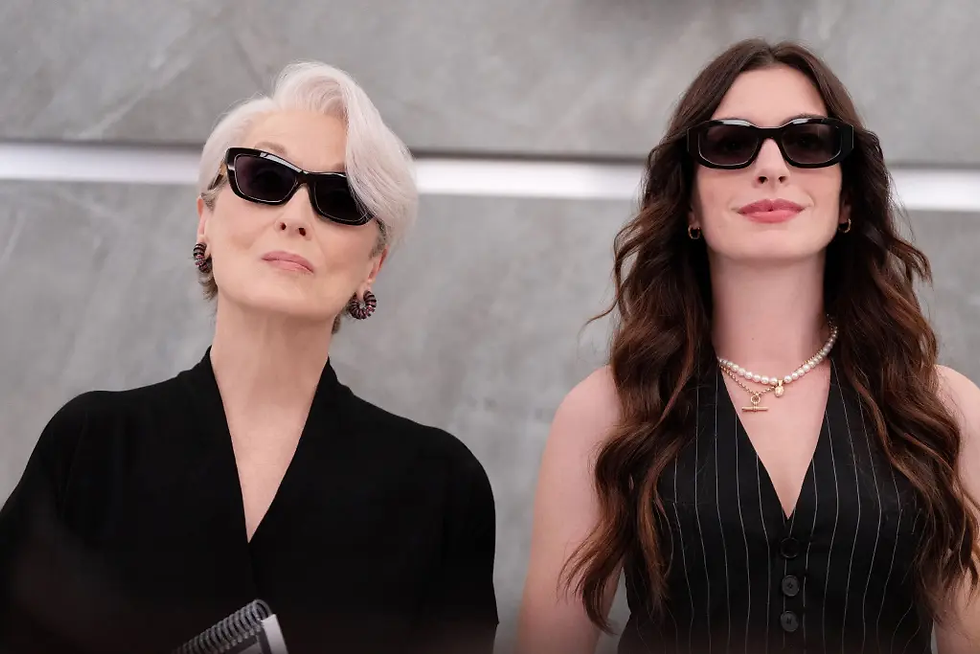
Within Hollywood, such agreements are often viewed as rare gestures of solidarity, particularly in franchises driven by legacy star power. Streep, whose career spans more than five decades and includes a record-setting number of Academy Award nominations, reportedly chose equality over maximizing her own payday. The decision quickly reignited public fascination with the unusually close dynamic between the three women, whose chemistry helped transform the original 2006 film into a cultural phenomenon that still influences fashion media and workplace comedies today.
Industry reports also suggested the actresses negotiated substantial box office bonuses tied to the film’s performance. Since its May release, “The Devil Wears Prada 2” has reportedly generated more than $433 million globally, placing it among the year’s biggest theatrical successes. Insiders claimed that if the film continues performing at its current pace, Streep, Hathaway and Blunt could each receive an additional $20 million in backend compensation. Neither the actresses nor their representatives publicly commented on the reports, but the numbers alone were enough to dominate entertainment headlines for days.
The sequel reunites Streep as the icy and feared Miranda Priestly, Hathaway as former assistant Andy Sachs and Blunt as the razor-sharp Emily Charlton. Stanley Tucci also returned as Nigel Kipling, the witty fashion director whose understated emotional warmth became one of the original film’s most beloved elements. Directed once again by David Frankel, the sequel revisits the characters nearly two decades later, exploring how the fashion industry, celebrity culture and media power have evolved in the digital age.
Long before the sequel existed, the original “Devil Wears Prada” had already become one of the most influential mainstream fashion films ever made. Adapted from The Devil Wears Prada, the movie drew inspiration from the world of high-fashion magazines and particularly from the reputation surrounding Anna Wintour, the legendary editor-in-chief of Vogue. Miranda Priestly quickly entered pop culture history as one of cinema’s most memorable fictional bosses — terrifying, brilliant, emotionally distant and strangely magnetic all at once.
For Meryl Streep, however, accepting the role was not an automatic decision. Shortly before the sequel’s release, the actress revealed during an interview that she initially rejected the original film entirely. “I knew it was going to be a hit,” she explained, adding that the screenplay immediately impressed her. Yet when the studio first approached her with an offer, she declined. “They called me up, and they made an offer, and I said, ‘No. I’m not going to do it.’”

Streep later admitted she intentionally tested the studio by doubling her asking price, expecting resistance. Instead, executives immediately accepted her demand. Reflecting on that moment years later, she revealed how differently she viewed her career at the time. “And I wanted it, but if they didn’t want to do that, I was OK. Because I’m old — I’m 56, I was ready to retire,” she said. Ironically, the role she nearly rejected ultimately became one of the defining performances of her later career and introduced her to an entirely new generation of younger audiences.
By the time “The Devil Wears Prada” premiered in 2006, Streep was already considered one of the greatest actresses in modern cinema. Films like Sophie's Choice, Kramer vs. Kramer and The Bridges of Madison County had cemented her reputation for emotional precision and transformative performances. Yet Miranda Priestly represented something slightly different: a comedic role infused with subtle cruelty, restraint and elegance rather than overt emotional breakdowns. The performance revitalized Streep’s relationship with mainstream audiences and reminded Hollywood executives of her unmatched versatility.
Off screen, Streep also built a reputation as one of the industry’s most private and respected figures. Married to sculptor Don Gummer since 1978, she long represented a rare image of stability in Hollywood. Although reports later emerged suggesting the couple had quietly separated years earlier while remaining legally married, Streep largely avoided public scandal throughout her career. Instead, she became known for fiercely protecting her personal life while maintaining extraordinary professional longevity in an industry often criticized for sidelining women over forty.
For Anne Hathaway, returning to Andy Sachs carried a very different emotional weight. When the original film premiered, Hathaway was still transitioning away from the wholesome image created by The Princess Diaries. “The Devil Wears Prada” marked a turning point in her career, allowing her to move into more mature dramatic territory. Andy Sachs — intelligent, ambitious and increasingly seduced by the glamour surrounding her — became one of Hathaway’s signature roles and established her as a serious adult actress.

Over the years that followed, Hathaway experienced one of Hollywood’s most dramatic career evolutions. She won an Academy Award for Les Misérables, starred in major blockbusters like The Dark Knight Rises and became one of the most recognizable actresses of her generation. Yet fame also brought periods of intense public backlash. During the early 2010s, Hathaway became the subject of widespread online criticism, a phenomenon later labeled “Hathahate” by media commentators. Many critics viewed the backlash as rooted in unrealistic expectations placed on ambitious female celebrities.
In recent years, Hathaway’s public image underwent a significant reassessment. Audiences who once mocked her polished persona increasingly praised her intelligence, professionalism and longevity. Her return to “The Devil Wears Prada” therefore carried layers of nostalgia not only for the audience, but for Hathaway herself. In interviews promoting the sequel, she repeatedly described making the original film as one of the funniest and most formative experiences of her career.
“I loved making the first,” Hathaway explained in one interview. “I know I was stressed and anxious and all those things, but it’s one of the most hilarious experiences ever because of the people I was with.” She singled out Emily Blunt as “a dream of a human being” and praised Stanley Tucci as “so funny and quick.” Speaking about Streep, Hathaway described her as “someone who defines how it’s done” and “somebody who is just living greatness and never rests on that laurel but is always pushing herself to expand as an artist.”
Emily Blunt’s career trajectory since the original film has been equally remarkable. Though “The Devil Wears Prada” introduced many viewers to her dry comedic brilliance, Blunt later proved herself equally effective in action films, thrillers and prestige dramas. Performances in Sicario, A Quiet Place and Oppenheimer expanded her reputation far beyond comedy. Yet for many fans, Emily Charlton remains one of her most iconic characters — ruthless, exhausted and endlessly quotable.
Unlike some celebrity friendships created purely for publicity cycles, the bond between Hathaway, Blunt and Streep appeared to deepen over the years. Their reunion press appearances for the sequel generated enormous online engagement precisely because audiences sensed genuine affection between them. Red carpet moments featuring the trio immediately went viral, especially among younger viewers who had grown up watching the original film repeatedly on television and streaming services.

The renewed fascination with “The Devil Wears Prada” also reflects how dramatically the fashion and media industries have changed since 2006. The original film emerged during the peak era of glossy print magazines, celebrity paparazzi culture and elite fashion gatekeeping. By 2026, social media influencers, TikTok creators and digital branding have largely transformed how fashion power operates. The sequel reportedly incorporates those shifts while examining whether figures like Miranda Priestly can still dominate culture in the same way they once did.
Behind the glamorous wardrobes and viral red carpets, however, the salary story surrounding the sequel continued resonating most strongly in Hollywood circles. For decades, conversations about equal pay for women in entertainment often exposed enormous disparities between actresses working on the same projects. The fact that one of the industry’s most powerful veterans allegedly chose to reduce her own leverage in favor of salary parity became symbolic far beyond this single film.
It also reinforced Meryl Streep’s unusual status within Hollywood. Despite her legendary reputation, she has rarely projected overt competitiveness toward younger actresses. Instead, many performers who worked alongside her over the years described her as collaborative, generous and deeply focused on the work itself rather than hierarchy. That dynamic appears to have influenced the atmosphere surrounding “The Devil Wears Prada 2,” where nostalgia, friendship and mutual respect became central to the film’s public identity.
Nearly twenty years after audiences first watched Andy Sachs nervously step into Runway magazine’s offices wearing cerulean blue sweaters and uncomfortable heels, the franchise remains strangely relevant. The original film was never simply about fashion; it was about ambition, reinvention, female power and the emotional cost of success. Those themes continue resonating across generations, particularly as audiences revisit the film with more nuanced perspectives on work culture and gender expectations.

For Streep, Hathaway and Blunt, the sequel represents more than just another Hollywood reunion. It reflects the enduring power of characters that evolved alongside their own lives and careers. Each actress now returns not as the woman she was in 2006, but as someone shaped by decades of professional triumphs, personal challenges and changing public perceptions. And perhaps that is why audiences responded so intensely to seeing them together again: because “The Devil Wears Prada” no longer belongs only to one cinematic era. It has become part of a much larger cultural memory about ambition, identity and the complicated women who defined both.


Comments