


“Tom Cruise confirms Top Gun 3 is officially underway: At 63, Maverick returns and shakes up Hollywood!”
- Apr 17
- 5 min read
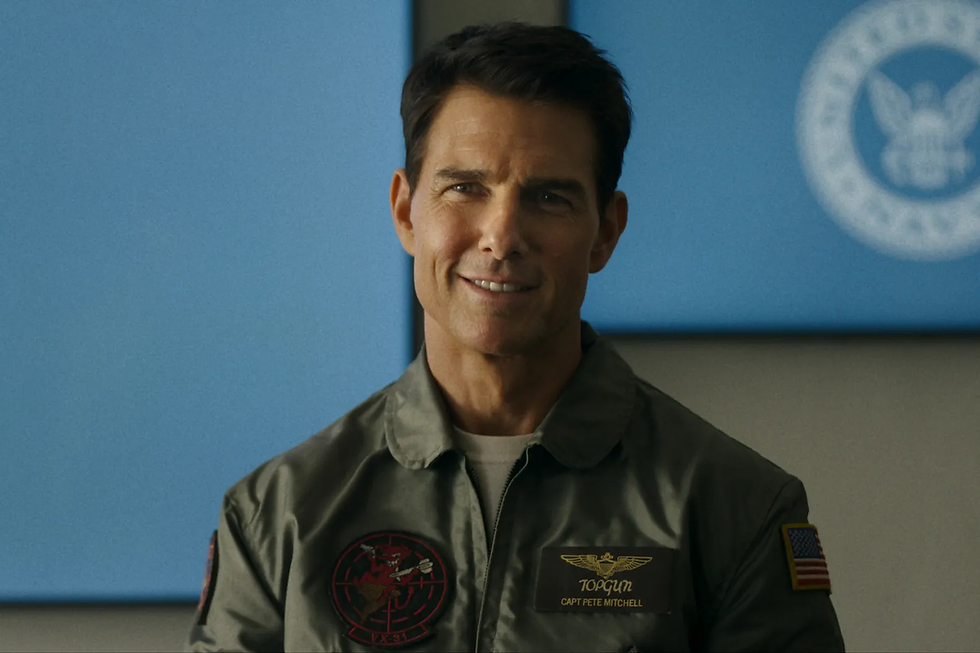
The announcement arrived with a sense of continuity rather than surprise. Tom Cruise confirmed that Top Gun 3 is “officially in development with a script underway,” signaling his return to one of the most defining roles of his career, Pete “Maverick” Mitchell. More than three decades after the original film and following the extraordinary success of Top Gun: Maverick, the franchise appears poised to extend its legacy once again, even as expectations remain unusually high.
Cruise shared the update during a presentation tied to CinemaCon, where he appeared in a pre-recorded clip filmed atop the iconic water tower at the Paramount lot in Los Angeles. Standing against the skyline, he offered a brief but telling statement: “The future looks pretty great from here.” The remark, understated yet deliberate, encapsulated both optimism for the project and an awareness of the cultural weight the franchise now carries.

Behind the scenes, the project brings together familiar collaborators. Producers confirmed that the new installment will reunite Cruise with Jerry Bruckheimer, whose involvement dates back to the original 1986 Top Gun. This continuity has become a defining feature of the franchise, reinforcing its identity across decades. While no director has yet been officially attached, the script is being developed by Ehren Kruger, who previously worked on Maverick alongside Christopher McQuarrie and Eric Warren Singer.
The groundwork for a third installment had, in fact, been quietly laid for some time. McQuarrie revealed as early as last year that the story was “already in the bag,” suggesting that the creative team had been considering the continuation even before the full cultural impact of Maverick had settled. That film, directed by Joseph Kosinski, not only revived the franchise but redefined its place in contemporary cinema, blending nostalgia with technical innovation and emotional depth.
Released more than 30 years after the original, Maverick reunited Cruise with the character that first elevated him to global stardom. The narrative followed a seasoned pilot returning to mentor a new generation, including Bradley “Rooster” Bradshaw, portrayed by Miles Teller, the son of Maverick’s late friend. Alongside Glen Powell and the late Val Kilmer, the film balanced legacy and renewal in a way that resonated widely with audiences.
Its commercial success was equally significant. With global earnings exceeding $1.5 billion against a reported budget of $170 million, Maverick became one of the most successful films of its era. More importantly, it reaffirmed the viability of theatrical spectacle at a time when the industry was navigating shifting viewing habits. The film’s emphasis on practical stunts and immersive aerial sequences contributed to its distinctive appeal.

It is precisely this success that now complicates the path forward. Audience reactions to the announcement of a third film have been notably mixed. While many expressed enthusiasm at the prospect of returning to the world of Top Gun, others questioned whether the narrative required further extension. One fan described Maverick as an “all time favorite” and expressed anticipation for the sequel, while another asked, “I don’t even know how you could do a third by how good Maverick was.” A recurring sentiment emerged: admiration for what had been achieved, coupled with uncertainty about what could follow.
Some reactions focused less on narrative concerns and more on Cruise himself. “How can a 63-year-old be so active and doing stunts!” one observer noted, highlighting the actor’s continued commitment to physical performance. Others adopted a more skeptical tone, suggesting that the franchise risked diminishing its impact by continuing. “At this point they’re gonna have Tom Cruise flying jets at 70,” one comment read, reflecting a broader cultural conversation about longevity and reinvention.
For Cruise, however, such debates are not unfamiliar. Throughout his career, he has consistently navigated the tension between risk and repetition, often choosing projects that challenge both audience expectations and his own physical limits. His work on the Mission: Impossible franchise, in particular, has become synonymous with a commitment to practical stunts and escalating spectacle, reinforcing his reputation as one of the last major proponents of traditional action filmmaking.
This approach is deeply rooted in his broader philosophy of cinema. Cruise has long emphasized the importance of theatrical experience, advocating for films designed to be seen on the largest possible screen. His involvement in projects like Top Gun and Mission: Impossible reflects a belief in the enduring power of immersive storytelling, even as the industry evolves.
Beyond the screen, Cruise’s life has been marked by a combination of professional discipline and personal complexity. His past marriage to Nicole Kidman remains one of the most discussed chapters of his personal history, emblematic of a period when both actors were at the height of their careers. Though their relationship ended decades ago, moments such as their near encounter at the same event continue to attract public attention, illustrating the enduring fascination with their shared past.
Cruise’s personal life has often intersected with public discourse in other ways as well, particularly through his association with Scientology. While he has rarely addressed the topic in detail in recent years, it remains a recurring point of discussion in media coverage, shaping perceptions of his off-screen identity. Despite this, his professional trajectory has remained largely unaffected, sustained by a consistent output of commercially successful films.
In contrast to the complexities of his personal narrative, Cruise’s on-screen persona has retained a remarkable degree of consistency. Whether portraying a fighter pilot, a secret agent, or a futuristic protagonist, he often embodies characters defined by determination, skill, and a willingness to confront extreme circumstances. This continuity has contributed to his enduring appeal across multiple generations of viewers.
The return of Maverick, therefore, is not merely a continuation of a story but an extension of a persona that has evolved alongside the actor himself. The character’s trajectory—from a rebellious young pilot to a seasoned mentor—mirrors, in some respects, Cruise’s own progression within the industry. This parallel adds an additional layer of resonance to the franchise, particularly for long-time audiences.
As development on Top Gun 3 continues, key details remain undecided. The absence of a confirmed director and release date suggests that the project is still in its formative stages, allowing space for creative decisions that will ultimately shape its direction. The challenge lies in balancing innovation with continuity, ensuring that the new installment honors the legacy of its predecessors while offering something distinct.
Industry observers will be watching closely to see how the film navigates this balance. The success of Maverick demonstrated that audiences remain receptive to stories that combine technical excellence with emotional authenticity. Replicating that formula, however, is far from straightforward, particularly when expectations have been set so high.

For now, Cruise’s brief statement—“The future looks pretty great from here”—serves as both a promise and a question. It suggests confidence in the project while leaving open the details of how that future will unfold. In the context of a career defined by calculated risks, it is a familiar position: moving forward with conviction, even in the face of uncertainty.
Ultimately, the anticipation surrounding Top Gun 3 reflects more than interest in a single film. It speaks to the enduring relationship between audiences and long-running narratives, as well as the role of actors like Cruise in sustaining that connection. Whether the upcoming installment will meet expectations remains to be seen, but its development alone has already reignited a conversation about legacy, longevity, and the evolving nature of cinematic storytelling.


Comments