


The Fast & Furious empire isn’t stopping: Vin Diesel announces the biggest turning point in the franchise’s history.
- May 14
- 5 min read
Across more than two decades, the Fast & Furious has evolved from a street-racing story in Los Angeles into one of Hollywood’s most profitable global cinematic universes, and its central figure, Vin Diesel, is now steering it toward a new phase that extends far beyond the big screen. As the franchise approaches its final chapter on film, Diesel has confirmed that the universe is preparing for a significant expansion into television, signaling a new era for the saga that has defined modern action cinema.
The announcement was made during NBCUniversal’s annual presentation in New York, where Diesel appeared alongside television host Jimmy Fallon to introduce the next phase of the franchise. According to his remarks, the streaming platform Peacock is preparing to launch multiple projects within the Fast & Furious universe. He stated, “As you all know, we are very precious about these movies but over the last decade, we’ve realised that the fans have wanted more, they wanted us to expand the legacy characters, their stories,” emphasizing the growing demand for deeper storytelling beyond the theatrical films.

Diesel further explained that the transition into television was not immediate but developed gradually as the structure of Universal’s entertainment divisions evolved. He specifically credited Donna Langley for overseeing both film and television operations, a move he believed ensured consistency in maintaining the franchise’s core identity. “And I had to wait till it was right. It became right when Donna Langley started to oversee it all, because that’s when I knew that the integrity of the characters, the international appeal, what makes us all feel like family would be protected in the TV space. The news that I have here today is that Peacock is launching four shows from the Fast and Furious universe,” he said.
However, industry sources later clarified that while multiple projects are in development, only one series is currently moving forward in active production at Peacock, with additional spin-offs at various early stages under Universal Television. The pilot episode is reportedly being developed by writers Mike Daniels and Wolfe Coleman, known for their collaboration on the police drama Shades of Blue. Both are also attached as co-showrunners and executive producers, signaling a strong creative continuity for the new expansion.
The television projects will be produced under Diesel’s own production company One Race, alongside long-time franchise collaborators including Neal Moritz, Pavun Shetty, Jeff Kirschenbaum, and writer-producer Chris Morgan, all of whom have been instrumental in shaping the franchise’s narrative evolution over the years. No official plot details have been released yet, but expectations remain high given the franchise’s global reach and established fan base.
The expansion into television is not the first time the Fast & Furious universe has branched beyond film. The animated spin-off Fast & Furious Spy Racers previously ran for six seasons on Netflix, demonstrating the franchise’s adaptability across different formats and audiences. That series introduced younger viewers to the world of Fast & Furious while maintaining core themes of teamwork, loyalty, and high-speed adventure.
The original The Fast and the Furious premiered in 2001 and quickly transformed from a niche street-racing thriller into a global cultural phenomenon. Over time, it evolved into a sprawling action saga encompassing international heists, espionage missions, and increasingly elaborate stunt sequences. Despite its tonal evolution, the emotional foundation of the franchise has consistently revolved around the concept of family, a theme repeatedly emphasized by Diesel in public appearances.

Where it all began
As the franchise expanded, it also became one of Universal Pictures’ most financially successful properties. Across eleven films, it has grossed more than $7 billion worldwide, solidifying its place among the highest-earning film franchises in history. The success of recent installments, including Fast X, has demonstrated that audience interest remains strong even as the series approaches its planned conclusion.
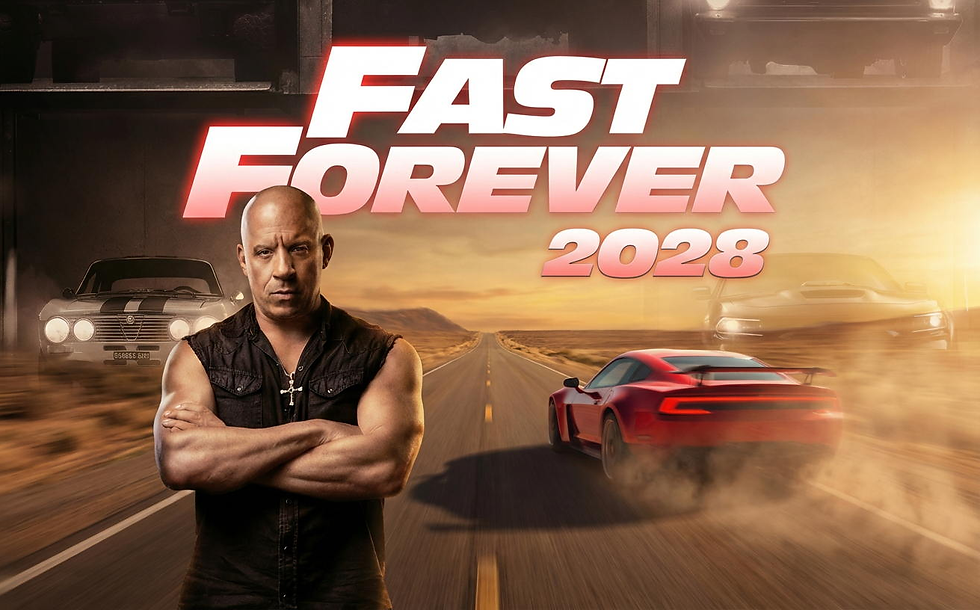
The next installment, Fast & Furious 11—also referred to as Fast Forever—is scheduled for release in 2028 and is expected to conclude the main storyline. This final chapter has been positioned as the culmination of more than two decades of interconnected storytelling, bringing closure to long-standing character arcs and relationships that have defined the franchise since its inception.
Diesel’s leadership role within the franchise extends beyond acting, as he has served as a key producer and creative influence through One Race Films. His involvement has been central in maintaining continuity across shifting directors, writers, and evolving narrative directions. Over the years, he has consistently advocated for preserving the emotional core of the franchise, often describing it as a story rooted in loyalty, connection, and chosen family rather than traditional action spectacle alone.
The expansion into television represents a strategic move aligned with broader industry trends, as major film franchises increasingly seek to extend their intellectual properties into streaming platforms. This shift allows for deeper character exploration and long-form storytelling that is not always possible within the constraints of theatrical releases. For Fast & Furious, this could mean expanded narratives for supporting characters and new perspectives on the universe’s established mythology.
Within Hollywood, the franchise is often cited as a case study in long-term brand development. Its ability to reinvent itself—from underground racing films to global blockbuster action epics—has been driven by a combination of consistent thematic identity and willingness to evolve stylistically. Diesel’s continued presence across all phases has provided a sense of continuity that anchors the franchise’s increasingly complex narrative structure.

The involvement of Jimmy Fallon in the announcement event further highlighted the crossover appeal of the franchise beyond cinema, reinforcing its position as a mainstream cultural touchpoint. The presentation underscored how Fast & Furious has transcended traditional film boundaries to become a multimedia brand with global recognition.
While details of the upcoming television series remain limited, anticipation is fueled by the franchise’s track record of delivering high-energy storytelling combined with emotional stakes. The creative teams involved have hinted at expanding the “legacy characters,” suggesting that familiar faces from the films may appear in new narrative contexts designed specifically for serialized television.
At its core, the Fast & Furious universe has always balanced spectacle with sentiment, and this upcoming expansion appears to continue that tradition. Diesel’s remarks about protecting the “integrity of the characters” reflect an ongoing commitment to maintaining the emotional foundation that has sustained audience engagement for over two decades.
As the franchise prepares for both its cinematic conclusion and its television expansion, it stands at a pivotal moment in its history. The transition signals not an ending, but a transformation—one that redefines how the Fast & Furious world will continue to exist in global entertainment.
With the final film approaching and new series in development, the Fast & Furious saga is entering a new chapter that extends its legacy beyond the theater and into serialized storytelling, ensuring that its themes of family, loyalty, and identity continue to evolve for years to come.



Comments