


“Ryan Gosling moved by fan’s Rocky tattoo: A small moment revealing the powerful impact of Project Hail Mary!”
- Apr 17
- 5 min read
There is something quietly powerful about the moment when a film ceases to exist merely as a production and begins to live within the audience. That transition—from scripted narrative to personal connection—rarely announces itself loudly, yet when it happens, it becomes unmistakable. Such a moment appears to have unfolded around Project Hail Mary, when a fan revealed a tattoo inspired by the character Rocky to Ryan Gosling, prompting a reaction that reportedly reflected genuine happiness. It is the kind of encounter that underscores the enduring relationship between storytelling and those who receive it.
What makes the gesture particularly meaningful is the nature of the character itself. Rocky is not designed as a conventional icon of popular culture. Rather than embodying straightforward heroism or visual spectacle, the character represents a more nuanced combination of intelligence, loyalty, curiosity, and emotional depth. These qualities resonate in a quieter register, one that often leaves a more lasting impression. When a fan chooses to immortalize such a character in ink, the decision suggests a deeply personal connection—one that extends beyond casual admiration.

For an actor like Gosling, whose career has often balanced introspective roles with broader commercial appeal, such moments carry particular significance. Project Hail Mary is not simply another entry in his filmography; it represents a project where emotional storytelling operates alongside scientific intrigue and large-scale narrative stakes. The audience may initially be drawn in by the premise—space exploration, survival, and discovery—but it is the human element, particularly the bond at the story’s center, that ultimately defines its impact.
The image of Gosling responding warmly to the tattoo also offers a glimpse into the often-overlooked emotional dimension of performance. While public perception frequently frames actors as distant figures, insulated by fame, such interactions reveal a more grounded reality. A fan presenting a tattoo is not merely offering praise; it is a declaration that the story has been internalized, that it has found a permanent place in their life. For the actor, witnessing that transformation can be both humbling and affirming.
This exchange also reflects the broader cultural life of cinema. Stories do not end when the credits roll; they continue through the interpretations, memories, and expressions of those who engage with them. In this context, the tattoo becomes a form of continuation, an extension of the narrative into everyday existence. It is a reminder that the relationship between creator and audience is not unidirectional but collaborative in its own way.
Gosling’s career trajectory provides additional context for understanding why such a moment resonates. Emerging from early television roles, he gradually established himself through performances that emphasized emotional subtlety and complexity. Films such as The Notebook and Drive positioned him as an actor capable of conveying depth with restraint, a quality that has become central to his screen persona. Over time, he has navigated a diverse range of genres, from musicals like La La Land to science fiction epics such as Blade Runner 2049.
This versatility has allowed him to maintain both critical credibility and mainstream appeal. Yet, despite his prominence, Gosling has often cultivated a degree of distance from the traditional machinery of celebrity. His public appearances tend to be measured, his interviews thoughtful rather than performative. In this sense, the quiet sincerity of his reaction to the tattoo aligns with the broader image he has constructed over the years.
Beyond his professional life, Gosling’s personal narrative has also contributed to his public perception. His long-term relationship with Eva Mendes has been characterized by a notable degree of privacy, a choice that stands in contrast to the visibility often associated with high-profile couples. Together, they have navigated the complexities of public attention while maintaining a focus on family life, rarely offering more than glimpses into their private world.

This balance between visibility and discretion has, in many ways, mirrored the themes present in his work. Whether portraying introspective individuals or characters navigating extraordinary circumstances, Gosling often brings a sense of grounded authenticity to his roles. It is perhaps this quality that enables audiences to form such strong connections with the characters he portrays.
In the case of Project Hail Mary, that connection appears to be forming even before the film’s full release cycle has concluded. The emergence of fan expressions such as tattoos suggests that the narrative’s emotional core is already resonating. This early engagement speaks to the enduring appeal of stories that prioritize relationship and empathy alongside spectacle.
The character of Rocky, in particular, occupies a distinctive place within that framework. As a figure defined less by traditional heroics and more by relational depth, Rocky challenges conventional expectations. The decision to celebrate such a character through a tattoo indicates a shift in what audiences find meaningful—an appreciation for complexity, vulnerability, and connection.
Moments like the one shared between Gosling and the fan also highlight the evolving nature of fandom. No longer confined to passive consumption, audiences increasingly participate in the cultural life of a story, whether through art, discussion, or personal expression. These interactions blur the line between creator and consumer, creating a shared space in which meaning is continually negotiated.
For Gosling, witnessing this dynamic firsthand may serve as a reminder of the broader impact of his work. While box office figures and critical reviews provide measurable indicators of success, they do not fully capture the ways in which a story integrates into individual lives. A tattoo, by contrast, offers a tangible representation of that integration, one that carries both permanence and personal significance.

It is also worth noting that such moments contribute to the longevity of a film’s cultural presence. Long after its theatrical run, a story can continue to resonate through the memories and expressions of its audience. In this sense, the tattoo becomes part of the film’s ongoing narrative, a small but meaningful extension of its life beyond the screen.
Gosling’s response, described as one of genuine happiness, reflects an understanding of this dynamic. Rather than viewing the interaction as a fleeting novelty, it appears to have been received as a meaningful affirmation of the work itself. This reaction aligns with the broader ethos that has characterized his career—an emphasis on authenticity, both in performance and in engagement with audiences.
The broader industry context further underscores the importance of such connections. In an era where large-scale productions often prioritize visual spectacle, the success of emotionally driven narratives suggests a continued appetite for stories that engage on a deeper level. Project Hail Mary, with its blend of scientific intrigue and emotional resonance, appears well positioned within this landscape.
Ultimately, the encounter between Gosling and the fan encapsulates a series of intersecting themes: the power of storytelling, the evolving nature of fandom, and the human dimension of performance. It is a reminder that, at its core, cinema is not merely about images on a screen but about the connections those images foster.
In this light, the tattoo is more than a personal choice; it is a testament to the enduring capacity of stories to inspire, to comfort, and to remain. For Gosling, seeing that impact reflected back at him offers a rare and meaningful perspective on his work—one that extends beyond the boundaries of the film itself.
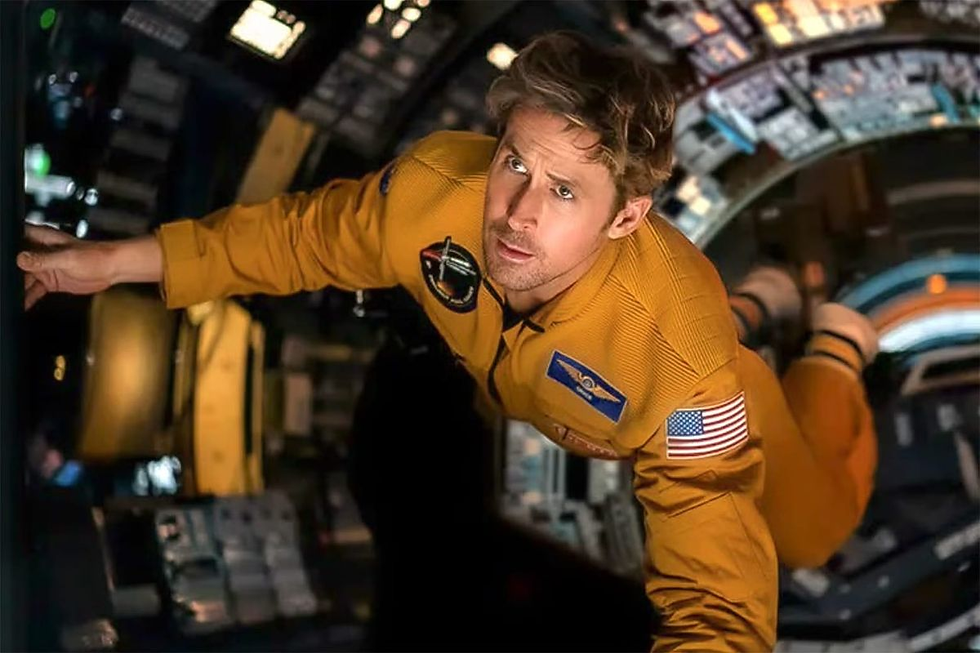
As the narrative of Project Hail Mary continues to unfold in the public imagination, moments like this will likely become part of its legacy. They serve as quiet indicators of a story’s reach, marking the points at which fiction intersects with lived experience.
In the end, what remains most striking is not the scale of the production or the prominence of its star, but the simplicity of the connection. A fan, a tattoo, and an actor’s genuine reaction—together, they form a small yet enduring illustration of why stories matter, and how they continue to shape the world beyond the screen.



Comments