


Pierre Deny, the Emily in Paris actor, has died at the age of 69 after battling ALS.
- May 28
- 7 min read
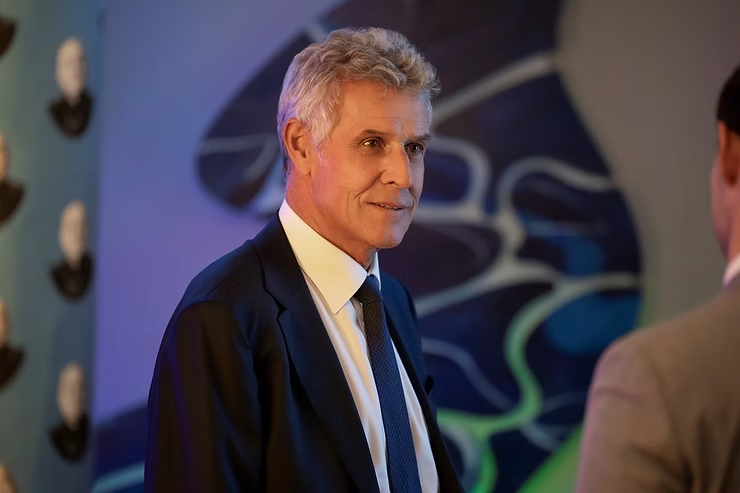
For many international viewers, Pierre Deny became recognizable through his understated yet memorable role in Emily in Paris, where he portrayed Louis de Léon, the polished and quietly intimidating CEO of JVMA. Appearing in the third and fourth seasons of Netflix’s glossy Paris-set drama, Deny brought a distinctly French elegance to the series — the kind of authority that rarely needed to raise its voice to command attention. But long before streaming audiences discovered him alongside Lily Collins, Deny had already spent decades building a respected career across French cinema, television, and theater. His death at the age of 69 following a battle with ALS has now prompted renewed attention toward both his body of work and the private life he kept largely outside celebrity culture.
His daughters confirmed the news in an emotional statement released shortly after his passing. “It is with deep emotion that we announce the passing of Pierre Deny, which occurred this Monday following a sudden and severe case of ALS,” they shared. The announcement immediately sparked tributes across French entertainment circles, where Deny had long been regarded as a dependable and deeply intelligent actor rather than a conventional mainstream celebrity.

ALS, also known as amyotrophic lateral sclerosis, is a degenerative nervous system disease that affects nerve cells in the brain and spinal cord, gradually causing the loss of muscle control. According to the Mayo Clinic, the illness worsens progressively over time and currently has no cure. While some patients can survive for decades after diagnosis, many live only three to five years following confirmation of the disease. Deny’s family described his case as “sudden and severe,” suggesting the actor’s health deteriorated rapidly in recent months.
For audiences outside France, Deny may have seemed like one of the many sophisticated supporting figures populating Emily in Paris’ fashionable universe. Yet within French artistic circles, he represented something far more layered: a classically trained actor whose career stretched across multiple generations of filmmaking. Colleagues often described him as discreet, disciplined, and deeply committed to performance over publicity. Unlike many contemporary television personalities, Deny rarely centered himself within media attention, preferring instead to let his work speak quietly on its own terms.
Born in France during the 1950s, Deny grew up during a period when French cinema still carried the afterglow of the Nouvelle Vague movement. Though he never positioned himself as part of any specific artistic revolution, those influences shaped the seriousness with which he approached acting. Friends from his early years reportedly remembered him as intellectually curious and fascinated by literature, theater, and philosophy long before entering the entertainment industry professionally.
He initially built his reputation through stage work, where his calm intensity and measured delivery earned him recognition among theater directors in Paris. Throughout the 1980s and 1990s, Deny became known for performances that favored emotional precision over theatrical excess. He was not an actor who chased flamboyant visibility. Instead, he specialized in restrained authority figures, emotionally distant fathers, politicians, executives, professors, and men carrying quiet internal conflicts beneath polished exteriors.
That screen persona eventually translated naturally into television and film. Over the years, Deny appeared in numerous French productions, often occupying supporting roles that nevertheless left strong impressions on audiences. Critics frequently praised his ability to elevate scenes through subtle expression rather than overt dramatics. Even in projects where he had limited screen time, there was often a sense that his characters existed beyond the frame, carrying histories viewers could feel without explicit explanation.

By the time Emily in Paris entered production, Deny belonged to a generation of French actors increasingly rediscovered by international streaming audiences. The Netflix series, despite its polarizing reception in France itself, introduced many viewers worldwide to veteran French performers who had spent decades working domestically. As Louis de Léon, Deny embodied exactly the type of corporate Parisian sophistication the show sought to romanticize: elegant tailoring, restrained speech, impeccable manners, and an air of understated authority.
Though his role was relatively limited compared to the series’ younger leads, viewers quickly noticed his presence. Social media discussions around Emily in Paris often referenced the authenticity older French actors brought to the show’s otherwise heightened fantasy version of Paris. Deny’s scenes in particular carried a realism that contrasted with the series’ more exaggerated comedic moments. Industry observers later noted that he approached the production with the same seriousness he brought to traditional French drama, despite the lighter tone of the Netflix hit.
Away from the camera, Deny maintained a notably private personal life. Unlike many actors of his generation who cultivated celebrity mystique through interviews or public appearances, he rarely discussed relationships, finances, or family matters publicly. What is known largely comes through occasional comments from collaborators and the statement released by his daughters after his death. Friends frequently described him as reserved but warm, someone who preferred intimate dinners and literary conversations over the performative social circuits associated with entertainment culture.
There were no major public scandals attached to his name throughout his decades-long career, a rarity within an industry increasingly driven by controversy and constant exposure. In many ways, Deny belonged to an older tradition of actors whose identities remained somewhat separate from their public personas. He gave interviews primarily to discuss projects rather than himself, and colleagues often remarked upon his discomfort with celebrity culture’s more intrusive aspects.
His commitment to privacy may also explain why news of his ALS diagnosis came as such a shock to many fans and industry peers. There had been little public indication that the actor was seriously ill. In recent years, he continued appearing professionally while largely avoiding conversations about his health. According to several French entertainment journalists, only a small circle of close friends and family were aware of the severity of his condition before his death.
The conversation surrounding Deny’s passing has also reignited broader awareness around ALS itself. The disease has increasingly entered public discussion through high-profile diagnoses involving actors, athletes, and public figures around the world. Yet despite growing awareness, ALS remains poorly understood by much of the general public. The illness attacks nerve cells responsible for controlling voluntary muscles, eventually impacting speech, movement, swallowing, and breathing. While treatments may slow progression for some patients, there is currently no known cure.
In recent years, several entertainment figures have spoken publicly about living with ALS, helping bring greater visibility to the realities of the disease. Advocacy organizations and medical researchers continue pushing for increased funding, earlier detection methods, and more effective treatments. Following the announcement of Deny’s death, many fans online began sharing donation links and information related to ALS research, reflecting how celebrity losses often become catalysts for wider health conversations.
Professionally, Deny’s career reflected the changing landscape of French entertainment across nearly four decades. He witnessed the transition from traditional cinema dominance to international streaming platforms reshaping global viewing habits. Younger audiences who discovered him through Emily in Paris may not immediately realize how extensive his earlier work was within French cultural life. For longtime viewers in France, however, Deny represented a familiar and reassuring artistic presence — one of those actors who consistently appeared across generations of television and film without aggressively seeking the spotlight.
There was also a particular elegance in the way Deny aged onscreen. Unlike performers who struggled publicly against aging in an image-driven industry, he seemed to embrace maturity naturally. As he grew older, casting directors increasingly leaned into his ability to portray sophisticated authority figures carrying emotional depth beneath composure. His later performances often relied less on dialogue and more on stillness, facial expression, and timing.
Colleagues who worked with him throughout the years frequently described him as intensely prepared. Directors reportedly appreciated his punctuality, discipline, and refusal to create unnecessary drama on set. Younger actors often mentioned feeling intimidated by his quiet seriousness initially, only to discover a deeply generous collaborator once filming began. Several actors who appeared alongside him in theater productions later recalled how carefully he listened during scenes, treating even small performances with respect.
Although Emily in Paris brought Deny renewed international recognition late in life, those close to him suggested he never became particularly preoccupied with global fame. Unlike younger performers navigating viral celebrity culture, Deny came from a generation that viewed acting primarily as craft rather than personal branding. Even after joining one of Netflix’s most internationally visible series, he reportedly continued living relatively quietly in France, maintaining routines far removed from Hollywood glamour.
His death has prompted many retrospective discussions about the kind of actor he represented. In an entertainment era increasingly dominated by hyper-visibility, social media performance, and instant fame cycles, Deny belonged to a disappearing category of performers whose careers were built gradually through consistency, discipline, and artistic credibility. He was never the loudest figure in a room, nor the most commercially promoted. Yet he remained respected precisely because he approached acting with seriousness rather than spectacle.

For fans of Emily in Paris, Louis de Léon may now carry a bittersweet significance. Scenes that once functioned simply as stylish moments within a romantic comedy-drama have become reminders of an actor whose career extended far beyond the boundaries of a single streaming hit. Viewers revisiting those episodes are likely to notice the measured calmness Deny brought to every appearance, even within a show defined by heightened fantasy and fashionable chaos.
Ultimately, Pierre Deny’s legacy may rest less in celebrity mythology than in professional longevity. He spent decades working steadily within an industry notorious for instability, reinvention, and short public memory. Through changing cinematic trends, evolving television landscapes, and shifting audience habits, he remained committed to performance itself. That consistency earned him admiration from colleagues even when mainstream international fame arrived relatively late.
The statement released by his daughters was brief, restrained, and deeply personal — qualities that perhaps reflected Deny himself. “It is with deep emotion that we announce the passing of Pierre Deny, which occurred this Monday following a sudden and severe case of ALS.” There were no grand theatrics attached to the announcement, only grief and quiet dignity. In many ways, it mirrored the understated elegance that defined both his career and public image for decades.
As tributes continue emerging from fellow actors, directors, and viewers around the world, Pierre Deny is being remembered not merely as another face from a popular Netflix series, but as a performer who carried the traditions of French acting with subtlety, intelligence, and restraint. His career may not have been built around scandal, spectacle, or relentless visibility, but around something increasingly rare in modern entertainment: consistency, discretion, and craft.


Comments