


KJ Apa furiously calls Mr. Fantasy a “f---ing liar and thief” as rumors the two are actually the same person send social media into meltdown.
- May 13
- 7 min read
The internet’s fascination with blurred celebrity identities reached a new peak when KJ Apa publicly accused Mr. Fantasy of “stealing” his image in an unusually emotional video posted to Instagram. What had initially been dismissed by fans as an elaborate online joke or viral marketing stunt has now evolved into a full-scale public feud involving famous friends, music videos, conspiracy theories and questions about how far performance art can go before it begins to damage a real person’s career and reputation.
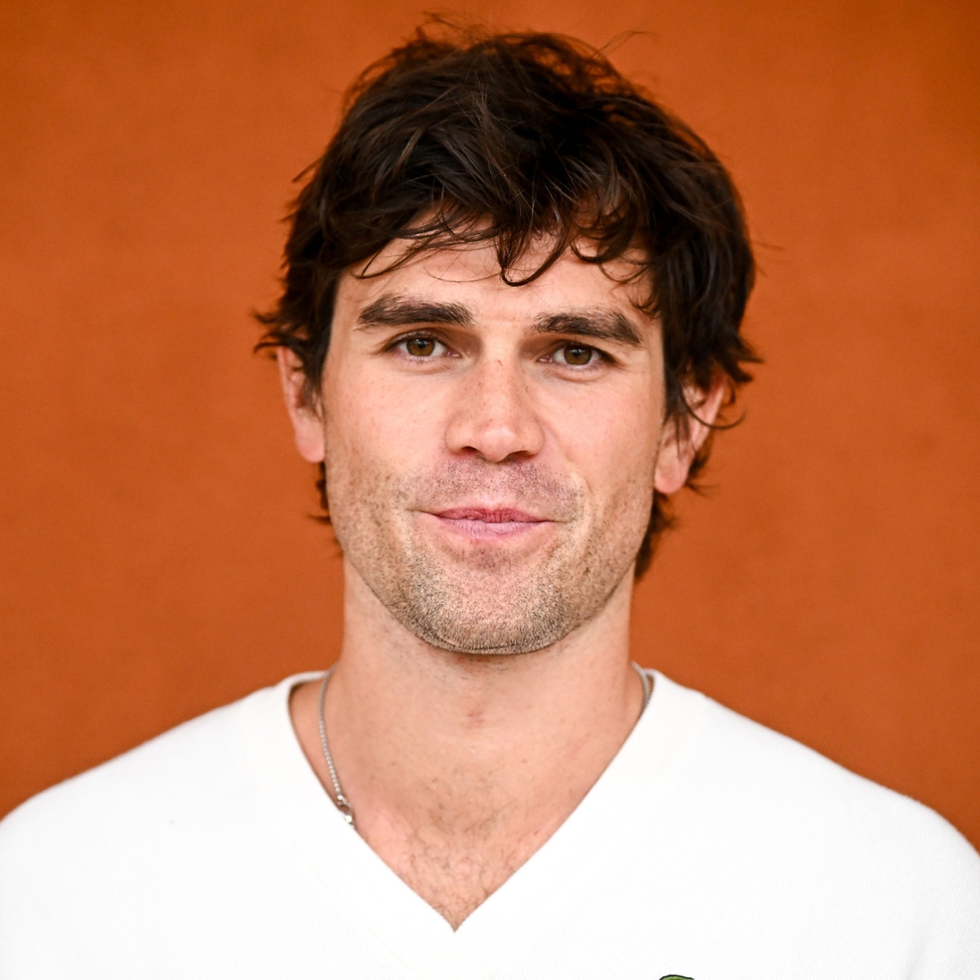
For months, social media users had speculated that Mr. Fantasy — a mysterious British musician who appeared online in 2025 seemingly out of nowhere — was secretly KJ Apa operating under a bizarre alter ego. The theories were fuelled by their strikingly similar physical appearances, identical tattoos, overlapping social circles and an almost uncanny resemblance in mannerisms. Many viewers became convinced the entire project was an experimental rebrand from the former Riverdale star, especially as Mr. Fantasy’s public persona leaned heavily into irony, theatrical humour and exaggerated charm.

The controversy intensified after Mr. Fantasy released his latest music video for “Do Me Right”, which featured several people closely associated with KJ Apa, including his former Riverdale co-stars Lili Reinhart, Camila Mendes and Madelaine Petsch. For many fans, that casting choice seemed almost impossible to explain unless KJ himself was secretly involved. The internet quickly erupted with renewed speculation, memes and side-by-side comparisons between the actor and the musician.
In response, KJ Apa finally addressed the rumours publicly in a lengthy Instagram video. The actor explained that he had avoided discussing the situation for a long time because he initially believed it was too ridiculous to warrant attention. However, according to him, the situation had now begun to affect his personal and professional life in ways he could no longer ignore.
“So there has been something going on for a long time that I haven't addressed because I didn't think it was even worth addressing,” KJ said in the video. “But now, because of how it's impacted my life personally, I feel like I have to talk about it.”
He continued by directly accusing Mr. Fantasy of appropriating his likeness. “There was recently a music video that was released that included a bunch of people who are really close to me by a guy who's completely and utterly stolen my image and misappropriated my image and my likeness. And I think we all know who we're talking about.”
The most striking part of the video came when KJ Apa suggested the controversy had already cost him professional opportunities in Hollywood. “It's f---ed up because I just lost on a huge job and can no longer go in for serious work because people think that I'm a joke because of this guy,” he stated. “And I don't know what to do about it other than bring it here and do everything that I can to protect myself because it's completely f---ing disrespectful and completely wrong to do that.”
The actor ended the statement with an even harsher message aimed at the musician. “You know, this person advocates for positivity and for kindness and for all of this stuff, look in the mirror and tell yourself that you're not a f---ing liar and a thief, because that's exactly what you are.”
Almost immediately after the video was uploaded, the entertainment industry began reacting publicly. Rachel Zegler voiced support for KJ by writing, “We stand with KJ Apa.” Taylor Lautner, who had previously interviewed Mr. Fantasy and spoken positively about him, appeared to reconsider his position, commenting: “I was a huge fan of this man but [you're] right, this has to end.”
Madelyn Cline also joined the conversation with the remark: “Identity theft is not a joke.” Meanwhile, actress Zoey Deutch — who had appeared in Mr. Fantasy’s “Do Me Right” video — publicly apologised to KJ Apa after his statement went viral. “Hi I am really sorry I agreed to do the music video with him. I had no idea it was affecting your life like this,” she wrote. “I obviously won’t engage anymore with him and just feel really bad about the whole thing. I hope you can accept my apology.”
Despite the backlash, Mr. Fantasy has remained silent regarding KJ Apa’s accusations. His social media accounts have continued posting cryptic messages, stylised promotional clips and philosophical reflections without directly addressing the controversy. That silence has only deepened public fascination with the story, especially as fans continue dissecting every detail of the singer’s appearance, speech patterns and personal history.
According to previous interviews, Mr. Fantasy is supposedly a British musician from Harrogate in North Yorkshire who moved to Los Angeles to pursue music after being inspired by his grandmother. He has repeatedly insisted that “Mr. Fantasy” is not a stage name but his real birth name. In an interview with USA Today, he stated: “The name Mr. Fantasy was given to me at birth. I believe that I was given that name because I evoke a spirit of ever-expanding love, you know, I am what everyone else is. I mean, that's what we all are. We are just bubbles of ever-expanding love.”
The surreal nature of those comments only contributed to the mythology surrounding him. While some fans view Mr. Fantasy as a clever performance artist satirising celebrity culture, others believe the project represents a carefully engineered social media experiment designed to exploit ambiguity and internet obsession. There are even viewers who still insist KJ Apa is secretly involved despite his public denial.

Part of the reason the conspiracy gained so much traction lies in KJ Apa’s own artistic background. Long before this controversy erupted, the New Zealand-born actor had already shown a strong interest in music. Although globally recognised for playing Archie Andrews in Riverdale, KJ has spent years writing songs, playing guitar and experimenting creatively outside traditional acting roles. His musical ability often surprised fans who primarily associated him with teen television dramas.
Born Keneti James Fitzgerald Apa in Auckland in 1997, the actor grew up in a family deeply connected to Samoan heritage and culture. His father, Tupa’i Apa, held an important leadership role within their village community in Samoa, something KJ has spoken about with pride in multiple interviews. Before entering Hollywood, he began his career on New Zealand television through the long-running soap opera Shortland Street, where he developed his early acting experience.
Everything changed in 2017 when he was cast as Archie Andrews in Riverdale. The series quickly became one of the defining teen dramas of its generation, turning its young cast into international stars almost overnight. Alongside Lili Reinhart, Cole Sprouse and Camila Mendes, KJ Apa became one of the most recognisable young actors on television.
Yet fame came with complications. Throughout Riverdale’s run, KJ often discussed the pressure of maintaining a highly curated image. In interviews, he admitted he sometimes felt uncomfortable with the show’s repeated focus on his physique and shirtless scenes. “I didn't feel comfortable,” he once confessed while discussing how the series marketed him as a teen heartthrob. That discomfort now appears relevant again as he fights to reclaim control over his public identity.
After Riverdale, KJ attempted to diversify his career through films such as I Still Believe, Songbird and The Last Summer. While some projects attracted attention, he struggled at times to escape the shadow of Archie Andrews. Hollywood has long had difficulty allowing young television stars to reinvent themselves, particularly those associated with iconic teen franchises.

Away from the screen, KJ Apa’s personal life also attracted considerable media attention over the years. His relationship with French model Clara Berry became widely followed online, particularly after the couple welcomed their first child together in 2021. Fatherhood marked a visible shift in the actor’s priorities, with KJ frequently speaking about wanting a quieter life away from constant industry scrutiny. Although rumours later circulated about difficulties within the relationship, both largely avoided discussing their private life publicly.
Unlike many young Hollywood stars, KJ Apa generally managed to avoid major scandals throughout his rise to fame. He cultivated a relatively low-profile reputation, focusing more on work than celebrity drama. That is partly why his angry public outburst toward Mr. Fantasy surprised many observers. The actor has rarely spoken with such visible frustration in public before, leading some fans to believe the situation genuinely struck a nerve.
The controversy also touches on broader questions surrounding identity in the digital age. Online culture increasingly rewards mystery, reinvention and blurred realities. Audiences are often drawn toward personas that feel intentionally difficult to decode, and creators understand how viral ambiguity can generate enormous engagement. In many ways, Mr. Fantasy represents the perfect internet-era celebrity: attractive, elusive, self-aware and impossible to fully verify.
At the same time, KJ Apa’s response highlights the darker side of that phenomenon. For actors whose careers depend heavily on public perception, even ironic internet narratives can carry real professional consequences. If casting directors begin associating an actor with parody, confusion or meme culture, it may affect how seriously they are considered for dramatic roles. KJ’s claim that he lost a major opportunity because of the controversy reflects a growing anxiety many performers face in an era where online narratives can quickly overpower carefully constructed careers.
Entertainment insiders have already begun debating whether the feud itself could ultimately evolve into a larger creative project. Some suspect a documentary, album rollout or scripted collaboration may eventually emerge from the chaos. Others believe the emotional tone of KJ Apa’s video suggests the conflict is genuine and rooted in authentic frustration rather than marketing strategy.

For now, however, the mystery remains unresolved. Mr. Fantasy continues releasing music while refusing to directly answer accusations. KJ Apa continues insisting that the musician has damaged his reputation and exploited his identity. Meanwhile, fans remain divided between those who view the saga as performance art and those who see it as an unsettling example of how celebrity culture and internet mythology can spiral beyond anyone’s control.
What began as a strange TikTok curiosity has now evolved into one of the entertainment industry’s most bizarre ongoing stories. Whether the truth ultimately reveals an elaborate artistic experiment or a genuine personal conflict, the saga has already exposed the fragile relationship between fame, identity and perception in modern celebrity culture. For KJ Apa, the battle appears to be about far more than a lookalike musician. It is about preserving ownership over his own image in an era where the internet often decides reality before the people involved ever get the chance to explain it.


Comments