


Justin Bieber Admits Fame No Longer Makes Him Happiest: ‘Jack Is My Whole World’.
- May 21
- 7 min read
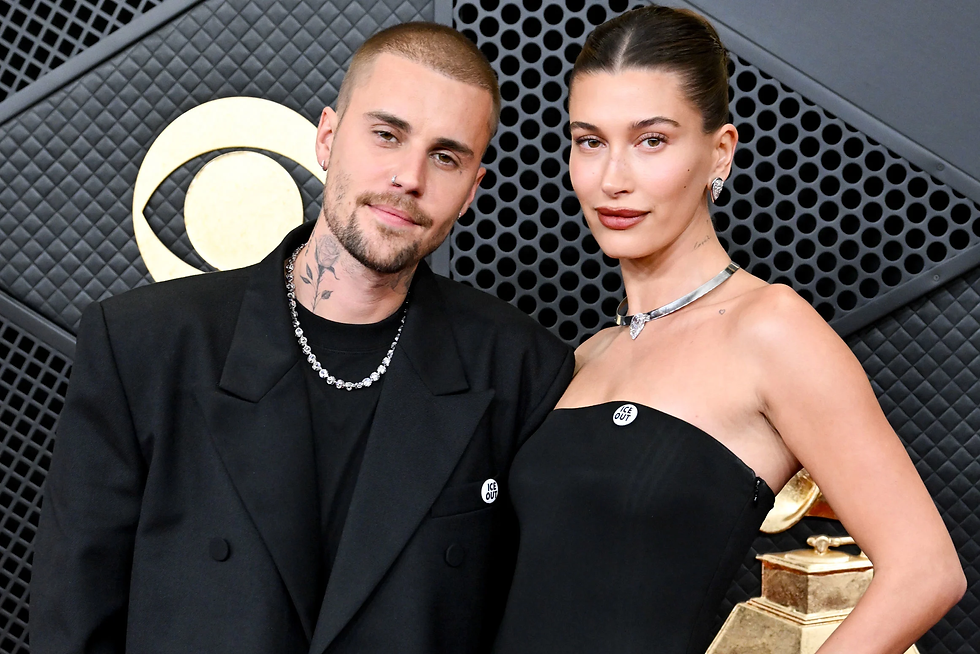
For most of his life, Justin Bieber has existed inside a level of fame that very few people on earth will ever truly understand. Since adolescence, his life has unfolded under constant public attention, shaped by screaming crowds, sold-out stadiums, chart-topping music and relentless scrutiny from both fans and media. He has headlined major festivals, broken streaming records, built a global brand and become one of the defining pop stars of his generation. Yet despite all of those accomplishments, Bieber recently revealed that the moments that make him happiest are no longer connected to fame, career milestones or public recognition. Instead, he says his greatest happiness comes from being with his wife, Hailey Bieber, and their baby son, Jack.
The simplicity of that statement has resonated deeply with many people precisely because of who it comes from. Bieber is someone who has already experienced virtually every visible form of success available in modern celebrity culture. He has stood on the biggest stages in the world, generated billions of streams and spent more than a decade living as one of the most recognizable faces on the planet. Yet when asked where he feels happiest, his answer is not connected to career achievements or luxury. It is connected to home, family and the quiet ordinariness of fatherhood.

“Jack is his whole world,” sources close to the singer reportedly said, a phrase that carries unusual emotional weight considering Bieber once had the entire world seemingly revolving around him. For someone who grew up with millions of strangers emotionally invested in every phase of his life, the idea that true fulfillment now exists in the presence of one small child feels especially meaningful.
In many ways, Bieber’s relationship with fame has always been unusually complicated. Discovered as a teenager after videos of him singing on YouTube went viral, he quickly became one of the earliest truly internet-born global superstars. Under the guidance of Usher and manager Scooter Braun, Bieber transformed from a Canadian teenager posting homemade videos online into an international phenomenon almost overnight.
The success was immediate and overwhelming. Songs like Baby, One Time and My World 2.0 turned him into a teenage idol with a fanbase powerful enough to influence pop culture globally. By the time he was barely out of high school, Bieber had already built the kind of career many artists spend decades chasing.
But the intensity of that fame also came with consequences. Bieber’s transition from teen star to adulthood unfolded publicly and often chaotically. During the early 2010s, headlines surrounding his personal behavior frequently overshadowed his music. Legal troubles, paparazzi confrontations, reckless driving allegations and reports of emotional instability began dominating conversations about him. For a period, Bieber became one of the clearest examples of how fame acquired too young can distort personal identity and emotional development.
At the same time, his relationship with Selena Gomez became one of the most obsessively followed celebrity romances of the decade. Their on-again, off-again relationship generated enormous media attention and created an emotional narrative that fans projected onto both stars for years. Even long after their breakup, public fascination surrounding “Jelena” continued shaping perceptions of Bieber’s emotional life.
Yet beneath the controversies, Bieber’s musical evolution continued. Albums such as Purpose marked a major turning point in his career, both commercially and artistically. Songs like Sorry, Love Yourself and What Do You Mean? helped reposition him from former teen sensation into a mature pop artist capable of longevity.
During that same period, Bieber also became increasingly vocal about the psychological toll fame had taken on him. In interviews and documentaries, he spoke candidly about anxiety, depression, loneliness and the pressure of growing up without normal boundaries. He described periods of emotional exhaustion, struggles with substance use and a growing sense that public success alone could not provide stability or fulfillment.
That search for emotional grounding eventually became closely tied to his faith and personal relationships. Bieber repeatedly referenced Christianity as an important source of structure and healing during some of the most unstable periods of his life. Around the same time, his relationship with Hailey Baldwin — later Hailey Bieber — evolved from friendship into romance.
Their relationship moved quickly. After reconnecting in 2018, the couple became engaged within months before marrying later that same year in a courthouse ceremony. A larger wedding celebration followed in 2019, officially establishing them as one of the most visible celebrity couples of their generation.
At first, public reaction to the marriage was divided. Some fans viewed the relationship as rushed, particularly because it began so soon after Bieber’s final split from Gomez. Hailey, meanwhile, faced years of online scrutiny, conspiracy theories and comparisons to Bieber’s former relationships. Social media often transformed her into the target of intense fan projection and criticism, something she later admitted deeply affected her mental health.

Despite that pressure, the couple remained publicly committed to one another. Over time, their marriage became increasingly defined not by celebrity glamour but by conversations around healing, growth and emotional maturity. Both Bieber and Hailey openly discussed therapy, faith and the effort required to maintain a healthy relationship under extraordinary public scrutiny.
Hailey herself simultaneously built a highly successful identity independent from her husband’s fame. Originally known primarily as the daughter of Stephen Baldwin and part of the extended Baldwin family, she gradually transformed into a major fashion and beauty figure in her own right. Through modeling campaigns, brand partnerships and especially the success of her skincare company Rhode, Hailey established herself as one of the most influential celebrity entrepreneurs of her generation.
Still, public discussion surrounding the couple often remained heavily focused on Justin’s emotional wellbeing. Over the last several years, fans repeatedly speculated about his mental and physical health after noticing periods of withdrawal from public life, canceled tours and emotionally vulnerable social media posts. In 2022, Bieber revealed he had been diagnosed with Ramsay Hunt syndrome, a neurological condition that temporarily caused facial paralysis and forced him to postpone performances.
That period appeared to deepen his desire for a quieter and more grounded personal life. Increasingly, Bieber stepped back from the nonstop visibility that once defined his career. He became more selective about appearances, interviews and performances, prioritizing time at home over maintaining constant celebrity presence.
The arrival of baby Jack seems to have transformed that shift into something even more profound. According to people close to the couple, fatherhood has fundamentally changed Bieber’s perspective on success and happiness. The routines that now define his happiest moments are reportedly simple ones: spending time at home, holding his son, being with Hailey and participating in the ordinary rhythms of family life.

What makes that particularly striking is the contrast between celebrity success and parental fulfillment. Celebrity achievement is public, measurable and endlessly visible. It exists in ticket sales, awards, streaming numbers and headlines. Fatherhood, by contrast, is largely invisible to the outside world. Its meaning exists in repetition, patience, emotional presence and private moments that rarely generate public validation.
For Bieber, that difference appears increasingly important. After spending most of his life performing for millions of strangers, he now seems drawn toward a life centered around a much smaller emotional universe. The idea that “Jack is his whole world” suggests not simply affection for his son, but a reordering of priorities after years defined by external attention.
Observers who have followed Bieber since his teenage years often note how dramatically his public energy has changed. The hyperactive chaos that once surrounded him has gradually been replaced by a more subdued and reflective presence. Even his social media activity has shifted away from relentless self-promotion toward more personal and spiritual reflections.
Of course, public fascination surrounding Bieber remains enormous. Every appearance, relationship update or emotional statement continues generating headlines worldwide. The paradox of his current life is that even his attempts at normalcy become part of celebrity culture. A quiet family moment involving Justin, Hailey and Jack can instantly become international news precisely because of who they are.
Yet there is also something undeniably human about the way Bieber now speaks about happiness. Many celebrities eventually reach a point where professional achievement alone no longer feels emotionally sufficient. For Bieber, who experienced fame earlier and more intensely than most people ever will, that realization may have arrived sooner and more forcefully.
The idea that fulfillment ultimately comes from family rather than fame is hardly new, but hearing it from someone who genuinely achieved nearly every imaginable level of public recognition gives the statement unusual credibility. Bieber is not speaking theoretically about fame’s emptiness. He is speaking as someone who has lived inside global obsession for more than half his life.

That perspective also changes how many people interpret his current choices. His reduced touring schedule, selective professional appearances and increasing focus on private life no longer appear like career instability so much as intentional recalibration. Rather than chasing the relentless momentum that once defined his brand, Bieber now seems more interested in protecting emotional stability and personal connection.
For Hailey, this stage of their relationship also represents a significant transition. After years spent navigating internet scrutiny and public pressure surrounding their marriage, she now appears to be building a family life that exists somewhat separately from the narratives fans once projected onto them. Motherhood has seemingly added another layer of emotional grounding to their relationship.
The public may continue to view Justin Bieber primarily as a global pop star, but the way he increasingly describes himself suggests he sees his identity differently now. He is still one of the most famous musicians in the world. He is still the artist whose songs shaped adolescence for millions of people. But in his own telling, the center of his life has changed completely.
He is a husband. He is a father. And according to the people closest to him, the happiest moments of his life are no longer happening onstage in front of crowds, but quietly at home with Hailey and Jack. After everything fame gave him — and everything it took from him — that private world now appears to matter more than any arena ever could.


Comments