


Judge delivers brutal dismissal of Blake Lively's fat-shaming and sexual harassment claims in major pre-trial win for Justin Baldoni
- Apr 3
- 6 min read
Updated: Apr 6
The lawsuit between Blake Lively and Justin Baldoni has taken a major turn after a judge dismissed a series of key allegations. This decision is considered a significant blow to the plaintiff ahead of the upcoming trial.
The court ruled that the fat-shaming allegations did not have sufficient legal basis to constitute a valid claim. This significantly weakened Lively’s overall argument in the case.
Not only that, but all of the actress’s sexual harassment claims were also dismissed. This is seen as a major legal victory for Baldoni before entering the trial phase. The legal dispute between the two co-stars of It Ends With Us began in December 2024. Since then, both sides have exchanged intense accusations and rebuttals.
Judge Lewis Liman issued a 152-page ruling analyzing each legal aspect in detail. Following the decision, Lively is left with only three claims to pursue in court.
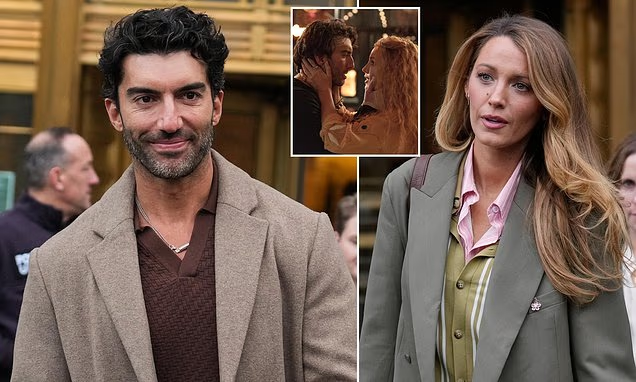
These remaining claims include breach of contract, retaliation, and aiding and abetting retaliation. Compared to the original allegations, this represents a significantly narrowed case.
The trial is still scheduled to take place on May 18 in New York. However, with many claims dismissed, the dynamics of the case have changed substantially.
Baldoni’s attorneys expressed satisfaction with the court’s ruling. They emphasized that the serious allegations had been carefully reviewed and lacked sufficient evidence.
The defense considers the dismissal of all sexual harassment claims a crucial turning point. They now look forward to defending against the remaining claims in court.
One of Lively’s allegations was that Baldoni crossed professional boundaries during filming. She claimed he kissed her in a scene where it was not scripted.
She also accused him of entering her trailer while she was breastfeeding. Another allegation involved being shown a video of his wife giving birth.
However, the court found that these details were not sufficient to establish a hostile work environment. Some incidents were deemed minor or lacking proper context. Lively’s legal team maintains that the case remains focused on retaliation and damage to her reputation. They argue that this is the true core of the lawsuit.
The plaintiff’s side also stressed that the dismissal of certain claims does not mean wrongdoing did not occur. According to them, it is a matter of legal standards.
A key factor in the ruling was that Lively did not sign an important agreement known as the Actor Loanout Agreement (ALA). This made its provisions unenforceable.
The judge concluded that no valid contract existed between the parties at the time of the dispute. This undermined the legal foundation of several claims.
Lively argued that ongoing negotiations could still create legal effect. However, the court rejected this argument.
According to the ruling, the failure to reach final agreement clearly showed that no contract had been formed. Therefore, it could not be used as a basis for litigation.
Another crucial issue was the classification of the working relationship. The court determined that Lively was an independent contractor, not an employee.
This meant she was not protected under certain labor and civil rights laws. This distinction played a key role in dismissing many claims.
The court also highlighted Lively’s significant control over the film’s production. This reinforced the conclusion that she operated independently.
She had authority over music selection, editing decisions, and even the overall visual direction of the film. These factors demonstrated a high level of autonomy.
Additionally, she participated in hiring and firing personnel. This went far beyond the typical responsibilities of an actress.
The court further noted that she could leave the project at any time, with only contractual consequences. This is a clear indicator of economic independence.

Regarding the fat-shaming allegations, the court ruled that Baldoni’s actions could not be considered gender discrimination.
The question about her weight was framed within the aesthetic requirements of the film, which was considered part of the job.
Lively herself acknowledged that maintaining a certain physical appearance was necessary for the role. She trained intensively to achieve that goal.
The court concluded that these actions could not be interpreted as hostility toward women. Therefore, the claim was dismissed entirely.
Other incidents, such as Baldoni discussing his body or suggesting intimate scenes, were also not considered violations.
According to the court, these elements fell within the scope of artistic creativity and did not constitute harassment.
However, the retaliation claims were found to have sufficient basis to proceed. A jury may still evaluate these aspects of the case.
The judge also noted that two realities can coexist: one involving creative control, and another involving a genuine perception of misconduct. These issues will need to be examined at trial.
Ultimately, the lawsuit continues but in a much narrower scope. The ruling has significantly shifted the balance between the two sides ahead of trial.
The legal battle between Blake Lively and Justin Baldoni did not emerge out of nowhere. It traces back to their collaboration on It Ends With Us, a highly anticipated project both commercially and emotionally, adapted from the bestselling novel by Colleen Hoover. The film itself explores the turbulent relationship between Lily Bloom and Ryle Kincaid, a romance that is at once passionate and deeply toxic, reflecting cycles of abuse and long-lasting psychological scars.
From the very beginning, the production carried immense pressure. Not only did it inherit the expectations of a global fanbase, but it also tackled sensitive subject matter involving domestic violence and emotional trauma. Within this intense environment, both Lively and Baldoni were far more than just actors. They were deeply involved in shaping the project—rewriting scenes, influencing creative direction, and contributing to the overall storytelling. Ironically, this level of involvement would later become a critical factor in court when assessing Lively’s degree of independence within the production.
The tensions between the two did not explode overnight. Instead, they simmered quietly throughout filming. Differences in artistic vision and professional boundaries gradually created friction. Certain intimate scenes—central to the film’s narrative—became flashpoints. Lively argued that some moments crossed beyond what had been agreed upon in the script, while Baldoni’s side maintained that such improvisation was part of the creative process, necessary to achieve emotional authenticity.

At the same time, concerns about the working environment began to surface in Lively’s account. These ranged from personal matters, such as questions about her weight, to situations she described as uncomfortable or inappropriate. Individually, these incidents might have seemed minor, but collectively, they formed the foundation for the more serious allegations she would later bring forward.
The conflict reached its peak in December 2024, when Lively formally filed a lawsuit against Baldoni and several associated parties. Her claims extended beyond sexual harassment to include retaliation and an alleged campaign to damage her reputation. What began as behind-the-scenes tension quickly escalated into a high-profile legal battle, drawing widespread public and media attention.
Baldoni, for his part, strongly denied the allegations and pushed back both legally and publicly. His defense suggested that Lively’s actions were less about addressing misconduct and more about asserting control over the project. This clash of narratives blurred the line between creative disagreements and legal violations, making the case increasingly complex.
It is within this broader context that the ruling by Judge Lewis Liman becomes more understandable. In a sweeping decision, the court dismissed Lively’s fat-shaming claims, stating they could not reasonably support a legal case. Even more significantly, all sexual harassment allegations were thrown out, marking a major legal victory for Baldoni ahead of trial.
As a result of the ruling, Lively is now left with only three claims: breach of contract, retaliation, and aiding and abetting retaliation. While the trial is still scheduled to proceed in New York, the scope of the case has been dramatically narrowed, fundamentally altering its trajectory.
A key reason behind the dismissal lies in contractual issues. The court found that Lively had not signed a crucial agreement—the Actor Loanout Agreement—rendering it unenforceable. Without a binding contract, many of her claims lacked a solid legal foundation.
Equally important was the court’s determination that Lively functioned as an independent contractor rather than an employee. This distinction meant that certain labor protections and legal standards simply did not apply to her situation.
The judge pointed to Lively’s significant creative and operational control over the film as evidence. She influenced music selection, oversaw editing decisions, participated in hiring and firing, and even shaped the film’s overall aesthetic and marketing direction. These factors reinforced her economic independence and autonomy within the project.

Regarding the fat-shaming allegations, the court concluded that Baldoni’s actions could not reasonably be interpreted as gender-based discrimination. Discussions about physical appearance were framed as part of the film’s aesthetic requirements—something both parties had acknowledged as integral to the project.
Other claims, including those involving on-set interactions and creative decisions, were similarly dismissed as falling within the bounds of artistic expression rather than constituting harassment. The court emphasized that creative environments often require a degree of flexibility and experimentation.
However, the case is far from over. The remaining claims—particularly those related to retaliation—still carry weight and may be evaluated by a jury. The judge acknowledged that it is possible for conflicting interpretations to coexist: one involving creative control, and another involving a genuine perception of inappropriate conduct.
Ultimately, what remains is a significantly narrower but still unresolved legal battle. The ruling has shifted the balance between the two sides, but it has not closed the chapter. Instead, it leaves behind a deeper and more complex question—where exactly is the line between creative freedom, professional power, and accountability in an industry built on emotion, storytelling, and human vulnerability.



Comments