


Former Inmate Exposes Mackenzie Shirilla’s ‘Remorseful’ Image: ‘She Was Like a Celebrity in Prison’.
- May 21
- 6 min read
The release of Netflix’s The Crash has reignited public fascination with the case of Mackenzie Shirilla, the Ohio woman convicted of deliberately driving her car into a brick building at nearly 100 miles per hour in 2022, killing her boyfriend Dominic Russo and their friend Davion Flanagan. While the documentary presents Shirilla as a remorseful young inmate reflecting on the devastating consequences of that night, new claims from a former fellow prisoner have cast doubt on the authenticity of the image portrayed onscreen, opening another controversial chapter in a case that has remained deeply polarizing since the moment it first captured national headlines.
According to former inmate Mary Katherine Crowder, who served time alongside Shirilla at the Ohio Reformatory for Women, the version of Shirilla featured in the documentary bears little resemblance to the woman she allegedly encountered behind bars. Speaking in an interview with the New York Post, Crowder said she was stunned watching the Netflix production because the subdued, emotionally restrained figure presented to viewers was “nothing like the person I was in there with.”

“When she walked out in the documentary, my jaw literally dropped, because her demeanor and the way that she looked was nothing like the person I was in there with,” Crowder claimed. The former inmate alleged that Shirilla had embraced a dramatically different identity while incarcerated, describing her as highly image-conscious, socially influential and eager to maintain a polished appearance even within prison walls.
Crowder further alleged that Shirilla carried herself as the unofficial leader of a clique she compared to the “Mean Girls” archetype. According to her account, Shirilla allegedly cultivated a glamorous image that stood out inside the correctional facility, wearing makeup daily and putting effort into stylish outfits. Crowder claimed that Shirilla’s parents, along with older men she allegedly met online, financially supported the lifestyle she maintained in prison.
The allegations sharply contrast with the emotionally restrained presentation seen in The Crash, where Shirilla appears without heavy makeup and speaks at length about regret, trauma and the lasting emotional weight of the fatal collision. In the documentary, she also revisits her long-discussed medical diagnosis of postural orthostatic tachycardia syndrome, commonly referred to as POTS, suggesting that the condition may have contributed to the crash.
Crowder, however, openly disputed those claims. “When I was in there with her, you’d look at her and she had her makeup done every day, she was very well put together — almost like preppy,” she said. “But in the documentary, she did not look like that at all — she almost looked like she was conforming to the people that have been there for a while.”
She also challenged the severity of Shirilla’s alleged medical struggles. “Never one time did I ever see Mackenzie Shirilla go for a blood pressure check, take any type of medication or go to sick call, ever experience dizziness,” Crowder alleged. “In fact, Mackenzie Shirilla would go out in 100-degree heatwaves with baby oil on her and sit in the prison yard and tan … the girl does not have any medical issues.”
Another point that struck Crowder was what she described as Shirilla’s altered speaking style in the documentary. “She talked like a Valley girl when I was in there with her. Her voice was very happy-go-lucky and high-pitched, but now she has an edge to her voice,” she claimed, adding, “This character in the documentary is nothing like who I saw in there at all, and it was shocking.”

Crowder’s allegations did not stop there. She claimed Shirilla viewed herself as something of a celebrity within the prison population because of the national attention surrounding the case. “Everyone knew why she was there, and she walked around like she was this famous person within prison,” Crowder said. “She definitely carried herself like she was the Regina George of prison … she was very much like an ‘It girl.’”
The former inmate also spoke publicly through a series of TikTok videos in which she discussed Shirilla’s alleged romantic relationships with other female inmates. According to Crowder, Shirilla had multiple girlfriends during her incarceration and was once disciplined for inappropriate conduct. “Yes, Mackenzie has had multiple girlfriends … she was walking around with hickies on her neck,” Crowder claimed in one clip. “She’s gone to ‘the hole’ for being intimate with girls in prison.”
Crowder went further by questioning whether Shirilla’s behavior aligned with the remorse she expresses in the Netflix documentary. “If she was grieving or remorseful, she would not have gone to prison and jumped into prison relationships over the next six months,” she argued. Shirilla’s attorney did not immediately respond to requests for comment regarding the allegations.
The renewed attention surrounding Shirilla’s prison life comes nearly four years after the crash that permanently altered multiple families. In July 2022, prosecutors argued that Shirilla intentionally accelerated her vehicle into a commercial building in Strongsville, Ohio, killing Russo and Flanagan instantly. Authorities stated that there was no evidence of braking before impact, a detail that became central to the prosecution’s argument that the collision was deliberate rather than accidental.
At the center of the case was the volatile relationship between Shirilla and Dominic Russo. Friends and investigators painted a complicated portrait of two teenagers navigating a turbulent romance marked by emotional intensity, arguments and repeated breakups. Prosecutors argued during trial that Shirilla’s actions stemmed from emotional instability and possessiveness, while the defense maintained there was insufficient evidence to prove intent beyond a reasonable doubt.
The trial itself became one of the most heavily discussed criminal proceedings in Ohio that year, partly because Shirilla was only 17 at the time of the crash. The judge ultimately convicted her on multiple felony charges, including murder, felonious assault and aggravated vehicular homicide, sentencing her to two concurrent life sentences with the possibility of parole after fifteen years.

Public reaction to the sentencing was sharply divided. Some viewed Shirilla as a calculating young woman who weaponized a vehicle during a moment of rage, while others believed the prosecution relied too heavily on circumstantial interpretations of teenage behavior and text messages. The debate intensified online, where supporters and critics dissected every detail of the case, from surveillance footage to psychological evaluations.
The Netflix documentary entered this already emotionally charged landscape by attempting to humanize Shirilla without fully absolving her. The production revisits her upbringing in Ohio, presenting her as a teenager whose life appeared outwardly stable before unraveling publicly in catastrophic fashion. Interviews with family members suggest she was once viewed as academically driven, socially active and deeply attached to Russo before the relationship deteriorated under mounting emotional pressure.
Much of the fascination surrounding Shirilla stems from the contrast between her appearance and the brutality of the crime she was convicted of committing. Media coverage repeatedly emphasized her youth, suburban background and conventionally polished image, elements that complicated public perception of the case. In many ways, the story became part true crime narrative and part examination of how young women accused of violent crimes are portrayed in American media.
Unlike many high-profile female defendants whose cases involve lengthy criminal histories, Shirilla had no widely publicized record of violent behavior before the crash. Former classmates reportedly described her as sociable and ambitious, making the prosecution’s depiction of calculated violence especially shocking to many observers. That disconnect fueled endless online speculation about her psychological state in the weeks leading up to the crash.

The documentary also revisits the grief experienced by the victims’ families, whose lives have largely remained overshadowed by the intense public fixation on Shirilla herself. Dominic Russo’s relatives have repeatedly spoken about the pain of seeing his life reduced to headlines surrounding the woman convicted of killing him. Davion Flanagan’s family similarly struggled through years of legal proceedings and media attention while mourning a teenager they described as loyal, kind and deeply loved by his community.
For some viewers, Crowder’s allegations now raise uncomfortable questions about whether The Crash intentionally softened Shirilla’s image for dramatic effect. True crime documentaries have increasingly faced criticism for blending emotional storytelling with selective framing, often creating sympathetic portraits that critics argue distort reality. In Shirilla’s case, the divide between the documentary’s presentation and Crowder’s claims has become a new focal point of public debate.
At the same time, others argue that prison gossip and anecdotal testimony should not automatically outweigh filmed interviews conducted over an extended period. Because Crowder’s allegations remain unverified, supporters of Shirilla caution against treating them as established fact. Still, the controversy has only amplified interest in both the documentary and the broader case.
Beyond the courtroom and prison walls, Shirilla’s story also reflects a growing cultural obsession with young women at the center of sensational criminal cases. Comparisons have frequently been drawn between her media treatment and that of figures such as Gypsy Rose Blanchard or Casey Anthony, women whose legal cases evolved into larger conversations about femininity, manipulation, trauma and public perception. Like them, Shirilla became more than a defendant; she became an internet fixation dissected through documentaries, TikTok commentary, Reddit theories and endless social media debates.
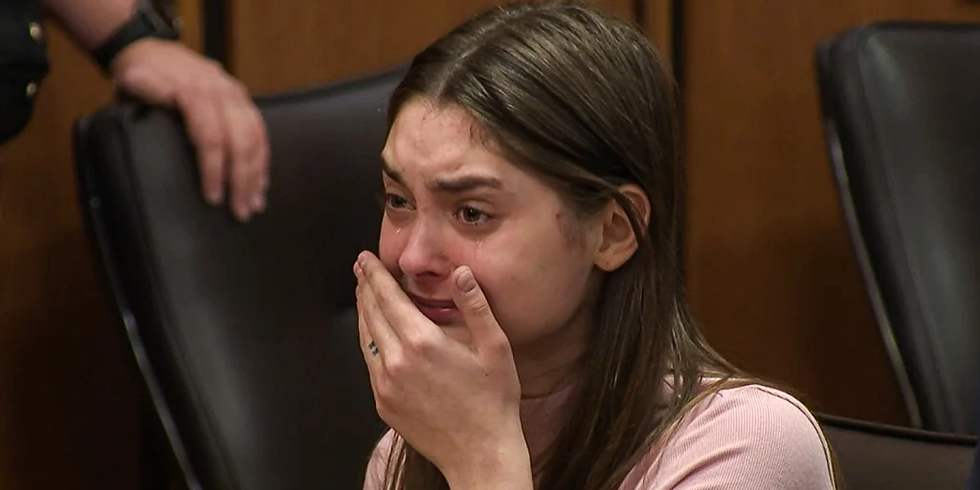
As Netflix’s The Crash continues attracting viewers, the public narrative surrounding Mackenzie Shirilla appears far from settled. The documentary presents one version of a young woman confronting irreversible consequences, while Crowder’s claims suggest a far more socially confident and emotionally detached figure operating behind prison walls. Somewhere between those competing portrayals lies the reality of a case that continues to disturb, divide and fascinate audiences years after the deadly crash first made headlines.



Comments