


Ella Bright goes viral with awkward ‘Off Campus’ confession: Her parents watched the entire series three times without skipping a single scene.
- May 26
- 6 min read
The rapid success of Off Campus has transformed nearly every member of its young cast into a social media talking point, but few moments connected with audiences quite like the recent story shared by Ella Bright about watching the series with her parents. What began as a humorous behind-the-scenes anecdote quickly evolved into one of the internet’s favorite “Off Campus” moments because of how unexpectedly relatable it felt, particularly for viewers aware of the show’s emotionally charged and intimate scenes.
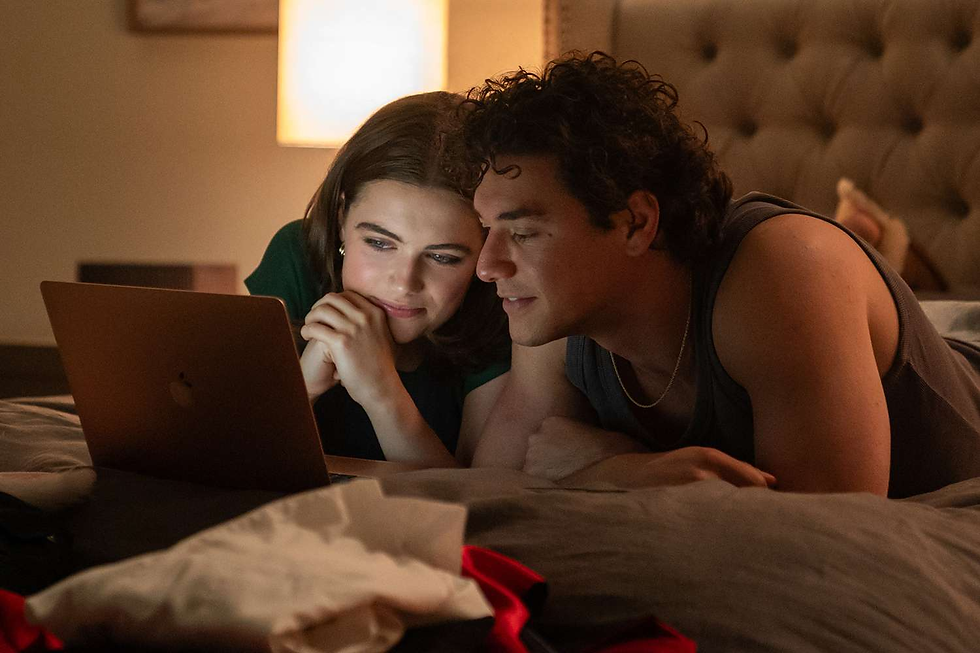
During recent interviews promoting the series, Bright revealed that she originally intended to watch the show alongside her parents so she could carefully avoid the more mature sequences herself. However, after returning from the cast’s press tour, she discovered that her parents had already watched the entire season on their own — not once, but reportedly three times — without skipping any scenes at all. The revelation immediately spread across TikTok, X and fan forums, where audiences reacted to the uncomfortable but undeniably familiar dynamic of actors having family members watch romantic or intimate performances onscreen.

The story resonated particularly strongly because “Off Campus” has become known for leaning heavily into emotional chemistry, physical tension and mature romantic storytelling. Adapted from the bestselling novels by Elle Kennedy, the Prime Video series does not shy away from intimacy between its characters, a creative choice that has significantly contributed to its popularity among streaming audiences. For younger cast members like Bright, that visibility also means navigating the awkward reality of family members witnessing scenes that blur the line between professional performance and deeply personal vulnerability.
Fans online quickly praised Bright for speaking about the situation with honesty and humor rather than discomfort. Many viewers interpreted the anecdote as evidence of the close relationship she appears to have with her family, while others focused on the broader pressure placed on young actors entering romance-centered projects at an early age. Although awkwardness surrounding intimate scenes is hardly unique within Hollywood, the transparency of Bright’s story made the experience feel unusually human in an industry often dominated by highly polished celebrity narratives.
At just nineteen years old during the release of “Off Campus,” Bright found herself at the center of a series that rapidly became one of streaming’s biggest romantic sensations. Her performance stood out not simply because of onscreen chemistry, but because she approached emotionally mature material with a level of restraint and vulnerability that many viewers did not expect from someone so young. Throughout the series, she managed to balance emotional openness with naturalistic acting choices, helping her character resonate deeply with audiences invested in the show’s central relationships.
The success of that performance has dramatically increased public interest in Bright herself. Before “Off Campus,” she had already been building experience within the entertainment industry, though largely outside mainstream international attention. Like many young British performers, she gradually developed her career through smaller acting opportunities, auditions and youth-oriented productions before landing the role that would significantly raise her global visibility.
Unlike some rising actors whose careers are shaped heavily through social media influence before major acting work, Bright’s trajectory has centered more directly on performance itself. That distinction has become increasingly important in discussions surrounding her success. While many modern streaming stars cultivate online personas long before breakout roles arrive, Bright’s popularity appears to stem primarily from viewers responding organically to her work onscreen rather than to a carefully manufactured celebrity image.
Her sudden rise has nevertheless brought the familiar complications associated with rapid internet fame. Since the release of “Off Campus,” fan interest in Bright’s private life has intensified considerably, with social media users closely analyzing interviews, cast interactions and public appearances. Romantic dramas often generate especially intense fandom culture because viewers become emotionally attached not only to the fictional couples but also to the possibility of off-screen chemistry between actors themselves.

That level of attention can become particularly difficult for younger performers navigating visibility for the first time. Female actresses attached to romance-driven franchises frequently face disproportionate scrutiny regarding relationships, appearance and public behavior. Every interview clip or social media interaction can quickly become material for viral discourse, often placing young actors under immense psychological pressure while they are still adapting to sudden recognition.
Bright has so far handled that transition with notable composure. In interviews, she tends to project a relatively grounded and self-aware personality, often laughing about the surreal aspects of sudden fame while avoiding the kind of overexposure that frequently overwhelms emerging stars. Her anecdote about her parents watching the show repeatedly became popular largely because it reinforced that image of relatability rather than celebrity distance.
At the same time, the story also highlighted how emotionally demanding “Off Campus” can be for its cast. Although the series is frequently discussed through the lens of romance and fantasy, many of its emotional moments require substantial vulnerability from the actors involved. The intimacy between characters is not portrayed solely for shock value; rather, it often functions as an extension of deeper emotional conflicts surrounding trust, insecurity and connection.
For Bright, performing within that environment at nineteen inevitably drew attention to the maturity of her work. Viewers repeatedly commented on how convincingly she handled emotionally layered material despite her age. Rather than approaching romantic scenes with exaggerated dramatics, she often relied on smaller emotional details — hesitation, body language, silence — to communicate vulnerability. That subtlety became one of the defining strengths of her performance throughout the season.
The success of “Off Campus” itself reflects broader shifts occurring within streaming entertainment. After years dominated by darker prestige dramas and franchise-heavy action series, audiences appear increasingly drawn toward emotionally immersive romance narratives once again. Streaming platforms have recognized the commercial power of adaptation-driven fandoms, particularly when stories already possess passionate online communities before release.
Because “Off Campus” originated from a bestselling book series with an established fan base, expectations surrounding the adaptation were intense from the beginning. Readers of Elle Kennedy’s novels had spent years imagining these characters and relationships, meaning the cast faced significant pressure to embody personalities that fans already felt emotionally attached to. Bright’s performance appears to have satisfied much of that audience, which partly explains why conversations surrounding her role expanded so rapidly online.
The internet’s fascination with the cast has also been fueled by the group’s chemistry during interviews and promotional appearances. Behind-the-scenes clips featuring Bright alongside her co-stars have accumulated millions of views across social media platforms, with fans repeatedly praising the natural dynamic between the actors. In many ways, the marketing surrounding “Off Campus” benefited from presenting the cast less as distant celebrities and more as a believable friend group, something that strengthened emotional investment in the show itself.
That strategy, however, also blurs boundaries between performance and personal identity. Modern fandom culture increasingly expects actors to remain emotionally accessible outside their fictional roles, particularly within romance-oriented franchises. As a result, even casual anecdotes — such as Bright discussing her parents watching intimate scenes — quickly become major viral talking points because audiences crave personal insight into actors’ real experiences behind emotionally charged storytelling.
Despite the sudden visibility, Bright has largely avoided controversy. In an entertainment landscape where scandals and public feuds often dominate headlines, her public image remains relatively clean and centered around her work. That absence of controversy has arguably made audiences even more protective of her, particularly as conversations continue regarding the pressures placed on young actresses within highly online fandom environments.
The attention surrounding Bright also reflects how quickly streaming-era stardom can emerge. A single successful series now has the ability to transform relatively unknown actors into globally recognized faces almost overnight. Yet maintaining that momentum often proves more difficult than achieving it initially. The entertainment industry is filled with performers whose breakout roles generated enormous short-term popularity before later projects failed to sustain public interest.

Whether Bright ultimately becomes a long-term leading figure within television and film will likely depend on how successfully she navigates the transition beyond “Off Campus.” Many actors associated with major young-adult romance franchises struggle to separate themselves from the roles that first made them famous. However, some viewers already believe Bright possesses the emotional range necessary to expand into more dramatic or psychologically complex material in the future.
Part of that optimism comes from the authenticity visible in her acting style. Even in highly stylized romantic sequences, Bright tends to ground her performances in emotional realism rather than fantasy alone. That quality has become increasingly valuable in modern streaming television, where audiences respond strongly to performances that feel emotionally recognizable despite heightened dramatic circumstances.
The viral story about her parents watching the series multiple times may have begun as a funny interview anecdote, but its popularity ultimately revealed something larger about the relationship between audiences and young stars today. Viewers no longer connect only to polished celebrity personas; they respond just as strongly to awkwardness, vulnerability and moments that feel recognizably human. Bright’s willingness to laugh at an uncomfortable situation allowed audiences to see her less as a manufactured streaming celebrity and more as a young actress navigating extraordinary circumstances in real time.

As anticipation for future seasons of “Off Campus” continues growing, so too does curiosity surrounding Bright’s next career steps. The series has already positioned her as one of the breakout young actresses associated with the current wave of streaming romance dramas. Whether discussing emotionally vulnerable performances, viral interview moments or the realities of navigating fame at nineteen, Ella Bright has quickly become one of the central figures audiences associate with the phenomenon surrounding “Off Campus.”



Comments