


Cillian Murphy sparks a frenzy again with his $8 million horror hit: the old film unexpectedly dominates streaming, earning 10x its budget!”
- Apr 7
- 4 min read
The resurgence of a cult classic often says as much about the present as it does about the past, and in 2026, few examples illustrate this better than the renewed success of 28 Days Later. More than two decades after its initial release, the dystopian horror film led by Cillian Murphy has found a new life on streaming, climbing back into global charts and reminding audiences of the performance that helped define his early career.
This renewed attention comes at a particularly significant moment for Murphy, whose career has entered a new phase following his Academy Award-winning performance in Oppenheimer. In an industry often driven by reinvention, Murphy’s trajectory appears instead to be one of continuity—an actor who has quietly built a body of work marked by intensity, restraint, and an almost literary sense of character.
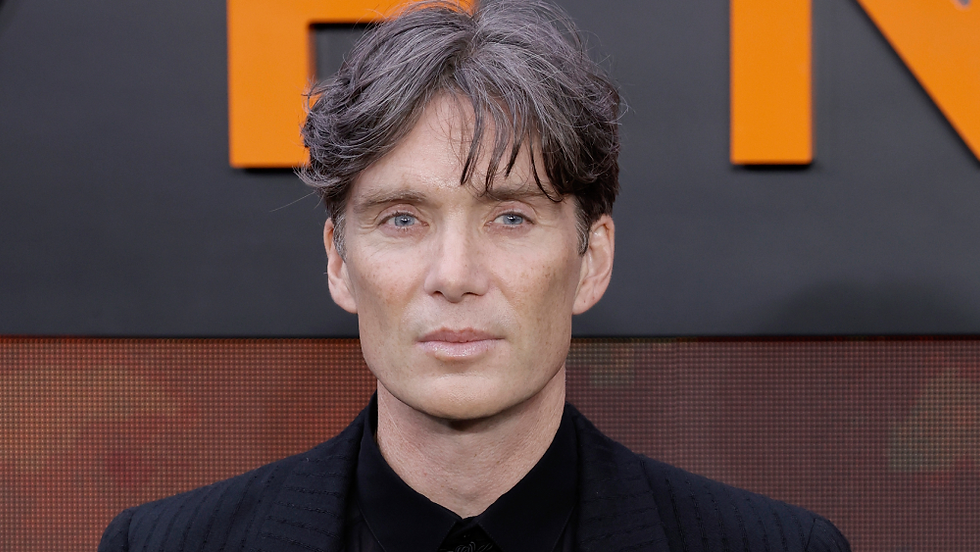
In 2026, Murphy’s return to the screen has been especially visible. He reprised his iconic role as Tommy Shelby in Peaky Blinders: The Immortal Man, a feature-length continuation of the acclaimed television saga Peaky Blinders. The film not only revisits the character that has accompanied him for over a decade but also brings a sense of closure to a narrative that has grown alongside both actor and audience. The ending, by most accounts, seals the fate of Thomas Shelby in a way that feels definitive, even as it opens the door to a new sequel series already in development.
Yet Murphy has not lingered in that world. Almost immediately after completing the project, he moved on to new collaborations, including an upcoming film directed by Damien Chazelle, in which he stars opposite Daniel Craig. Though details remain under wraps, the project has already generated anticipation, not least because of Murphy’s growing reputation for choosing complex, character-driven roles.
He is also attached to the next installment in the A Quiet Place universe, working under the direction of John Krasinski, with Emily Blunt returning. The project further underscores Murphy’s continued engagement with the thriller and horror genres, spaces where his understated intensity has long proven effective.
It is within this broader context that the renewed popularity of 28 Days Later becomes particularly meaningful. Originally released in 2002, the film was produced on a modest budget of just $8 million—an amount that now feels almost unimaginable in an era of blockbuster-scale production. Despite these constraints, the film achieved both critical and commercial success, earning strong ratings and establishing itself as a cornerstone of modern zombie cinema.
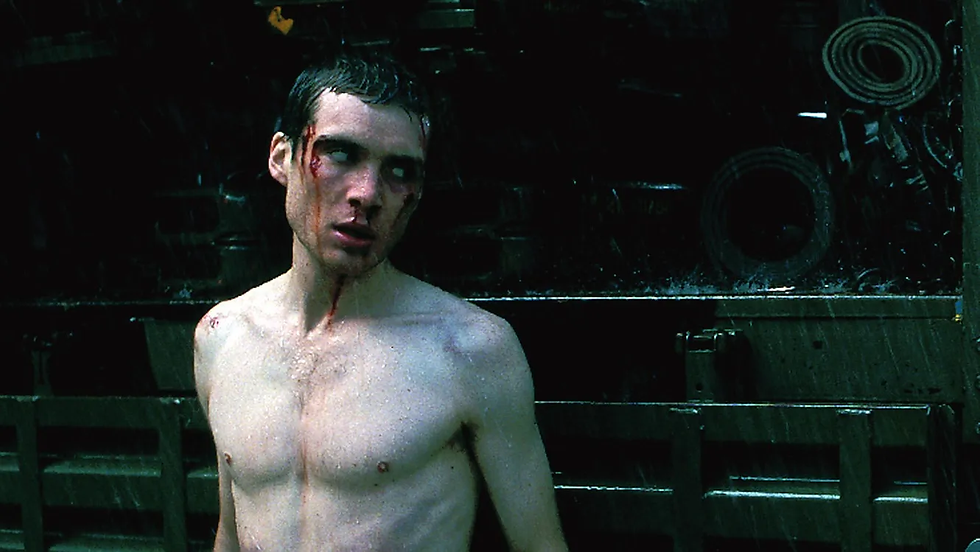
The premise remains strikingly simple. “Four weeks after a mysterious, incurable virus spreads throughout the United Kingdom, a handful of survivors come together in the hopes of finding sanctuary.” This concise synopsis belies the film’s deeper resonance, which lies not only in its depiction of societal collapse but also in its exploration of isolation, fear, and the fragile nature of human connection.
Murphy’s portrayal of Jim, a bicycle courier who awakens from a coma into a devastated world, is central to that impact. His performance captures a progression from confusion to resilience, embodying a character who must reconstruct his identity in the absence of any familiar structure. It is a role that, in retrospect, foreshadows many of the themes Murphy would continue to explore throughout his career.
The film also benefited from the creative partnership of Alex Garland and Danny Boyle, whose collaboration brought a distinctive visual and narrative style. Their approach—combining handheld digital cinematography with a raw, almost documentary-like tone—helped redefine the aesthetics of the genre and influenced a generation of filmmakers.
Alongside Murphy, the cast included Naomie Harris as Selena, Brendan Gleeson as Frank, Noah Huntley as Mark, and Megan Burns as Hannah. Each performance contributed to the film’s emotional texture, grounding its more extreme elements in recognisable human experience.

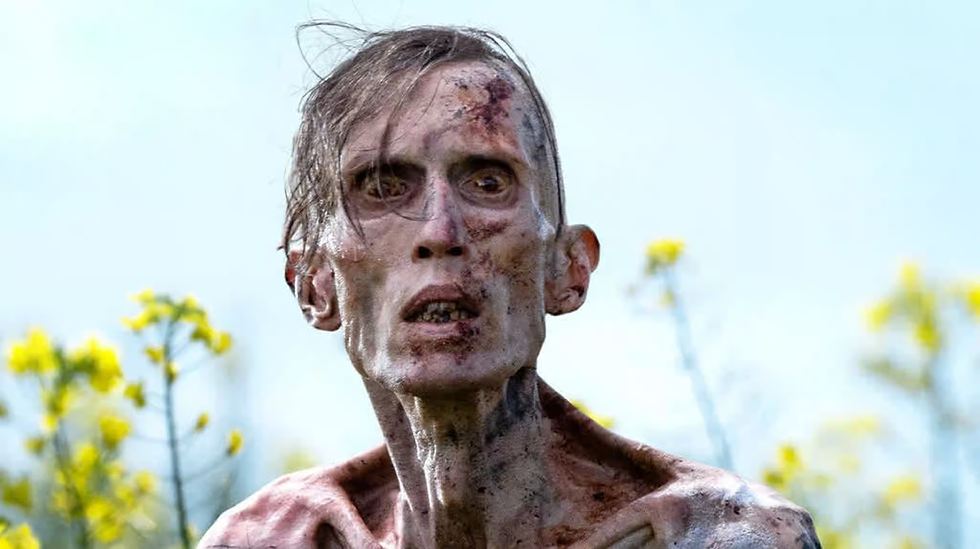
The film’s recent resurgence can be partly attributed to the release of its legacy sequels, including 28 Years Later and 28 Years Later: The Bone Temple. These continuations have prompted both new viewers and longtime fans to revisit the original, driving it back into the global top 10 on HBO Max. In doing so, they have reaffirmed its status as a foundational text within the genre.
For Murphy, this renewed attention serves as a reminder of the longevity of his work. Over a career spanning more than 25 years, he has consistently avoided the trappings of celebrity culture, focusing instead on the craft of acting. His collaborations with Christopher Nolan—including Inception and The Dark Knight trilogy—further cemented his reputation as a performer capable of inhabiting complex, often morally ambiguous characters.
Beyond the screen, Murphy’s personal life has remained notably private. He has been married to artist Yvonne McGuinness for many years, and the couple has two sons. Choosing to reside in Dublin rather than Los Angeles, Murphy has often spoken about his desire to maintain a sense of normalcy, distancing himself from the more performative aspects of fame.

This discretion has, in many ways, become part of his public image. In an era defined by constant visibility, Murphy’s reluctance to engage with social media or celebrity culture sets him apart. It also aligns with the qualities that define his performances—an inward focus, a preference for subtlety over spectacle.
If there have been controversies, they have been minimal and largely peripheral to his work. Murphy’s career has been characterized less by scandal than by consistency, a rare achievement in an industry where visibility often comes at the cost of stability. His choices suggest a deliberate effort to prioritize longevity over immediacy.
As 28 Days Later once again captures the attention of audiences worldwide, it becomes clear that its success is not merely a matter of nostalgia. Rather, it reflects the enduring relevance of its themes and the strength of the performances at its core. For Murphy, it is both a return to an earlier chapter and a testament to the coherence of his career.
In 2026, as he continues to navigate new projects and evolving roles, Murphy stands as an example of an actor whose work resists easy categorization. His journey from low-budget horror to award-winning historical drama, and back again to genre storytelling, illustrates a versatility that remains grounded in a consistent artistic vision.
Ultimately, the renewed prominence of 28 Days Later underscores a broader truth about cinema: that certain stories, and certain performances, retain their power regardless of time. In Murphy’s case, it also reaffirms his place as one of the most compelling actors of his generation—one whose past achievements continue to inform and enrich his present.


Comments