


Cillian Murphy reveals the truth behind Tommy Shelby: “It’s the most complicated characters that create great art” — but his real life couldn’t be more different!
- Apr 7
- 5 min read
In an industry often defined by visibility and performance beyond the screen, Cillian Murphy continues to stand apart with a rare combination of discretion and intensity. As he returns to one of his most iconic roles in Peaky Blinders: The Immortal Man, the actor offers a glimpse into both his artistic philosophy and the personal distance he maintains from the machinery of fame.
Asked whether he enjoys the promotional circuit that accompanies major film releases, Murphy responds with characteristic honesty. “I enjoy a considered chat about the themes and the work. That I enjoy. I think it's the more condensed version of it, it's very hard to soundbite something you've worked for years and years on. I guess I'm realizing, I guess I'm just quite a shy person. So that makes me maybe potentially a **** interviewee!” The remark, delivered with self-awareness, reflects a broader tension between the demands of publicity and his inward-focused approach to acting.

Far from being a reluctant or ineffective speaker, Murphy’s measured and thoughtful responses mirror the way he constructs his performances. Meeting him in London, in a neighborhood that once formed part of his everyday life, reveals an actor whose engagement with his craft extends beyond the screen. His presence is quiet but deliberate, much like the characters he inhabits.
Despite avoiding the spotlight in his personal life, Murphy’s performances consistently command attention. From Inception to Dunkirk and Oppenheimer, his filmography reflects a preference for psychologically complex roles. “They say acting is like the shy man's revenge,” he notes, suggesting that performance offers a space of freedom unavailable in everyday life. When asked if this is because he can become someone else, he simply replies, “I think so. I certainly feel very comfortable on stage, and very comfortable inhabiting somebody else's shoes.”
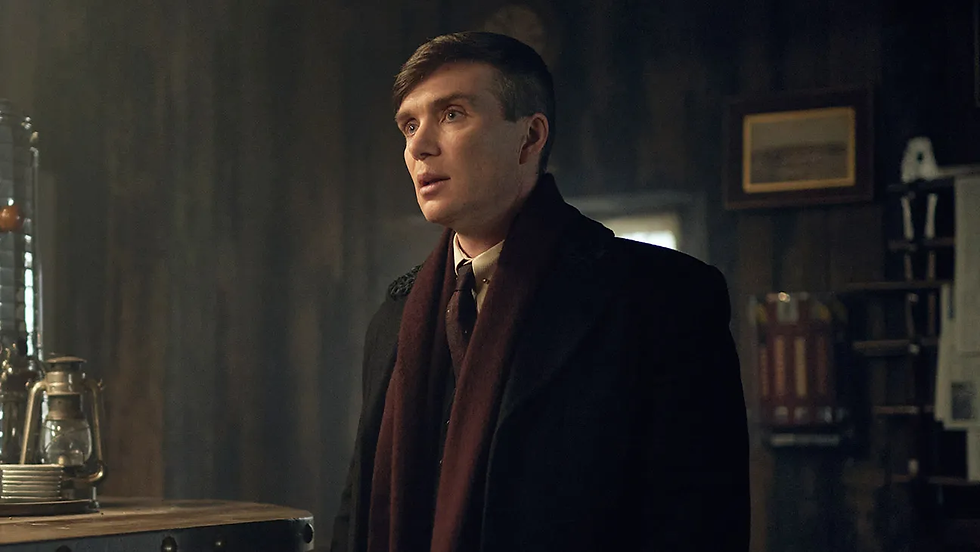
For over a decade, those “shoes” have belonged to Tommy Shelby, the enigmatic gang leader at the center of Peaky Blinders. What began in 2013 as a relatively modest BBC production evolved into a global phenomenon, eventually transitioning to Netflix and expanding its audience worldwide. Now, with the release of The Immortal Man, the story continues in cinematic form, introducing a new layer of conflict as Shelby confronts his own son, portrayed by Barry Keoghan.

Murphy approaches such a role with meticulous preparation. “I did an awful lot of reading about Britain between the wars, about the effects of what we now know as PTSD. And then you kind of have to figure out the physicality, figure out the walk, figure out the voice, figure out the costume, figure out the mannerisms, figure out the energy of the character, all that stuff.” The process, as he describes it, is both intellectual and physical, requiring a complete immersion into the character’s world.
Sustaining a role over such a long period raises questions about typecasting, but Murphy appears unconcerned. “Nah, I mean there's this adage in show business like, don't quit a hit, and I think that is correct. If something's working, audiences love it, the writing is good, you're still enjoying it, don't quit it, you know?” His perspective reflects a pragmatic understanding of both the industry and the relationship between actor and audience.
What draws Murphy most consistently, however, is complexity. “I think that's where good art exists, generally. Certainly in the art that I enjoy, it's never easy. It's a little tricky. It's not reductive, because human behavior is so weird. That's the stuff that I like.” This preference has shaped a career defined by characters who resist simplification, often existing in morally ambiguous or emotionally fraught spaces.
That inclination found perhaps its most visible expression in his portrayal of J. Robert Oppenheimer in Christopher Nolan’s film. To embody the physicist, Murphy underwent a physical transformation, losing weight to capture the gaunt intensity of a man grappling with the consequences of his own discoveries. The film’s success—both critically and commercially—culminated in Murphy receiving the Academy Award for Best Actor in 2024.

Yet even such recognition has not significantly altered his approach. “I don't really know,” he says when asked whether the Oscar relieves or adds pressure. “You know, I made a couple of films after 'Oppenheimer'… I suppose if it helped get those films… out into the world, if that helped, then I'll take that, I'll lean into that.” The award, while prestigious, is treated less as a defining achievement than as a tool to support future work.
He acknowledges the symbolic weight of the accolade. Being an “Academy Award-winner,” he says, is “one of those kind of iconic things in our industry. You just feel very humbled to be in that club, I suppose. I don't think about it very often!” The comment encapsulates his broader attitude toward success: appreciative, but not preoccupied.
Away from the screen, Murphy actively resists the trappings of celebrity. Living in Ireland with his wife, artist Yvonne McGuinness, and their two sons, he cultivates a life marked by routine and familiarity. “I like to run, walk the dog, meet my pals, go to the pub, you know, all the boring stuff!” The simplicity of this description contrasts sharply with the intensity of his on-screen personas.
His approach to fame is equally measured. “The less that people know about you, the more you can inhabit a character, you know?” he explains. “And just portray that character as honestly and convincingly as possible… And inevitably, that becomes a little bit eroded, I suppose, if you're in more high-profile work, but you try and preserve it as best as you can.” The tension between visibility and authenticity remains a constant negotiation.
Maintaining that balance is not without challenges. “I guess so, yeah. I don't know, there's a tension always,” he admits when pressed on how he navigates high-profile projects. It is a tension familiar to many actors, but one that Murphy confronts with a deliberate effort to remain grounded.
Even in the digital age, he avoids excessive exposure. Despite becoming the subject of online memes—often centered on his distinctive features—he remains detached from such commentary. “Well, I mean, what can I do with that? I don't pay any attention to that, honestly. Just try and make the work, you know.” The response underscores his focus on what he can control: the quality of his performances.
When it comes to public perception, Murphy displays a certain discomfort. Compliments about his appearance are met with deflection rather than engagement. “Yeah, I guess, but again, it's like I have no point of view really on that. It is just embarrassing.” His reaction reflects a broader reluctance to engage with the more superficial aspects of fame.
Instead, he returns consistently to the craft. “You do take the work deadly seriously, and you promote the work because you want people to see it, and then you just go quiet,” he says. This rhythm—intense focus followed by withdrawal—defines his professional life, allowing him to sustain both productivity and privacy.
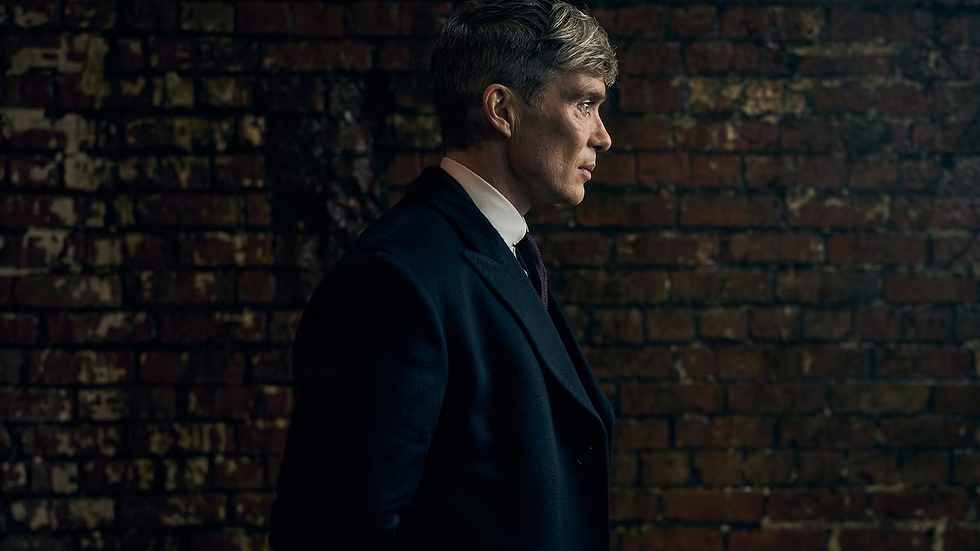
Murphy’s career, now spanning more than two decades, illustrates the possibility of longevity without overexposure. From early roles in independent cinema to major studio productions, he has navigated the industry with a clear sense of purpose. His collaborations with directors like Christopher Nolan and his continued involvement in character-driven projects reflect a consistent artistic vision.
In an era where celebrity often extends beyond the work itself, Murphy’s restraint offers an alternative model. His commitment to complexity, both in the characters he chooses and the way he approaches them, reinforces his belief that “that’s where good art exists.” It is a philosophy that continues to guide his choices, shaping a body of work that remains both cohesive and compelling.
As Peaky Blinders: The Immortal Man reaches audiences, it does so not only as a continuation of a beloved story but also as another chapter in Murphy’s evolving career. His portrayal of Tommy Shelby, layered and enduring, stands as a testament to the depth he brings to his roles—a depth that, much like the man himself, resists easy definition.


Comments