


Blake Lively unexpectedly drags Justin Baldoni back to court just weeks after their settlement agreement.
- Jun 2
- 5 min read
Blake Lively and Justin Baldoni have found themselves back in the legal spotlight only weeks after reportedly settling their highly publicized and emotionally charged court battle, as a judge has now ordered both parties to return to a Manhattan courtroom to address unresolved financial matters connected to the case. The renewed legal development adds another chapter to a dispute that has already spanned multiple lawsuits, countersuits, and a prolonged public narrative surrounding one of Hollywood’s most closely watched on-set conflicts in recent years.
According to court documents, Judge Lewis Liman has directed the former co-stars of “It Ends With Us” to appear in court to address damages tied to Baldoni’s dismissed $400 million defamation lawsuit against Lively. The order specifically centers on Lively’s request for Baldoni to cover her legal fees and associated costs incurred during the defamation proceedings, signaling that although a broader settlement was reached earlier, key financial disagreements remain unresolved.

The filing indicates that Lively, 38, is seeking reimbursement of legal expenses in addition to further financial remedies, including triple damages and punitive damages. While the exact total amount she is pursuing has not been publicly clarified, the scope of the request suggests that the financial dimension of the dispute continues to evolve even after the primary claims were officially settled earlier this year.
Representatives for both Lively and Baldoni have not publicly commented on the latest court order. The silence from both camps reflects a broader pattern that has characterized much of the legal battle, where official statements have often been minimal while legal filings and court proceedings have carried the narrative forward.
The current development follows a settlement reached in early May 2026, which initially appeared to close a turbulent chapter between the two actors. At the time, both sides signaled victory in the resolution of the case, even as interpretations of the outcome diverged sharply between their respective legal teams.
The dispute traces back to a sexual harassment lawsuit filed by Lively in December 2024 against Baldoni, who not only starred alongside her in “It Ends With Us” but also directed the film. In her complaint, Lively alleged misconduct on set, initiating a legal process that quickly escalated into a broader confrontation involving multiple parties and competing claims.
Baldoni denied the allegations and responded in January 2025 with a $400 million countersuit against Lively, her husband Ryan Reynolds, and their publicist Leslie Sloane. His claims included defamation, extortion, and additional allegations tied to the production and promotion of the film. The countersuit significantly expanded the scope of the conflict, transforming what began as a workplace dispute into one of the most high-profile Hollywood legal battles in recent memory.

However, in June 2025, Judge Lewis Liman dismissed Baldoni’s countersuit. In his ruling, the judge stated that Baldoni and his Wayfarer Studios production company “have not alleged that Lively is responsible for any statements other than the statements in her [California Civil Rights Department] complaint, which are privileged.” This decision marked a pivotal moment in the case, weakening Baldoni’s legal position while allowing Lively’s claims to remain central to ongoing proceedings.
Despite the dismissal, the broader legal conflict persisted for months before culminating in the May 2026 settlement. At that time, court appearances scheduled for mid-May were canceled after both parties reached an agreement, though the terms of the settlement were not fully disclosed publicly. What became clear, however, was that neither side received a financial payout from the other, despite the extensive litigation costs accumulated throughout the process.
Reports indicated that the combined legal expenses reached approximately $60 million over the course of the 18-month dispute. Even so, the settlement was framed by both parties as a form of victory, albeit for different reasons. Baldoni’s attorney, Bryan Freedman, described the outcome as a “huge victory,” suggesting that Lively’s decision to settle reflected reluctance to proceed to trial.
“It was an incredible opportunity,” he told TMZ Live. “and I don’t think you pass up an incredible opportunity.”
In response, Lively’s legal team strongly rejected that characterization, instead describing the resolution as a vindication of their client’s claims. “By admitting that Ms. Lively’s concerns ‘deserved to be heard,’ the defendants have ended once and for all the fiction that Ms. Lively ‘fabricated’ claims of sexual harassment and retaliation,” her lawyers stated in remarks provided to Page Six. They also referred to the settlement as a “resounding victory” for the actress.
The renewed court order now reopens questions about the financial aftermath of the case, particularly in relation to attorney fees and damages. Legal analysts have noted that such post-settlement proceedings are not uncommon in complex civil disputes, especially when multiple claims are dismissed, modified, or resolved without a fully detailed financial agreement.

Beyond the courtroom, the case has significantly impacted the public profiles of both Lively and Baldoni. Blake Lively, widely known for her role in “Gossip Girl” and later film work such as “A Simple Favor,” has long maintained a public image centered on glamour, family life, and entrepreneurial ventures alongside her husband, actor Ryan Reynolds. The legal dispute, however, has introduced a more contentious narrative into her public persona, drawing increased media scrutiny into her professional relationships and on-set experiences.
Lively and Reynolds, who married in 2012, have often been regarded as one of Hollywood’s most influential power couples, balancing successful acting careers with high-profile business and philanthropic endeavors. The couple shares four children and has frequently projected an image of stability and humor in public appearances and social media interactions. The ongoing legal battle, however, has temporarily shifted attention toward more serious aspects of Lively’s professional life.
Justin Baldoni, meanwhile, has built his career both as an actor and director, gaining recognition for his work in projects such as “Jane the Virgin” and later expanding into directing emotionally driven dramas, including “It Ends With Us.” His involvement in the film placed him in dual roles as both creative lead and co-star alongside Lively, a dynamic that later became central to the legal conflict.
In addition to his work in film and television, Baldoni has also been active in producing socially conscious media and speaking publicly on topics related to masculinity and emotional vulnerability. The allegations and countersuits have therefore added complexity to his public image, particularly as the dispute unfolded across multiple legal and media platforms.
The evolution of the case reflects a broader trend in Hollywood where workplace disputes increasingly transition into high-stakes legal battles involving defamation claims, counter-litigation, and extensive public commentary. In such cases, legal outcomes often extend beyond courtroom rulings to influence reputations, media narratives, and professional opportunities for those involved.
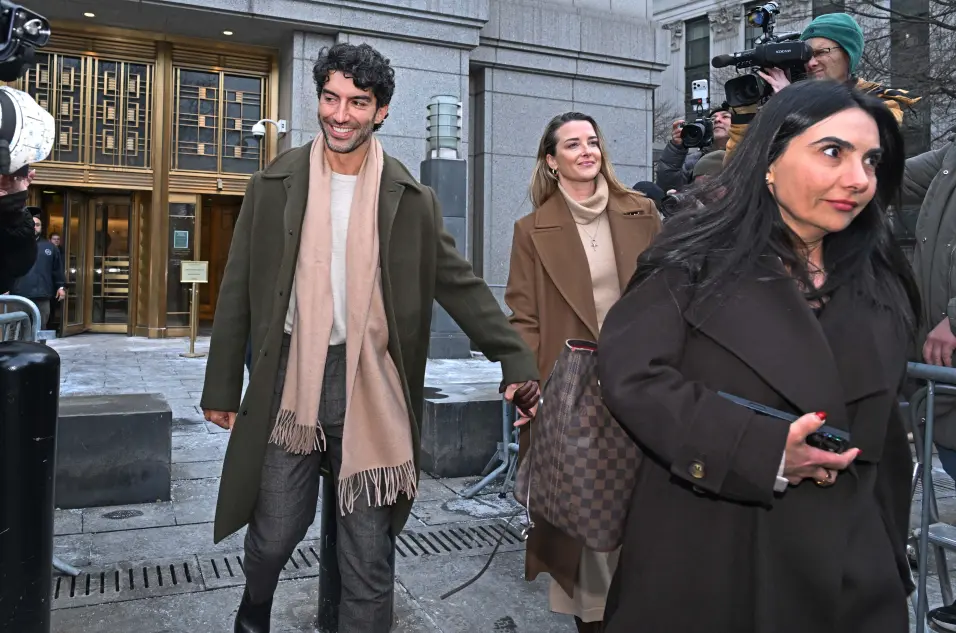
As Lively and Baldoni prepare to return to court, the focus has shifted from the original allegations to the financial and procedural consequences of the case. The judge’s order suggests that while the primary dispute may have been formally settled, its legal and economic implications remain unresolved.
For now, both actors continue to navigate the aftermath of a conflict that has spanned nearly two years, multiple filings, and significant public attention. Whether the upcoming court appearance leads to a final resolution or further legal complexity remains to be seen, but the case has already established itself as one of the most closely followed Hollywood legal disputes in recent memory, with implications that continue to unfold beyond the original settlement agreement.



Comments