


Billy Idol performs at the AMAs for the first time in decades: the rock legend’s emotional message leaves audiences deeply moved.
- May 28
- 6 min read
Billy Idol received one of the most emotional honors of his long career at the 52nd American Music Awards, where the legendary rocker was presented with the Lifetime Achievement Award in recognition of his decades-long influence on music and popular culture. Appearing onstage in Las Vegas before an audience filled with artists from multiple generations, Idol delivered a speech that blended gratitude, reflection, and encouragement, while also reminding viewers why his rebellious image and unmistakable sound have remained culturally relevant for nearly half a century.
The ceremony marked a particularly significant moment for Idol not only because of the award itself, but because it also coincided with a renewed period of visibility in his career. At 70 years old, the British rocker continues to tour, release music, and attract new generations of listeners who have discovered his work through streaming platforms, documentaries, and renewed interest in classic rock culture. His appearance at the American Music Awards reflected the rare longevity of an artist who successfully survived multiple eras of the music industry while maintaining a recognizable identity.
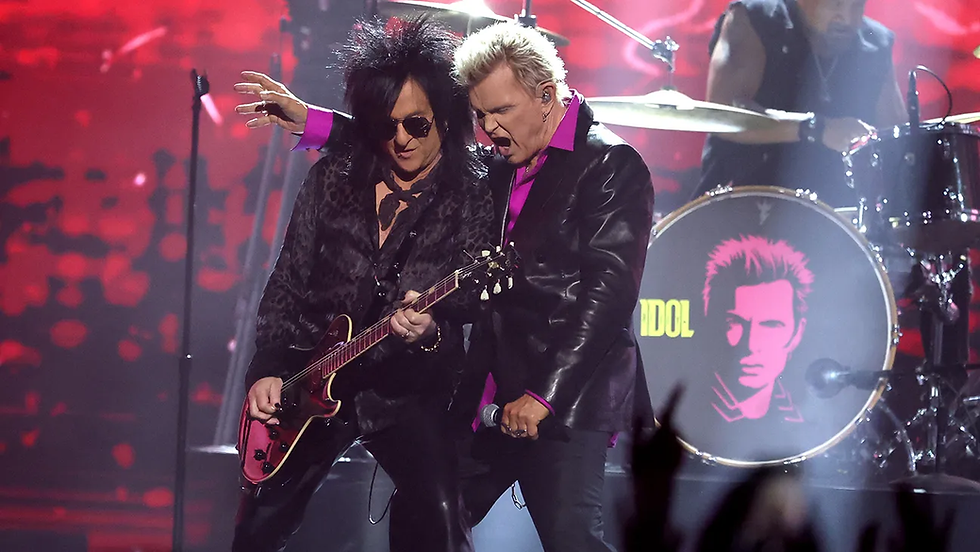
During the ceremony, actor and musician Leon Thomas presented Idol with the honor and reflected on his personal connection to the singer’s music. Thomas explained that his relationship to Idol’s work stemmed partly from his parents’ involvement with the Black Rock Coalition, an organization created to support Black rock musicians and broaden conversations around diversity within rock music culture.
Taking the stage after the introduction, Idol immediately acknowledged both the organization and the audience that supported him throughout his career. “Thank you, Leon. I remember the Black Rock Coalition. It really did a lot for a lot of people,” Idol said. “Thank you to the American Music Awards for this honor. And most importantly, thank you to all the fans. I've been able to live my dream and it's really all because of you.”
The speech quickly evolved into a reflection on the uncertainty that surrounded the early punk movement in the 1970s. Idol recalled how little he and his contemporaries expected their music to last when they first entered the scene. “When I started out in punk rock, back in 1976, we thought it may only last about 6 months, let alone 50 years. But we were doing it for the love and because music was the only thing that gave us a sort of feeling of freedom, a sense of freedom.”
He continued by describing the idealism that defined the early punk era and the belief that artistic passion could reshape a person’s life. “We believed in what we were doing, and we thought maybe if we just dreamed into this life and gave it everything we had, it would give it all back to us in spades. And that's exactly what happened.”
Idol then shifted his attention toward younger musicians and aspiring artists watching the ceremony. “So to any kid out there who loves rock and roll or any music of any kind as much as Leon and I do, and if you're inspired to create that sense of freedom and pursue a life of art, all I can say is pick an instrument. Find out who you are and be it.”

The speech concluded with a direct acknowledgment of his longtime collaborator and guitarist Steve Stevens, whose partnership with Idol has become one of the most enduring creative relationships in rock music. “Thank you for rock and roll, thank you to everyone,” Idol said before turning toward Stevens. “And now Steve, show them what a hit song sounds like, will you?”
Following the speech, Idol delivered a medley performance featuring some of the songs most closely associated with his career, including “Eyes Without a Face” and “Dancing with Myself.” The appearance marked his first-ever performance at the American Music Awards and his first time attending the ceremony since 2004. Despite decades in the music industry, the performance highlighted how rarely Idol has participated in mainstream awards-show culture compared to many artists of his generation.
The American Music Awards also emphasized Idol’s continuing impact on music history through an official statement from executive producers Barry Adelman and Alexi Mazareas of Dick Clark Productions. “Billy Idol is a true rock legend whose influence has transcended generations and genres. From his groundbreaking music to his electrifying stage presence, Billy has left an indelible mark on popular culture and the music industry,” the statement read. “We are thrilled to honor him with the Lifetime Achievement Award at the 52nd American Music Awards and celebrate his legacy with what promises to be an unforgettable performance.”
A separate press release described the award as recognition of Idol’s “incomparable career, body of work, and unparalleled contributions to music,” while highlighting the lasting influence he continues to have on artists and audiences decades after his rise to fame.
Idol’s career began during one of the most transformative periods in British music history. Before becoming a solo star, he first gained attention as the frontman of Generation X, a punk band formed in the late 1970s that combined rebellious energy with pop accessibility. The group released three albums between 1977 and 1981 and became associated with the first wave of British punk culture alongside bands emerging from London’s rapidly evolving underground music scene.
Unlike many punk artists whose careers faded with the movement itself, Idol successfully transitioned into mainstream solo success during the 1980s. His self-titled debut solo album in 1981 introduced audiences to a version of punk-infused rock that balanced aggression with commercial appeal. Songs like “White Wedding,” “Rebel Yell,” and “Eyes Without a Face” helped define MTV-era rock culture, while his bleached hair, leather aesthetic, and sneering vocal style transformed him into one of the decade’s most recognizable music personalities.

Part of Idol’s enduring fascination lies in the contradictions within his public image. Though associated with rebellion, danger, and excess, he also demonstrated a strong instinct for reinvention and survival. Throughout the 1980s and early 1990s, his lifestyle became deeply connected to the excesses commonly associated with rock stardom, including heavy drug use and destructive behavior that frequently threatened both his health and career.
One of the most defining moments of his personal life occurred in 1990 when Idol was involved in a serious motorcycle accident in Los Angeles. The crash nearly resulted in the loss of his leg and forced him into a long recovery period. The accident became symbolic of a broader turning point in his life, as the physical consequences of years spent living recklessly became increasingly difficult to ignore.
In later interviews, Idol spoke openly about addiction, self-destruction, and the darker realities behind the glamorous image associated with rock fame. Unlike some artists who attempted to erase those years from their public narrative, Idol often addressed them directly, acknowledging both the damage caused and the lessons learned through survival.
His openness about aging within rock culture has also contributed to his continued relevance. While many artists from his generation struggled to adapt to changing audiences and music trends, Idol embraced the idea of legacy without fully abandoning the rebellious spirit that originally defined him. His performances today often balance nostalgia with self-awareness, allowing longtime fans to reconnect with familiar music while introducing younger listeners to his catalog.
In 2025, Idol released the album Dream Into It, continuing a late-career creative resurgence that surprised some industry observers. Rather than relying exclusively on nostalgia tours, he remained actively involved in recording and artistic collaboration, reinforcing the idea that his career extends beyond simply revisiting past successes.
The same year also saw the release of the documentary Billy Idol Should Be Dead, which explored the highs and lows of his life and career in greater detail. The documentary examined not only his musical achievements but also the personal chaos, addiction struggles, and survival story that shaped his public identity. For many viewers, the project offered a more vulnerable and reflective portrait of a figure long associated primarily with swagger and rebellion.

Another major milestone awaits Idol later this year as he prepares to be inducted into the Rock and Roll Hall of Fame in November. The induction further solidifies his place among the defining rock artists of his era and represents institutional recognition that punk-influenced artists once rarely received within mainstream music establishments.
The broader context of the 2026 American Music Awards also reflected the increasingly diverse landscape of modern music culture. Hosted by Queen Latifah at the MGM Grand Garden Arena in Las Vegas, the ceremony featured artists from multiple genres and generations. Taylor Swift entered the night as the most-nominated artist with eight nominations, while Morgan Wallen, Olivia Dean, Sabrina Carpenter, and Sombr each received seven nods.
Yet amid the contemporary stars dominating charts and social media, Billy Idol’s appearance served as a reminder of rock music’s enduring cultural mythology. His speech about freedom, identity, and artistic purpose resonated precisely because it reflected experiences extending beyond commercial success. For Idol, music was never presented simply as entertainment, but as a form of personal liberation and self-definition.
That message may ultimately explain why his influence continues decades after the height of his commercial fame. Across changing musical eras, shifting industry structures, and evolving cultural conversations, Billy Idol has remained connected to an idea that still resonates with audiences: the belief that music can offer both escape and identity at the same time.
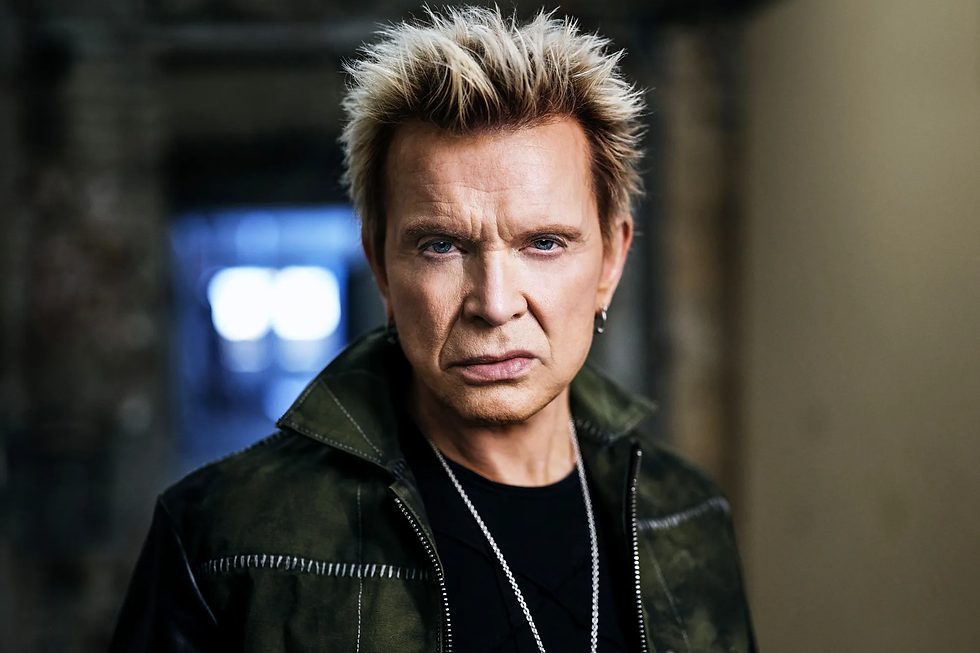
At the American Music Awards, the standing ovation he received suggested that his legacy is no longer viewed solely through the lens of nostalgia. Instead, Idol now occupies a space reserved for artists whose careers represent not just a soundtrack to a specific era, but a larger story about survival, reinvention, rebellion, and the enduring power of rock and roll itself.



Comments