


Quote of the day by Cillian Murphy: “Trust your instincts over logic—what feels right is right,” says the Oppenheimer and Peaky Blinders star.
There are moments when an inner voice feels stronger than reason itself, guiding people toward choices that logic may struggle to justify. This powerful sense of instinct can cut through fear, hesitation, and endless analysis, even when the path ahead appears uncertain or risky. Following intuition often demands immense bravery, as outcomes are never guaranteed and consequences remain unpredictable. Yet, trusting that deeper calling can sometimes lead to growth. Rather than allowing doubt to dominate every decision, there is value in embracing your gut feeling. Cillian Murphy champions this belief, urging people to trust their inner compass.
During a SAG-AFTRA Foundation Conversations podcast released in 2024, the Irish actor was asked what guidance he would offer his 21-year-old self. In his response, Murphy shared a deeply thoughtful piece of wisdom, offering inspiration for navigating life’s uncertainties. He said, “Believe your instincts. Instinct, instinct, instinct over intellect. Always instinct. Just because you can rationalise it doesn't mean it's right. If you feel it, then it's right.”

Murphy highlights the power of instinct as a deeper form of personal truth. He suggests that while logic can explain many choices, it does not always lead to the path that aligns with one’s authentic self. Inner intuition often cuts through fear, social pressure, and overanalysis. In real life, this can apply to career shifts, relationships, or creative pursuits where the safest logical option may not feel genuinely right. Trusting internal guidance requires courage, but it can often lead to more meaningful decisions and personal fulfilment than reason alone.
He also challenges the idea that every decision should be based purely on intellectual analysis. People often justify choices that appear sensible on paper while ignoring emotional truth or personal values. In modern life, this can result in staying in unfulfilling jobs, unhealthy relationships, or fear-based routines simply because they seem practical. His perspective reminds individuals that wisdom is not solely about logic, but also about emotional awareness. Balancing thought with instinct can create decisions that are not only rational but deeply aligned with one’s purpose and well-being.
Born on May 25, 1976, in Cork, Ireland, Murphy’s early life did not immediately point toward a career in acting. His first passion was music, and as a teenager, he immersed himself in bands, exploring songwriting and performance with the same intensity that would later define his acting career. For a time, he even considered pursuing music professionally, a path that seemed more tangible to him than the unpredictability of the stage or screen.
However, his trajectory shifted while studying law at University College Cork. It was there that he became involved in theatre, discovering a creative outlet that resonated more deeply than his academic pursuits. Acting quickly transformed from a casual interest into a calling. By 1996, he had made his professional stage debut, performing in productions across Cork, Dublin, and London. These early years in theatre helped him develop the discipline and emotional depth that would later become hallmarks of his screen performances.
Murphy’s breakthrough came with 28 Days Later, directed by Danny Boyle. His portrayal of Jim, a survivor navigating a post-apocalyptic world, introduced him to international audiences and established him as a compelling new presence in cinema. The role required both vulnerability and intensity, qualities that Murphy delivered with striking authenticity. It marked the beginning of a career defined by carefully chosen, often unconventional roles.

In the years that followed, Murphy continued to build an impressive filmography. He appeared in Batman Begins, working with Christopher Nolan for the first time, as well as in Red Eye and Inception. His collaborations with Nolan would become a defining aspect of his career, with the director repeatedly casting him in complex, psychologically rich roles that allowed him to explore a wide emotional range.
Despite his growing success in film, it was television that brought Murphy into millions of homes worldwide. In 2013, he took on the role of Thomas Shelby in Peaky Blinders, a character that would become iconic. As the leader of a post-World War I gang in Birmingham, Shelby is both ruthless and introspective, a man driven by ambition yet haunted by trauma. Murphy’s portrayal earned widespread acclaim for its subtlety and intensity, cementing his reputation as one of the most compelling actors of his generation.
The success of Peaky Blinders transformed Murphy into a global star, yet he remained notably private, avoiding the trappings of celebrity culture. Unlike many actors of his stature, he has consistently chosen to live outside the spotlight, prioritizing his craft over fame. This deliberate distance from Hollywood’s social scene has contributed to an air of mystery that surrounds him, reinforcing his image as an artist rather than a celebrity.
His career reached another milestone with Oppenheimer, once again directed by Christopher Nolan. In the film, Murphy portrays J. Robert Oppenheimer, the theoretical physicist often referred to as the “father of the atomic bomb.” The role demanded a profound psychological transformation, as Murphy delved into the moral complexities and internal conflicts of a man whose work changed the course of history. His performance was widely praised for its nuance and emotional depth, ultimately earning him the Academy Award for Best Actor.
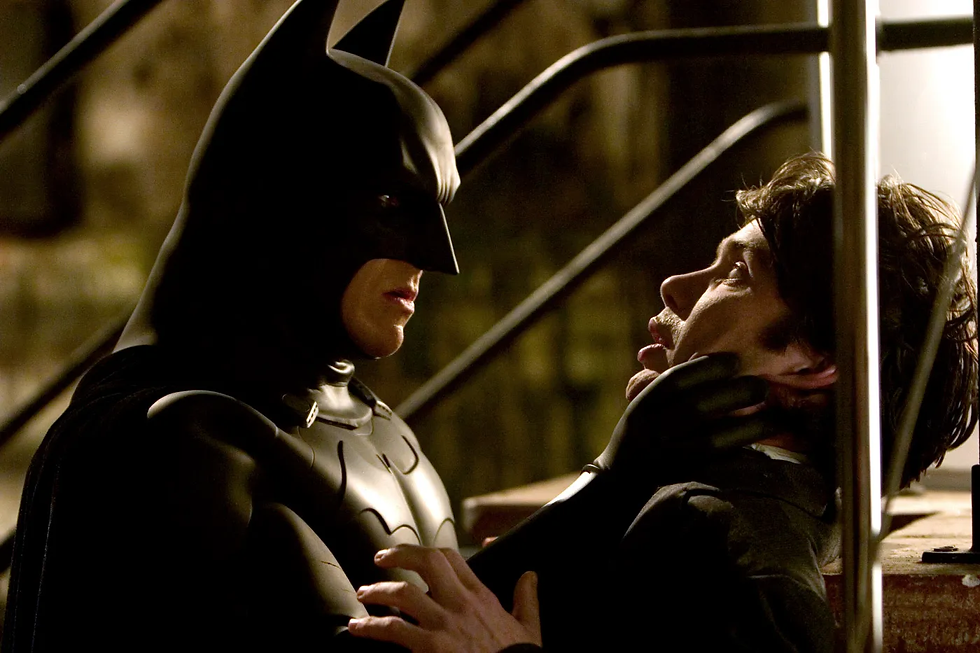
Murphy’s approach to acting has always been rooted in instinct, mirroring the philosophy he shared in his quote. Rather than relying solely on intellectual analysis, he often speaks about the importance of feeling his way into a character, allowing intuition to guide his choices. This method has resulted in performances that feel deeply authentic, resonating with audiences on an emotional level.
Beyond his professional achievements, Murphy’s personal life reflects a similar commitment to authenticity and balance. He has been married to visual artist Yvonne McGuinness since 2004, and the couple shares two sons. Unlike many public figures, Murphy has chosen to keep his family life largely out of the spotlight, emphasizing the importance of privacy. He has often spoken about his preference for a quiet, grounded lifestyle, far removed from the pressures of Hollywood.
This decision to prioritize family and personal well-being over constant public visibility aligns with his broader philosophy about trusting one’s instincts. While the entertainment industry often encourages visibility and self-promotion, Murphy has consistently followed his own path, making choices that reflect his values rather than external expectations. It is a stance that has earned him respect both within and outside the industry.
Throughout his career, Murphy has largely avoided controversy or scandal, a rarity in an era where public figures are frequently scrutinized. His reputation is built on professionalism, dedication, and a clear sense of identity. This stability has allowed him to focus on his work, cultivating a body of performances that speak for themselves without the need for sensational headlines.
At the same time, Murphy has not shied away from discussing the challenges that come with his profession. He has acknowledged the pressures of fame and the demands of maintaining a long-term career in a competitive industry. Yet, his perspective remains grounded, often returning to the idea that intuition can serve as a guiding force in navigating these complexities.

His journey from a music-loving teenager in Cork to an Oscar-winning actor illustrates the very principle he advocates. At several points in his life, Murphy could have chosen more conventional paths—continuing his law studies, pursuing music more aggressively, or conforming to Hollywood expectations. Instead, he followed his instincts, even when the outcomes were uncertain.
This emphasis on instinct does not imply a rejection of intellect, but rather a call for balance. Murphy’s career demonstrates that thoughtful decision-making and emotional awareness can coexist, creating a more holistic approach to life and work. It is a perspective that resonates beyond the realm of acting, offering a framework for navigating the complexities of modern life.
In an age defined by information overload and constant analysis, his words serve as a reminder that not all answers can be found through logic alone. There is a quiet power in listening to one’s inner voice, even when it contradicts conventional wisdom. For Murphy, this inner compass has been a source of clarity, guiding him through both personal and professional challenges.

As his career continues to evolve, Murphy remains committed to roles that challenge him, projects that resonate with him, and a lifestyle that reflects his values. Whether on stage, on screen, or in his personal life, he embodies the principle he articulates so simply: “If you feel it, then it’s right.”
In the end, Murphy’s story is not just about success in the entertainment industry, but about the courage to trust oneself. It is a narrative shaped by instinct, refined by experience, and grounded in authenticity. Through his work and his words, he offers a perspective that feels increasingly relevant—a reminder that, sometimes, the most important decisions are not the ones that make the most sense, but the ones that feel the most true.

Comments