


PHIL COLLINS AND PAUL MCCARTNEY END 24-YEAR FEUD
Phil Collins and Paul McCartney have finally put an end to their long-running feud, 24 years after an awkward encounter at Buckingham Palace turned a signed book into the unlikely source of a bitter disagreement. According to Collins, the two musicians spoke on the phone in early 2026 and finally cleared the air over a story that had lasted far longer than anything said during a brief meeting should have. Appearing on Piers Morgan Uncensored, Collins admitted that McCartney may never have intended to offend him, while also acknowledging that he probably gave the remark more significance than it deserved. After more than two decades, the seemingly minor incident has finally been put into perspective.
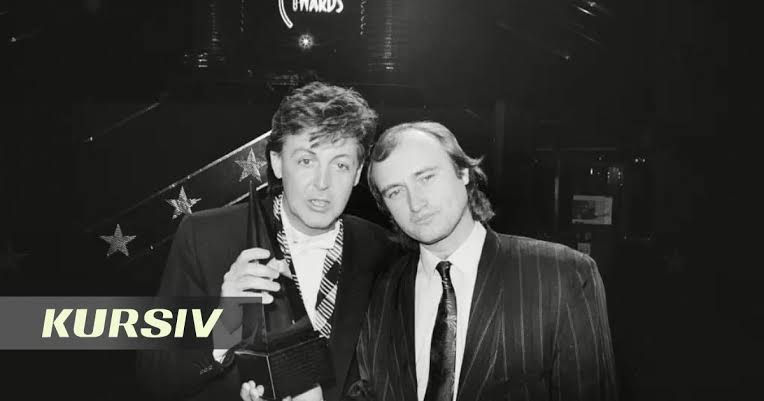
The story began in 2002, when artists were rehearsing for Queen Elizabeth II’s Golden Jubilee concert. Collins had brought along a rare first edition of a book about The Beatles written by Hunter Davies, a gift from his former wife Jill Tavelman. As a music fan, Collins wanted McCartney to sign it. When McCartney arrived with his then-wife Heather Mills, Collins handed him the book and asked for an autograph. McCartney signed it and then said: “He’s a big fan, our little Phil.” Collins heard the comment in an entirely different way. He felt he had been treated as someone small, almost like a young fan standing in front of a legendary musician he admired. His private reaction at the time was even more direct: “You a--hole.”
Years later, Collins admitted that McCartney may not have meant the remark in the way he had understood it at the time. “He probably didn’t mean it like it sounded,” Collins told Piers Morgan. He also looked back on his own reaction with striking honesty: “I probably made more of it than he meant. I did make more of it.” The problem was that a moment lasting only a few seconds did not disappear when the concert ended. It became a story Collins carried with him for years, eventually resurfacing publicly in 2016 as he promoted his memoir Not Dead Yet. In an interview with The Sunday Times, Collins said McCartney had treated him “condescendingly” and recalled the entire Buckingham Palace incident.
After that interview, McCartney reached out to Collins by email to discuss the issue. Collins did not respond. As a result, a comment made back in 2002 continued to exist in the public history of both men without a direct conversation to resolve it. While Collins regarded the incident as an insult, McCartney apparently did not believe there was a serious problem between them. Both musicians continued along their own paths, each having already secured such a significant place in British music history that a personal disagreement could hardly affect their careers. Yet the story of “our little Phil” remained, an unusual detail in the relationship between two generations of musicians.
The opportunity to finally resolve everything came in early 2026, when McCartney learned that Collins was collecting memorabilia for an auction to raise money for The King’s Trust. McCartney called Collins, and during the conversation, he brought up the old issue himself. Collins said he almost knew what was coming when McCartney introduced the subject with the words: “While we’re on the phone...” McCartney then asked directly: “What is all this about?” Collins no longer tried to defend the anger he had carried for decades. He replied: “I wish I’d never said it, Paul. I wish I’d never said it.” McCartney responded: “I thought we were good, you know.” That was enough for the two men to close the chapter. “So we kissed and made up,” Collins recalled.
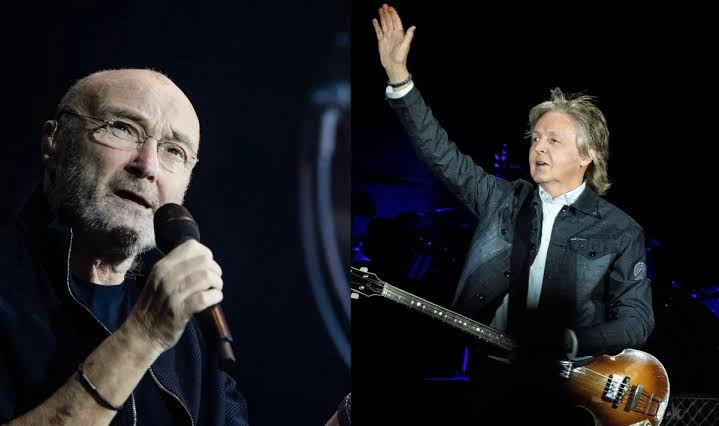
The reconciliation is notable not only because it brings a 24-year feud to an end, but also because it happened in a very different way from the way celebrity disputes often conclude. There was no lengthy joint statement, no lawyers, no carefully arranged interview and no public event designed to prove that the two men had made peace. McCartney has not publicly commented on the reconciliation, but Collins said they are now on good terms again. After so many years of looking back, what remains of the story seems to be less about the insult itself and more about the realization that both men allowed a misunderstood moment to survive for far too long.
Behind the story involving McCartney is a Phil Collins who has experienced a long and turbulent career, giving him a very different perspective on the conflicts of his past. Collins first became famous with Genesis, the band he joined in 1970 as a drummer. After Peter Gabriel left the group in 1975, Collins gradually took over as lead vocalist and helped Genesis enter one of the most successful periods in the band’s history. Albums such as A Trick of the Tail, And Then There Were Three, Duke, Abacab, Genesis and Invisible Touch transformed Genesis from a progressive rock band into one of the biggest names in popular music. Collins played drums, sang and contributed to songwriting, creating an image quite different from that of a conventional frontman.
The success of Genesis also opened the door to Collins’ solo career. In 1981, he released Face Value, an album featuring “In the Air Tonight”, one of the most recognizable recordings of his career. It was followed by a string of successful songs including “Against All Odds”, “Easy Lover”, “Sussudio” and “You Can’t Hurry Love”. For years, Collins became one of the most prominent figures in international pop-rock, with record sales estimated at around 150 million worldwide. That success also made him a controversial figure among critics, particularly as some listeners and reviewers came to regard his music as a symbol of 1980s pop.
Collins’ reputation therefore existed in a complicated state. He had hit songs known by millions, won major awards and successfully moved between the roles of drummer, singer, songwriter and producer. At the same time, his public image was mocked within parts of popular culture. Collins later acknowledged that the negative reaction affected him more than outsiders might have realized. In Not Dead Yet, he looked back on that period with self-deprecating honesty, admitting: “I realise in hindsight just how bloody annoying I was.” He understood that appearing everywhere, from Genesis to his solo career and other projects, could make some members of the public feel that he was simply too visible.
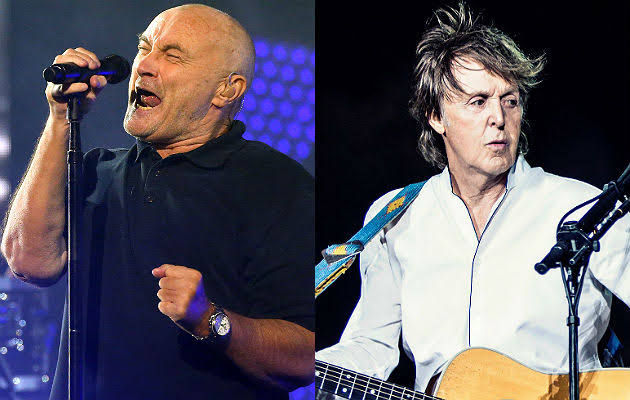
Collins’ personal life also became a frequent subject of media attention. He married three times and has five children. His first marriage to Andrea Bertorelli ended in 1980 after the couple had a child. Collins later married Jill Tavelman in 1985, and they had a daughter, Lily Collins, who went on to become a successful actress. His second marriage ended in a highly publicized divorce, partly because of the story that Collins sent a fax to his wife as their relationship was breaking down. The detail later became one of the most frequently repeated anecdotes about his private life.
His third marriage to Orianne Cevey brought Collins into another very different chapter. The couple married in 1999 and had two sons, Nicholas and Matthew. They divorced in 2008, with British media reporting a settlement worth as much as £25 million, one of the largest celebrity divorce payouts discussed in Britain at the time. Following the split, Collins went through a difficult period emotionally and physically, during which he admitted that he had been drinking heavily. Those upheavals contributed to his withdrawal from music for a period of time.
What made Collins’ relationship with Cevey particularly complicated was that it later went through another unexpected turn. In 2016, the two reunited and discussed the possibility of marrying again. Collins acknowledged at the time that after their separation, they had realized they still missed each other and believed their decision to divorce may have been a mistake. Cevey also said: “Our separation was the wrong decision.” Their relationship demonstrated that Collins’ personal life was far from a simple journey from marriage to divorce, instead moving through repeated periods of separation, reconciliation and change.
The years that followed challenged Collins in another way: his health. A spinal and nerve-related injury caused serious problems with his left hand, directly affecting his ability to play drums. After decades behind the drum kit, the instrument that had been inseparable from Collins’ musical identity became something he could no longer play as he once had. When he returned to the stage, he mainly focused on singing, with his son Nicholas playing drums alongside him. In 2016, Collins said: “I don’t think I’ll ever be able to play the way I used to.”
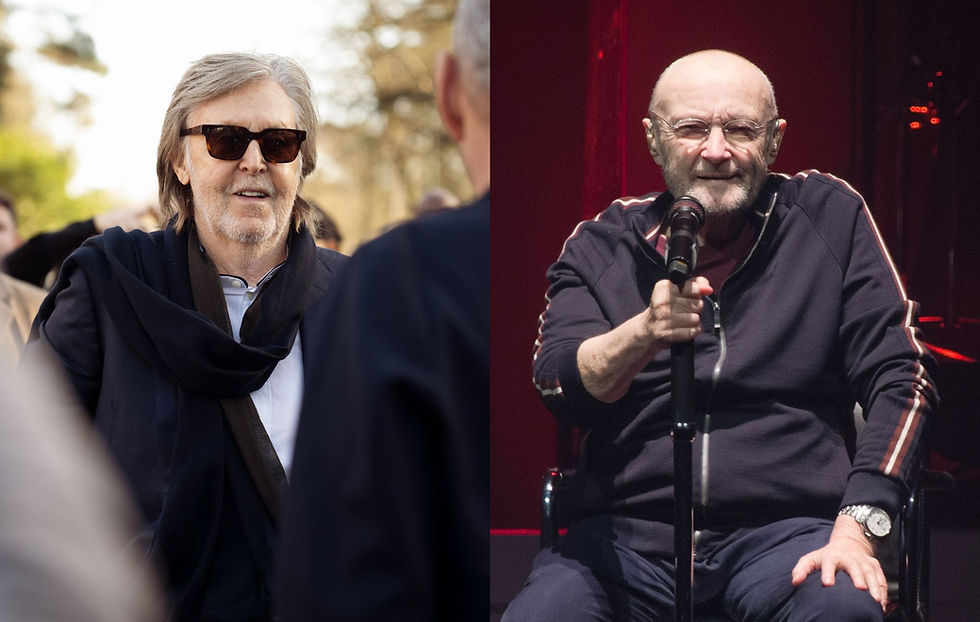
His health problems and struggles with alcohol also became an important part of the story of his later career. In 2026, he continued to discuss a serious period involving alcohol addiction, revealing that he had spent months in hospital in 2023 because of severe damage to his pancreas and kidneys. According to Collins, his condition had become serious enough that someone came to say goodbye, although he was not fully aware of how dangerous his situation was at the time. He said he has remained sober since then.
Looking back at the entire journey, the fact that Collins can now discuss what was once a deeply personal issue with Paul McCartney in such a calm way also reflects a broader change in the man himself. He is an artist who has experienced the heights of fame, broken marriages, scrutiny over his private life, criticism from the media, problems with alcohol and health limitations that forced him to change the way he performed on stage. Yet music has remained at the center of Collins’ life. He announced his retirement, only to return to performing after receiving encouragement from his children and fans. That return showed that he never truly wanted to close the door on music completely.
Perhaps that is why his story with McCartney has finally found an ending that fits this later chapter of Collins’ life. A remark that hurt him in 2002 was brought up again over the phone more than two decades later, this time not to reopen an argument but to close it. McCartney’s “What is all this about?” and Collins’ response, “I wish I’d never said it, Paul. I wish I’d never said it,” brought the two musicians to a point they might have reached many years earlier: acknowledging that a misunderstanding is sometimes not worth carrying for an entire lifetime. For Collins, who has experienced so many changes both on stage and away from it, saying they had “kissed and made up” was perhaps much simpler than everything that had come before. And after 24 years, the story of “our little Phil” can finally be left where it belongs: in the past.

Comments