


OKX Founder Star Xu on the Future of Crypto Exchanges and All-in-One Financial Platforms
Crypto exchanges are no longer just places to buy Bitcoin, check a chart, and move coins to a wallet. The biggest centralised exchanges now sit closer to financial operating systems, with trading, payments, savings-like products, Web3 access, wallets, identity tools, and institutional services under one roof.
That is the future OKX founder Star Xu has been pointing towards: a world where centralised exchanges, or CEXs, do far more than match buyers and sellers. The question is whether they can become all-in-one financial platforms without losing the trust, transparency, and user control that crypto was built to protect.
The answer is not simple. CEXs have the reach, liquidity, and technical base to become broader financial hubs. They also carry risks that become more serious as they expand. If exchanges want to play a larger role in global finance, they need to prove they can be safer, clearer, and more useful than the systems they aim to improve.

Why CEXs are expanding beyond trading
For many users, a centralised exchange is the first contact point with crypto. It handles sign-up, fiat deposits, token purchases, conversions, withdrawals, and customer support. That makes the CEX a bridge between the traditional financial world and blockchain networks.
Once an exchange controls that entry point, expansion becomes a natural next step.
A user who buys crypto may also want to:
Store assets securely
Swap tokens at low cost
Earn yield where allowed
Spend through a card or payment tool
Access Web3 apps
Manage tax records
Trade derivatives or structured products
Move funds across chains
Use stablecoins for transfers
Each extra service keeps the user inside the exchange ecosystem. That is why platforms such as OKX, Binance, Coinbase, Kraken, and others have pushed beyond spot trading into wallets, staking access, institutional custody, payments, and decentralised finance gateways.
Star Xu’s view fits this wider industry shift. The exchange of the future is not just a marketplace. It is a gateway to digital assets, financial services, and blockchain-based ownership.
Yet there is a key difference between being useful and becoming too centralised. Crypto users want convenience, but many also care about self-custody and open networks. CEXs have to walk that line carefully.
What an all-in-one crypto platform could look like
An all-in-one financial platform built around a CEX would not simply copy a bank. It would mix parts of a bank, brokerage, payments app, wallet provider, and blockchain portal.
The strongest version would give users one place to manage both traditional and digital assets, while still letting them move funds out to self-custody whenever they choose.
A mature platform could include:
Function | What it means for users | Main challenge |
Trading | Buy, sell, and convert crypto assets | Keeping markets fair and liquid |
Wallet access | Use custodial and non-custodial wallets | Making self-custody simple and safe |
Payments | Send stablecoins or spend through linked tools | Meeting local payment rules |
Yield products | Access staking or other reward options | Explaining risks clearly |
Identity and compliance | Verify users and reduce fraud | Protecting user privacy |
Web3 gateway | Reach decentralised apps from one interface | Avoiding unsafe contracts and scams |
Institutional tools | Custody, reporting, and execution for firms | Meeting higher security standards |
The important point is that users should not feel trapped. A financial platform built on crypto should offer connection, not lock-in. If a CEX becomes a closed system, it starts to look like the old financial model with different branding.
The better path is a hybrid one. Centralised exchanges can handle the complex parts that many users struggle with, such as fiat ramps, compliance, customer support, and recovery processes. At the same time, they can support open blockchain withdrawals, self-custody wallets, and proof-based transparency.
That combination could make crypto more practical for mainstream users without removing the features that make it distinct.

Trust will decide whether CEXs can grow into finance hubs
The clearest obstacle for any centralised exchange is trust. Crypto has seen major platform failures, frozen withdrawals, opaque balance sheets, and poor risk controls. Users now ask harder questions, and they should.
If a CEX wants to become an all-in-one financial platform, it needs to earn trust across several layers.
Custody must be clear. Users need to know whether assets are held one-to-one, whether they are lent out, and what happens during stress events. Proof-of-reserves can help, but it is not a full answer by itself. It should sit alongside liability reporting, audits where possible, and plain explanations.
Risk must be visible. Many users do not fully understand the difference between spot trading, margin, derivatives, staking, lending, and structured products. A broad platform has a duty to make those differences clear. Risk warnings should not be buried in long terms and conditions.
Compliance must be consistent. CEXs operate across many regions, each with different rules. The UK, the EU, and other jurisdictions have been tightening rules around promotions, stablecoins, custody, and anti-money laundering. A platform that wants to become part of everyday finance must treat regulation as core infrastructure, not a box-ticking exercise.
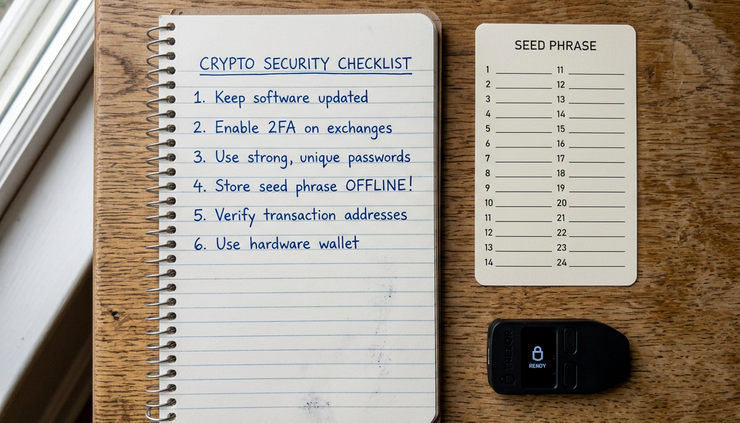
Security must be relentless. Exchanges are high-value targets. A future financial super-app would hold even more sensitive data and assets. That raises the bar for cold storage, wallet controls, withdrawal checks, bug bounties, internal permissions, and incident response.
Trust is not built through slogans. It is built through repeated proof under pressure.
That is where OKX and its peers face the same challenge. They can add more services, but each new feature increases the trust users must place in the platform. The more a CEX resembles a financial hub, the more it must act like a responsible financial institution while keeping crypto’s culture of verification alive.
The role of Web3 wallets in the future exchange model
One reason OKX stands out in this debate is its focus on wallets and Web3 access, not only exchange trading. A Web3 wallet changes the relationship between user and platform. Instead of the user only holding a balance inside a centralised account, they can connect to blockchain networks directly.
This matters because the future of exchanges may not be fully custodial.
A strong exchange model could offer two paths:
Custodial account
Best for users who want recovery options, simple trading, fiat access, and customer support.
Self-custody wallet
Best for users who want direct control, on-chain access, and the ability to use decentralised apps.
The best platforms will make both paths understandable. They will not push every user into complex self-custody before they are ready. They also will not hide self-custody because it competes with exchange balances.
For many people, the journey may look like this:
Start with a CEX account to buy a first asset.
Learn basic security, such as two-factor authentication and withdrawal allowlists.
Try a non-custodial wallet with a small amount.
Explore stablecoin transfers, swaps, or decentralised apps.
Keep some assets on exchange for liquidity and some in self-custody for control.
That is a healthier model than treating custody as a binary choice. The crypto economy needs both convenience and control. CEXs that can support both may have an edge.

Could CEXs compete with banks and fintech apps
If centralised exchanges become all-in-one platforms, they will compete more directly with banks, brokers, and fintech apps. That does not mean they will replace them soon. Traditional finance still has advantages in deposit protection, credit products, regulatory clarity, and public trust.
CEXs have different strengths.
They can move faster on digital assets. They can support global token markets around the clock. They can connect users to stablecoins, blockchain settlement, and self-custody in ways most banks do not yet offer. They can also serve users in markets where access to global financial tools is limited.
The biggest opportunity may sit in three areas.
Stablecoin payments
Stablecoins are one of crypto’s clearest practical uses. They allow fast digital transfers, often across borders, without relying on traditional banking hours. For CEXs, stablecoins can become the link between trading accounts, payments, remittances, and merchant tools.
The challenge is regulation. Stablecoins touch payments law, banking rules, reserves, and consumer protection. Exchanges that support them at scale will need strong controls and clear disclosures.
Tokenised assets
Tokenisation could bring bonds, funds, real estate interests, or other assets onto blockchain rails. If this grows, exchanges may become marketplaces for both crypto-native assets and tokenised traditional assets.
That future is still developing. Legal ownership, settlement rules, disclosures, and investor protections all matter. Still, tokenisation is one reason CEXs are thinking beyond simple coin trading.
Global access
A well-run exchange can give users access to digital assets in many regions from a single account. For people who move across borders, work internationally, or use stablecoins to protect against local currency swings, that access may be valuable.
Yet global reach brings responsibility. A product that suits one market may be unsuitable or restricted in another. CEXs cannot afford a one-size-fits-all approach.
What could hold this future back
The vision is attractive, but several barriers could slow it down.
Regulation is the first. Governments are still deciding how to classify and supervise many crypto products. Some regions welcome digital asset firms under clear rules. Others restrict access or treat parts of the sector with caution. CEXs that want to become broader financial platforms need licences, local controls, and strong governance.
User protection is the second. More services mean more chances for confusion. A beginner may not understand liquidation risk, smart contract risk, bridge risk, or counterparty risk. If CEXs make advanced products look too simple, they invite harm and regulatory pushback.
Technology is the third. Blockchains still face issues around fees, speed, wallet safety, and user experience. Account abstraction, better recovery methods, and simpler wallet design may help, but the industry has work to do.
Reputation is the fourth. Trust in centralised crypto platforms took serious damage after high-profile failures. Even well-run exchanges inherit that scepticism. They must show, not just claim, that they are different.
The final barrier is philosophy. Some crypto users do not want exchanges to become financial super-apps. They fear that large CEXs could recreate the concentration of power that crypto was meant to avoid. That concern is fair. The healthier future is one where centralised platforms connect users to open systems, rather than replacing those systems with closed gardens.
The most likely future is a hybrid financial platform
The future Star Xu describes is less about CEXs becoming banks in disguise and more about exchanges becoming hybrid platforms. They will combine trading, custody, payments, wallet access, and Web3 tools. The best ones will let users move between centralised convenience and on-chain control without friction.
That future will not arrive evenly. Some users will still only want a simple trading app. Others will use exchanges as their main financial dashboard. Institutions will demand custody, reporting, and compliance. Developers and advanced users will care more about wallet access and open networks.
The winners will be the platforms that make these paths feel connected without making them feel forced.
For OKX, the opportunity is clear. Its founder’s vision points to an exchange model where the platform is not only a marketplace, but a gateway into a broader digital financial system. The same is true for the wider CEX sector. The firms that survive the next phase will not be judged only by the number of tokens listed or trading volume. They will be judged by how safely they handle user assets, how clearly they explain risk, and how well they connect centralised services with open blockchain networks.
Crypto exchanges can become all-in-one financial platforms. But the better question is whether they can do it without becoming too powerful, too opaque, or too hard for ordinary users to understand.
The next generation of CEXs will need to prove that convenience and control can live side by side. If they can, the exchange account may become one of the main front doors to digital finance.
This article is for general information only and is not financial advice. Always research products, risks, and local rules before using any crypto platform.



Comments