


Erika Kirk Sparks Concern Over Her Obsession With Reuniting With Charlie Kirk in Heaven
More than a year after Charlie Kirk’s death, Erika Kirk continues to live between two seemingly intertwined worlds: her present life as a mother of two and the head of Turning Point USA, and the memories of her late husband, alongside her religious belief that their separation is only temporary. In a recent interview with Vanity Fair, Erika admitted that the prospect of seeing Charlie again in heaven has become one of the things guiding the way she makes decisions every day. “Will this bring me closer to heaven or further away from it?” she said of the question she often asks herself before making a choice.

What has drawn particular attention to Erika’s remarks is not simply her religious faith, but the way she described the intensity of her fixation. “I am so fixated and paranoid, of having anything keeping me from going to heaven to be reunited with my husband,” Erika said. For her, being reunited with Charlie appears to have become more than a comforting image after loss; it has become a spiritual goal that directly influences the way she views her life. Erika also said, “I do not know how to explain it other than this world will not break me,” reflecting her determination not to let the tragedy destroy her.
Her comments quickly sparked mixed reactions online. Some people expressed concern over Erika’s use of the word “paranoid” when describing her fear of being kept from heaven. One critical comment read: “I am so fixated and paranoid, she says, ‘of having anything keeping me from going to heaven to be reunited with my husband.’ This is problematic. The entire point of the Gospel is that we CAN know for certain we will be in heaven one day.” Another critic went even further, writing: “I think her ticket to heaven is already lost, but who knows. I can see why she’d be so paranoid about it.” These comments reflect how some members of the public have interpreted Erika’s words rather than representing any universal conclusion about her beliefs or state of mind.
Other reactions were even harsher, with some people arguing that Erika has become overly focused on the Bible and religious life. One commenter said she “is very hyper focused on scripture but she’s so completely out of touch with reality,” adding: “This is not how a normal mother behaves.” These remarks have emerged as Erika has become increasingly open about her Christian faith, family life and views on the role of women within a traditional marriage. At the same time, others have viewed her beliefs as her personal way of coping with grief and maintaining a sense of connection with the husband she lost.
In reality, religion has long been an important part of Erika’s public image. Before becoming Charlie’s successor at Turning Point USA, she had already built a career of her own in media, business and Christian-oriented activities. Erika previously won Miss Arizona USA, competed in the Miss USA pageant and appeared on the reality television series Summer House. She also developed a Christian-oriented fashion brand and hosted the Midweek Rise Up podcast. In addition, she established initiatives promoting Bible reading and charitable work.
Before her life changed completely following Charlie’s death, Erika lived a life that was relatively separate from the political spotlight surrounding her husband’s work. She and Charlie began dating in 2019 and married on May 8, 2021, in Scottsdale. They had two children, a daughter born in 2022 and a son born in 2024. The family has generally kept the children’s identities and images private.
In Erika’s accounts of their marriage, Charlie was not simply a prominent political figure, but first and foremost her husband, the father of her children and the center of their family life. Vanity Fair portrayed their life before the tragedy as relatively traditional: Charlie focused on his work and finances, while Erika spent much of her time caring for their children while also maintaining her own business activities. The children were also frequently brought to the office so they could be close to their father while he worked. After Charlie’s death, the spaces that once belonged to him became an important part of Erika’s memories. At Turning Point USA’s headquarters, she continues to work from the sofa in Charlie’s office, while his room has remained largely untouched.
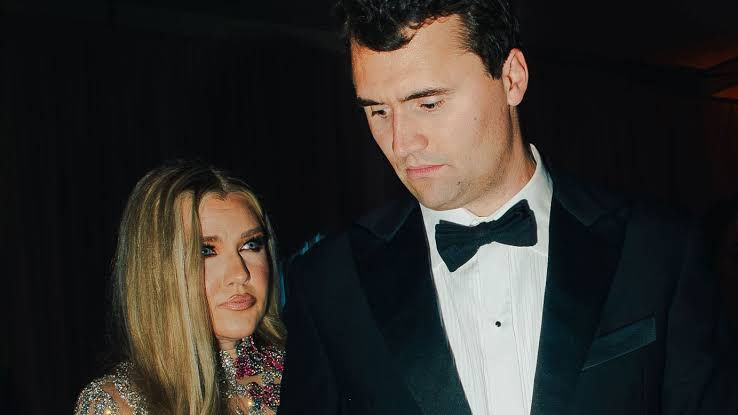
The final moment Erika had with Charlie has also become a memory she frequently recalls. After Charlie was shot at an event at Utah Valley University, a veteran police officer warned Erika that seeing her husband in that condition could become a painful final memory. But she did not want to leave without seeing Charlie. “With all due respect, I want to see what they did to my husband,” Erika recalled telling the officer. She explained that she had not kissed her husband goodbye that morning and wanted one final opportunity to do so.
According to Erika, what she saw afterward unexpectedly brought her a sense of peace. She remembered Charlie with his blue eyes slightly open and the corners of his mouth appearing to curve into what looked like a faint smile. To her, the expression seemed to communicate: “I just saw Jesus. I fought the good fight. I’m okay.” For Erika, that moment gradually became part of the way she understood her husband’s death. It also helps explain why her belief that Charlie is with God and that they will one day see each other again has become such an important part of her spiritual life.
Charlie Kirk was shot and killed on September 10, 2025, while speaking at Utah Valley University. Suspect Tyler Robinson was charged with serious offenses, including aggravated murder, and pleaded not guilty. Prosecutors have argued that the shooting was connected to Charlie’s political views, while Robinson’s defense attorneys have challenged that interpretation. Among the evidence cited by prosecutors was an inscription reportedly found on a cartridge: “Hey Facist! CATCH!”, along with other material that prosecutors have characterized as reflecting hostility toward Charlie.
The latest developments in the case have continued to keep Charlie’s death in the American political spotlight. An independent review of security at Utah Valley University, released in September 2026, identified multiple shortcomings in the preparation for and protection of the event. The report pointed to the lack of a comprehensive written security plan, problems with the assessment of the venue and issues involving coordination with law enforcement. Charlie’s family has also taken legal action related to security at the university.
After Charlie’s death, Erika not only had to deal with grief but also step into a position she had never previously held. On September 18, 2025, just days after the shooting, the Turning Point USA board unanimously appointed Erika as CEO and chair of the organization’s board. The organization said Charlie had told several leaders that Erika was the person he wanted to take over if he were to die.
It was a major transition for Erika. Before that, she had appeared at some Turning Point events but had not held a formal executive position within the organization. From being the wife and mother who often stood alongside Charlie, she suddenly became the person responsible for taking over a major political organization while raising two young children after losing her husband. That rapid transformation has placed virtually everything she says and does under intense public scrutiny.
Turning Point USA now identifies Erika as the organization’s CEO and chair. According to figures published by Turning Point USA itself, the organization’s network currently reaches more than 6,200 high schools and colleges, works with more than 8,000 churches, has more than one million student members and employs more than 400 people across the United States. These figures are self-reported by the organization and illustrate the scale of the operation Erika is now overseeing after taking over Charlie’s position.
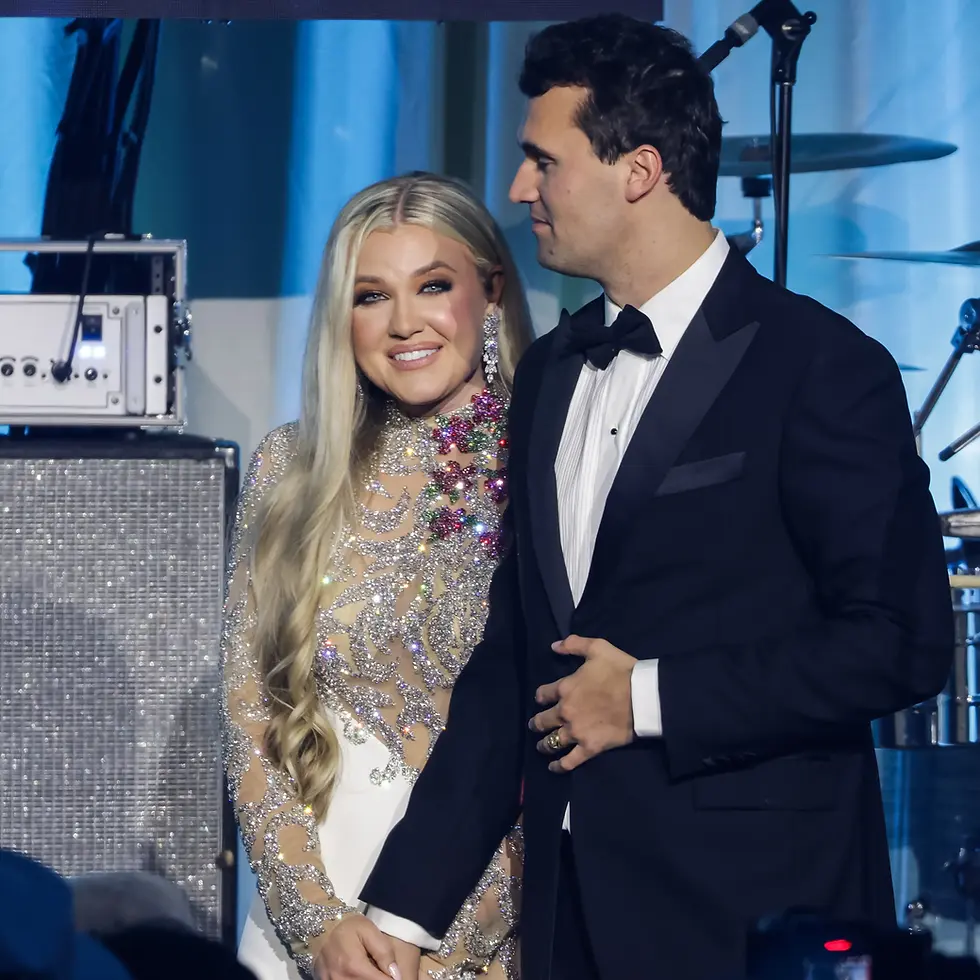
During her first year as CEO, Erika has gradually developed a leadership image that differs in emphasis from Charlie’s. While Charlie was known for political debates, podcasting and youth-oriented activism, Erika has placed greater emphasis on faith, family, marriage and the role of Christian women. At the 2026 Turning Point USA Women’s Leadership Summit, she focused on an image of conservative womanhood rooted in traditional values, emphasizing marriage, motherhood and religious faith.
Her new position, however, has also placed Erika at the center of controversies that have long surrounded Turning Point USA and Charlie’s political legacy. One of the most prominent relationships in this context has been her connection with Candace Owens, Charlie’s former close ally. Following his death, Owens repeatedly questioned aspects of the case and made allegations and speculation involving Erika. Those claims were challenged by Turning Point and people close to the family, while debates surrounding them continued online. Vanity Fair has reported that conspiracy theories surrounding Charlie’s death and Erika remain a recurring subject in Owens’ content.
In another development, Charlie’s mother, Kathryn Kirk, recently spoke out to reject rumors of a conflict with her daughter-in-law. She said Charlie’s death had not divided the family and that, instead, she and Erika had grown closer because they were experiencing the same loss. Kathryn also rejected rumors involving Charlie’s will, his assets and control of Turning Point USA, saying that Charlie had wanted Erika to take over the organization if he were no longer alive. Her comments came as Erika continued to face intense public attention and speculation online.
At home, Erika has also had to deal with a question far more difficult than running an organization: how to explain their father’s death to two children who are still very young. In an interview with Jesse Watters, she said that she initially told the children that their father was on a “work trip with Jesus.” When her daughter continued asking where her father was and when he would return, Erika explained that Charlie was “still with Jesus.” She also gave her daughter a simple way to maintain a sense of connection with her father: “If ever you want to talk to daddy, you just look up to the sky and start talking.”
When her daughter asked whether heaven meant that Charlie was living in a “different house,” Erika answered “yes” and told her that her father was “building a house” for their family. Those explanations show how Erika uses faith as a language for talking to her children about death, while helping them maintain an image of a father they will no longer have the chance to grow up with. For Erika, Charlie remains present not only in photographs and family memories, but also in the way she raises their children and in the choices she believes will bring her closer to the day when they can meet again.
Seen in that broader context, Erika’s statement that she is “fixated and paranoid” about the possibility of reaching heaven reflects a larger picture of her life since September 10. She lost her husband while their two children were still very young, took over the leadership position he left behind, continued to protect his legacy and found herself at the center of controversies surrounding the organization. In those circumstances, the belief that death does not represent the permanent end of their marriage has become an important part of the way she tells the story of her own life.
More than a year after the tragedy, Erika Kirk is therefore no longer known simply as Charlie Kirk’s wife. She has become a public figure in her own right, a businesswoman, a faith-based podcast host, a mother raising two children without their father and the leader of the political organization her husband built. Yet in her most personal reflections, the woman behind all those roles remains deeply connected to a profoundly personal loss. And when Erika says she constantly asks herself whether a decision will bring her “closer to heaven or further away from it,” the statement also reveals how she is attempting to turn grief into a guiding principle: continuing to raise her children, continuing her work and continuing to preserve the memory of the man she believes she will one day see again.


Comments