


“Cillian Murphy’s razor-sharp cheekbones: the secret weapon behind Oppenheimer and Peaky Blinders becoming screen legends.”
Few actors possess a physical signature so distinct that it becomes inseparable from their on-screen identity. For Cillian Murphy, that signature has long been a subject of fascination—not merely his famously piercing blue eyes, but the sharply defined cheekbones that seem to sculpt every performance. Since his breakthrough in 28 Days Later, Murphy’s face has been as much an instrument as his voice or movement, capable of shifting tone and meaning with the slightest change in light or expression.
Every great actor understands how to harness the tools they have been given. Some rely on voice, others on posture or timing. Murphy, however, has developed an acute awareness of how his physical features—particularly the angular structure of his face—can be used to shape a character. Those cheekbones, often described with a mixture of admiration and exaggeration, have become central to the way audiences perceive him, allowing him to move seamlessly between vulnerability, menace and introspection.

In examining Murphy’s most “cheekbone-forward” roles, one begins with A Quiet Place: Part II, where he plays Emmett, a hardened survivor in a post-apocalyptic world. In this instance, however, the defining feature is notably obscured by a heavy beard, softening the sharpness that typically defines his on-screen presence. The concealment almost feels intentional, as if the character’s emotional guardedness is mirrored in the visual suppression of Murphy’s most recognizable trait.
A different dynamic emerges in Inception, where Murphy portrays the heir to a corporate empire caught in a layered dreamscape orchestrated by Christopher Nolan. Here, the sharpness of his features contributes to a sense of fragility beneath privilege. His face, often framed in close-up, becomes a canvas for confusion and emotional exposure, reinforcing the psychological depth of the narrative.
Murphy’s collaboration with Nolan began earlier in Batman Begins, where he took on the role of Dr. Jonathan Crane, also known as the Scarecrow. The taut lines of his face lend themselves naturally to the unsettling nature of the character. There is an inherent duality in his appearance—at once refined and unsettling—that enhances the film’s exploration of fear and identity.
In Red Eye, directed by Wes Craven, Murphy leans further into this duality. Initially presenting as charming and composed, his character gradually reveals a darker, more threatening side. The transformation is subtle yet striking, with the angularity of his face accentuating the shift from approachability to menace. It is a performance that underscores his ability to manipulate perception through minimal physical change.
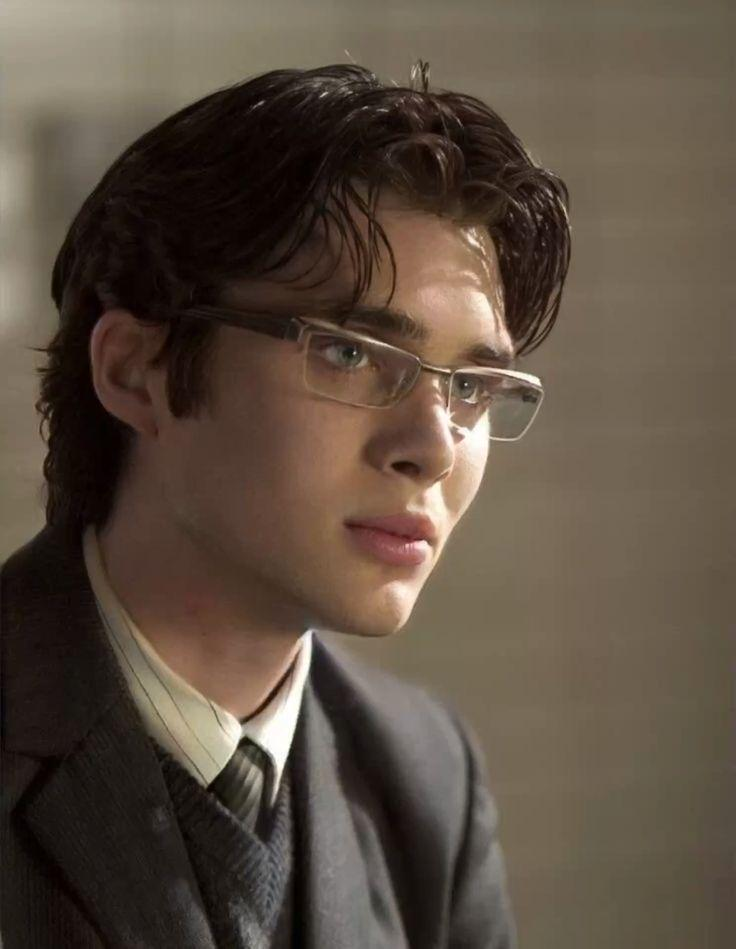
His earlier collaboration with Danny Boyle continued with Sunshine, a visually ambitious science fiction film set against the backdrop of a dying sun. In this context, Murphy’s features are amplified by stark, high-contrast lighting, reinforcing the existential stakes of the story. The interplay between light and shadow across his face becomes a visual metaphor for the film’s themes of survival and sacrifice.
A more grounded yet equally powerful performance can be found in The Wind That Shakes the Barley, directed by Ken Loach. Set during the Irish War of Independence, the film presents Murphy in a role defined by moral conflict and personal loss. His youthful appearance, combined with the sharpness of his features, underscores the human cost of political struggle, adding an additional layer of poignancy to the narrative.
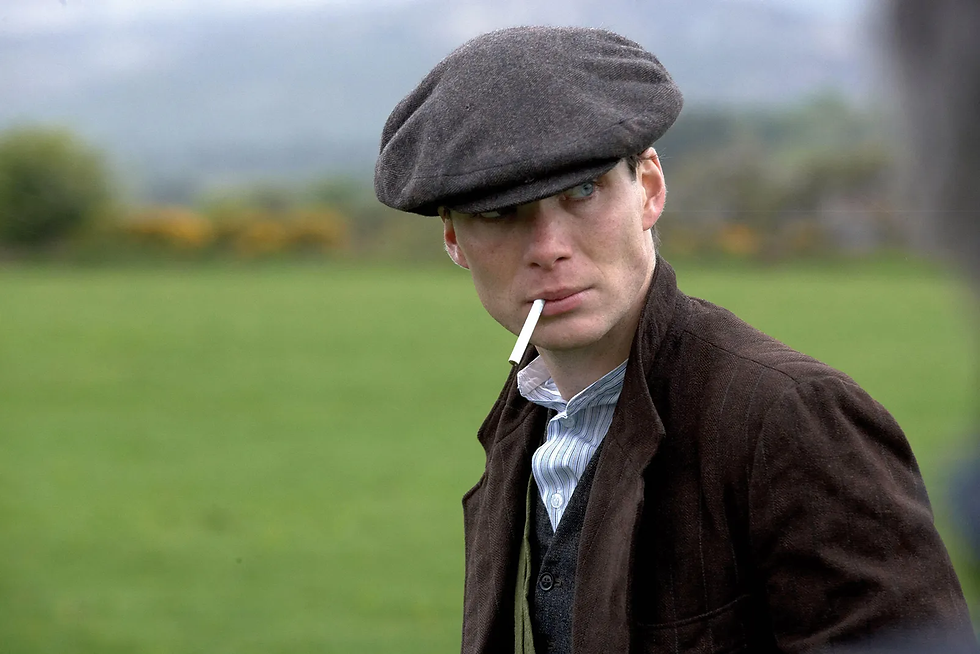
Television audiences came to know Murphy most intimately through Peaky Blinders, where he portrays Thomas Shelby, the calculating leader of a Birmingham gang. Over nearly a decade, Murphy refined the character into a cultural icon, with his physicality playing a crucial role. The severe haircut and tailored suits serve to accentuate the geometry of his face, creating a visual identity that has influenced fashion and popular culture alike.

Returning to his origins, 28 Days Later remains a defining moment in Murphy’s career. Directed by Danny Boyle, the film introduced audiences to a new kind of leading man—one whose presence was defined not by traditional heroism, but by a combination of vulnerability and intensity. The stark, minimalist cinematography places Murphy’s face at the center of the narrative, allowing his physical features to convey the emotional weight of a world in collapse.
This trajectory finds its culmination in Oppenheimer, where Murphy delivers one of the most acclaimed performances of his career as J. Robert Oppenheimer. Under Nolan’s direction, his face is captured in extreme close-up, in both color and black-and-white, emphasizing the psychological complexity of the character. Murphy reportedly lost weight for the role, further accentuating the angularity of his features, which in turn enhances the portrayal of a man burdened by the consequences of his own intellect.
Beyond the screen, Murphy’s life has been marked by a deliberate resistance to the conventions of celebrity culture. Born in Cork, Ireland, he initially pursued music, performing in bands before turning to acting during his university years. This early engagement with creative expression laid the foundation for a career defined by thoughtful choices rather than opportunistic ones.
His transition from theatre to film in the late 1990s and early 2000s reflects a steady, organic progression rather than a sudden ascent. Murphy’s early stage work provided him with the discipline and versatility that would later define his screen performances. Unlike many actors who emerge through highly publicized debuts, his rise was gradual, shaped by a commitment to craft rather than visibility.
Murphy’s long-standing collaborations with directors such as Christopher Nolan and Danny Boyle have played a significant role in shaping his career. These partnerships are built on mutual trust and a shared understanding of storytelling, allowing Murphy to explore a wide range of characters while maintaining a consistent artistic identity.
In his personal life, Murphy has maintained a level of privacy that is increasingly rare among actors of his stature. He has been married to visual artist Yvonne McGuinness since 2004, and together they have two children. The family resides away from the traditional centers of the film industry, reflecting Murphy’s preference for a grounded, private existence.

This commitment to privacy extends to his public persona. Murphy rarely engages in social media and tends to avoid the promotional circuits that often accompany major film releases. Instead, he allows his work to speak for itself, reinforcing his reputation as an actor who prioritizes substance over spectacle.
Notably, Murphy’s career has been largely free of scandal, a testament to his disciplined approach to both his professional and personal life. In an industry often characterized by volatility, his consistency and discretion have contributed to a sense of stability that enhances his credibility as an artist.
At the same time, his performances continue to evolve, reflecting a willingness to take risks and challenge expectations. Whether portraying historical figures, fictional antiheroes or ordinary individuals in extraordinary circumstances, Murphy approaches each role with a level of intensity that suggests a deep personal investment.

Ultimately, the fascination with Murphy’s physical features—particularly his cheekbones—serves as an entry point into a broader discussion about the nature of performance. While they may initially capture attention, it is his ability to imbue those features with meaning that sustains interest. In this sense, his face becomes not just a visual hallmark, but a narrative device in its own right.
As his career continues to unfold, Murphy remains an actor defined by precision, restraint and an unwavering commitment to authenticity. His journey from independent films to global recognition illustrates the enduring value of individuality in an industry often driven by conformity. Through each role, he reaffirms that true artistry lies not in transformation alone, but in the ability to reveal something essential—both about the character and the actor himself.

Comments