


Chelsea Handler slams Shane Gillis and Tony Hinchcliffe over comments she described as “racist” and “sexist” following Kevin Hart’s roast special.
- May 22
- 6 min read
Chelsea Handler has once again positioned herself at the center of a heated Hollywood debate after publicly criticizing fellow comedians Shane Gillis and Tony Hinchcliffe over controversial jokes made during The Roast of Kevin Hart. The backlash surrounding the roast has quickly evolved into a larger conversation about the limits of comedy, the role of offensive humor in modern entertainment, and the growing divide between comedians who embrace shock value and those who argue that certain topics should remain off limits.
During an appearance on the podcast “Deon Cole’s Funny Knowing You,” Handler delivered some of her harshest comments yet about Gillis and Hinchcliffe, accusing both comedians of building careers around material she considers racist, sexist, and intentionally inflammatory.

“I knew enough about Tony and Shane — they’re racists, they’re bigots, they’re sexist,” Handler said during the interview. “I don’t find those jokes funny.”
Her criticism focused particularly on a joke made by Shane Gillis during the roast in which he mocked Kevin Hart’s height by saying the comedian was so short “they’re gonna have to lynch him from a bonsai tree.” The joke immediately generated backlash online following the Netflix special’s release, with critics arguing that references to racial violence crossed a line even within the context of roast comedy.
“Lynching Black people is not a joke,” Handler stated firmly. “It’s worse than rape.”
The remark quickly circulated across social media platforms, intensifying already polarized reactions surrounding the roast. While some audiences defended Gillis under the traditional rules of roast comedy — where offensive humor is often expected — others sided with Handler, arguing that invoking racial terror and historical violence should never be normalized for entertainment.
Handler also criticized the overall tone of the event, suggesting that Kevin Hart deserved a more intelligent and elevated celebration of his career rather than what she described as “gross” humor designed primarily for shock value.
“There was so much disgustingness, I knew it was gonna be a gross vibe,” she explained, while emphasizing that roast comedy can still push boundaries without relying on cruelty or historically traumatic subject matter.

The controversy did not stop there. Handler also addressed comments made by Tony Hinchcliffe involving Sheryl Underwood and her late husband, Michael Sparkman, who died by suicide in 1990. Although Underwood herself later appeared on Gillis’ podcast defending the general spirit of roast comedy by saying, “Sometimes humor is the thing,” Handler maintained that certain jokes reflected a broader pattern she found disturbing.
Representatives for Hinchcliffe reportedly declined to comment publicly on the criticism. Gillis, meanwhile, responded with sarcasm through a representative, saying: “This is a big moment for Chelsea. I am glad she’s capitalizing. Good for her. We’re all rooting for her. Anyway come see me July 17th at the football stadium in Philly.”
The exchange reflected the increasingly combative nature of contemporary stand-up culture, where comedians frequently battle not only audiences but also one another over questions involving censorship, political correctness, artistic freedom, and social responsibility.
For Chelsea Handler, speaking openly about controversial cultural issues has long been central to her public identity. Since rising to prominence through Chelsea Lately, Handler cultivated a comedic persona built around blunt honesty, sexual candor, celebrity mockery, and political commentary. Unlike many comedians who attempt to remain ideologically ambiguous, Handler has increasingly embraced overt political and social activism over the past decade.
In recent years, she has become especially vocal about feminism, reproductive rights, voting rights, and criticism of conservative politics in the United States. That evolution significantly changed her audience. While some longtime fans admired her willingness to use her platform politically, others accused her of becoming increasingly divisive and self-righteous.
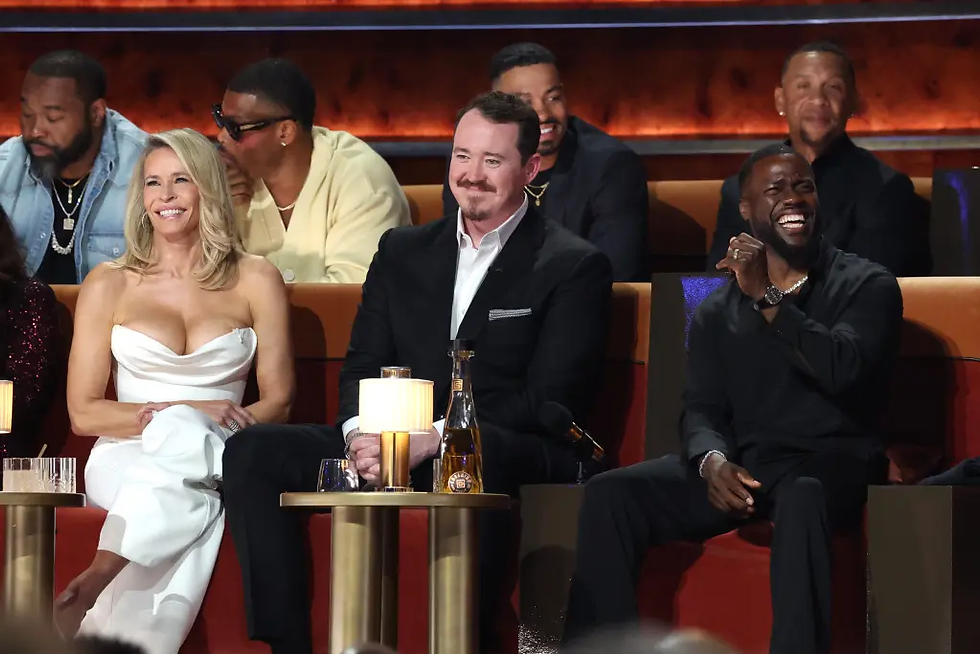
Her comments about Gillis and Hinchcliffe fit into that broader transformation. To supporters, Handler represents an older generation of comedians attempting to modernize comedy by challenging harmful stereotypes and rejecting lazy shock humor. To critics, however, she symbolizes what some comics view as the growing moral policing of stand-up comedy.
The debate surrounding Shane Gillis carries additional complexity because controversy has followed him for much of his career. Gillis became nationally known in 2019 after being hired by Saturday Night Live, only to lose the position days later after past podcast clips resurfaced containing racist and homophobic language. The incident transformed him into a polarizing figure almost overnight.
While many public figures distanced themselves from Gillis at the time, others defended him as a comedian whose material was intentionally provocative rather than hateful. In the years that followed, Gillis rebuilt his career independently through podcasts, stand-up specials, and live touring, eventually becoming one of the most commercially successful comedians among younger audiences despite — or perhaps partly because of — the controversies surrounding him.
Tony Hinchcliffe has similarly built a reputation around aggressive insult comedy. Best known for hosting the live comedy podcast Kill Tony, Hinchcliffe frequently pushes boundaries involving race, gender, sexuality, and politics. His defenders argue that his style intentionally revives the spirit of old-school roast comedy, where offensiveness itself becomes part of the performance. Critics, however, argue that irony and shock value are often used as shields for genuinely harmful rhetoric.
The Kevin Hart roast therefore became more than a comedy event. It evolved into a cultural flashpoint exposing generational tensions inside the entertainment industry itself. Older Hollywood figures increasingly face pressure to adapt to evolving social standards, while younger or anti-establishment comedians often position themselves as rebels resisting what they see as cultural overcorrection.
Complicating matters further, Handler herself became the subject of jokes during the roast. Shane Gillis introduced her with harsh comments referencing her attendance at a 2010 dinner connected to disgraced financier Jeffrey Epstein, as well as jokes targeting her liberal politics and personal life. Gillis later defended the insults as harmless fun consistent with roast tradition.

Handler has previously addressed the Epstein connection publicly. In a 2021 interview with Rob Lowe, she insisted she had attended the dinner party without fully understanding who Epstein was at the time, describing the event afterward as “awkward.”
The roast controversy also prompted reactions from other comedians. Michael Che, known for his work on “Saturday Night Live,” reportedly withdrew from the roast due to scheduling conflicts. Shortly afterward, however, he posted a series of now-deleted Instagram comments criticizing the racial dynamics of the event.
“White guys and black people joke different,” Che wrote. “Black guys roast like, ‘look at this n—a shoes!’ white roasts are like, ‘slavery, math, slain teens, sex crimes, slurs, family secrets.’”
In another deleted post, Che mocked the writing team behind the roast after sharing a photo showing several white male comedy writers. “‘Let’s do a roast celebrating the career of the most successful black comic in the last 10 years,’” he wrote sarcastically. “‘I love that! who should we get to write it?’”
The controversy surrounding the roast ultimately reflects a broader transformation taking place inside modern comedy. Over the last decade, stand-up culture has become deeply entangled with political identity, online outrage cycles, and debates over cancel culture. Comedians increasingly operate inside polarized ecosystems where audiences either celebrate offensive material as fearless honesty or condemn it as socially irresponsible.
Chelsea Handler’s own career mirrors that transformation. Earlier in her career, she herself frequently relied on provocative humor and celebrity insults, often targeting public figures in ways that would likely generate backlash today. Yet over time, her comedic voice evolved alongside shifting cultural conversations, especially after the rise of social movements centered around gender equality and racial justice.
That evolution has occasionally exposed Handler to accusations of hypocrisy from critics who point to jokes she made earlier in her career. Nevertheless, she has repeatedly argued that comedians, like society itself, must evolve and reconsider the impact of their material.
Kevin Hart, meanwhile, has largely avoided directly escalating the controversy despite remaining at the center of it. Over the years, Hart himself has navigated backlash related to past jokes and public statements, particularly surrounding homophobic tweets that resurfaced before he was scheduled to host the Academy Awards in 2019. That experience arguably positioned him uniquely within this ongoing conversation about comedy, accountability, and public forgiveness.

The Netflix roast therefore became not merely a celebration of Hart’s career but also an accidental referendum on the future of stand-up comedy itself. Questions surrounding who gets to joke about race, trauma, violence, and gender remain unresolved, and the increasingly fragmented entertainment landscape ensures those debates will likely continue.
For Chelsea Handler, however, the issue appears deeply personal as well as political. Her criticism suggests frustration not only with specific jokes but with what she perceives as a broader normalization of cruelty disguised as humor. Whether audiences agree with her or not, the intensity of the reaction demonstrates how comedy has become one of the most contested cultural battlegrounds in contemporary entertainment.
As streaming platforms continue investing heavily in uncensored stand-up specials and live comedy events, controversies like the Kevin Hart roast may become increasingly common. The clash between artistic freedom and social accountability now shapes not only public conversations but also the identities and careers of comedians themselves.


Comments