


Bitcoin’s Q4 2026 Breakout: Jordi Visser’s Catalysts for a New BTC Rally
Bitcoin rarely moves because of one clean reason. The biggest rallies tend to arrive when several forces line up at once: easier liquidity, stronger risk appetite, tighter supply, new buyers, and a story powerful enough to pull capital in from the sidelines.
That is why Q4 2026 is an interesting window to watch.
By then, the market will have had time to digest the 2024 halving, spot Bitcoin exchange-traded funds will have a longer track record, and the global economy may be further into a new rate and liquidity cycle. For investors who follow macro thinkers such as Jordi Visser, that mix matters. Visser has often framed Bitcoin as more than a speculative asset. In his public commentary, he has linked Bitcoin’s long-term appeal to technological change, fiat debasement concerns, institutional adoption, and the search for scarce digital assets in an increasingly digital economy.
This article is informational only and is not financial advice. Bitcoin remains volatile, and any forecast for 2026 should be treated as a scenario, not a promise.

Why Jordi Visser’s Bitcoin framework matters for 2026
Jordi Visser’s appeal as a Bitcoin commentator comes from the way he connects crypto to the bigger picture. He does not usually treat BTC as just a chart pattern. His broader framework looks at liquidity, technology, scarcity, and behavioural change.
That matters because Bitcoin’s strongest periods have often matched wider macro shifts. When capital is cheap, confidence rises, and investors feel more comfortable taking risk, BTC has tended to perform well. When liquidity tightens, speculative assets usually suffer first.
Visser has also spoken about a world being reshaped by artificial intelligence, automation, and digital networks. In that world, Bitcoin can be seen as a scarce asset built for the internet age. It has a fixed supply schedule, global settlement, and no central issuer. For supporters, that makes it a form of digital collateral. For sceptics, it remains a highly volatile asset with no cash flow.
The tension between those views is exactly what makes Q4 2026 worth analysing.
A possible Bitcoin’s Q4 2026 Breakout would likely need more than retail excitement. It would need a broad shift in how capital allocators view BTC. That could mean pension funds, sovereign-linked investors, family offices, and wealth platforms treating Bitcoin as a small but normal part of a diversified portfolio.
Visser’s key point, when reduced to its basics, is that Bitcoin sits at the crossing of several major trends:
Money supply and liquidity cycles
Bitcoin has historically responded well when financial conditions loosen.
Scarcity in a digital economy
The supply cap gives BTC a simple story that many investors understand.
Technological adoption
The more crypto rails mature, the easier Bitcoin becomes to hold, move, and use.
Generational behaviour
Younger investors are often more comfortable owning digital assets than gold or traditional stores of value.
None of these guarantees higher prices. Together, they explain why some macro investors keep returning to Bitcoin when they think about the next phase of markets.
The market set-up that could support a Q4 2026 rally
A late-2026 breakout would probably need a calmer and broader base than earlier Bitcoin manias. The market has matured since the 2017 retail boom and the 2020 to 2021 liquidity surge. Spot ETFs, regulated custody, public company holdings, and professional trading infrastructure have changed the way BTC enters portfolios.
The most important question is whether demand can grow faster than available supply.
Bitcoin’s issuance was cut again in April 2024, when the block reward fell from 6.25 BTC to 3.125 BTC. That halving reduced the amount of new Bitcoin miners receive. Halvings do not create instant rallies by themselves, but they can matter over time if demand stays firm or rises.
Historical cycles show why investors pay attention:
Halving cycle | Broad market pattern | What investors remember |
2012 halving | Strong rally followed in 2013 | Early proof that supply cuts could matter |
2016 halving | Major bull market into 2017 | Wider retail attention and exchange growth |
2020 halving | Rally into 2021 | Liquidity, stimulus, and institutional interest |
2024 halving | Still developing | ETFs and professional access changed the demand side |
A simple repeat of past cycles would suggest that the 2024 halving’s biggest effect might show up before late 2026. Yet markets do not always follow the old rhythm. The presence of ETFs may stretch the cycle. A deeper institutional market may dampen some extreme moves, while also creating a larger long-term demand base.
That is the paradox of a maturing Bitcoin market. It may become less explosive in percentage terms, but more investable for larger pools of capital.
A Q4 2026 rally could be supported by several market trends.
ETF flows could become steadier
Spot Bitcoin ETFs made it easier for traditional investors to gain exposure without managing wallets or private keys. By 2026, the key issue may not be launch excitement. It may be whether advisers and platforms include BTC in model portfolios, even at small allocations.
A 1% to 3% allocation from large pools of capital can matter in an asset with limited new supply.
Long-term holders may remain tight-fisted
Bitcoin has a strong culture of long-term holding. When conviction holders refuse to sell, new demand has to compete for a smaller active float. That can create sharp moves when liquidity improves.
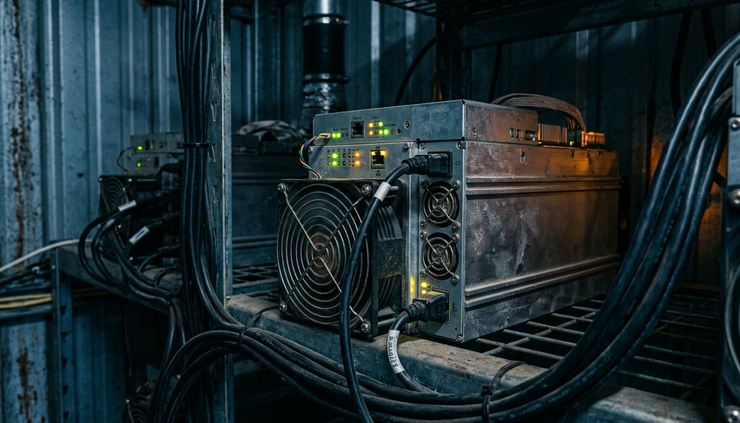
Mining economics may force discipline
After each halving, miners receive fewer coins for the same block subsidy. Weaker miners may sell, consolidate, or shut down. Stronger miners may become more efficient. Over time, this can reduce forced selling pressure, though the path can be rough.
Economic factors that could push Bitcoin higher
Bitcoin’s macro story often begins with one word: liquidity.
When central banks tighten policy, borrowing costs rise and investors tend to reduce exposure to risk assets. When policy eases, risk appetite can return. Bitcoin has often traded like a high-beta macro asset during these periods. It can behave like digital gold in one phase and like a speculative technology asset in another.
For Q4 2026, the economic backdrop could matter in four main ways.
Interest rates and global liquidity could turn supportive
If major central banks are cutting rates or ending quantitative tightening by late 2026, investors may look again at assets with higher upside potential. Lower real yields can also make scarce, non-yielding assets more attractive.
This does not mean rate cuts automatically lift Bitcoin. If cuts happen because of a severe recession or financial stress, investors may sell risk assets first. The quality of the easing cycle matters.
A benign easing cycle would look different. Growth would slow but not collapse. Inflation would ease enough to allow lower rates. Credit markets would remain stable. In that environment, Bitcoin could benefit from both risk appetite and renewed concern about currency debasement.
Debt concerns may strengthen the scarcity narrative
Across major economies, public debt remains a long-term concern. Investors may not expect a sudden debt crisis, but many do expect governments to tolerate higher nominal growth, larger deficits, or periods of inflation to manage debt burdens.
That backdrop supports the simple Bitcoin argument: there will only ever be 21 million BTC.
Gold has played this role for centuries. Bitcoin is younger, more volatile, and more controversial, but it offers a version of scarcity that is easy to verify on-chain. Visser’s broader view fits here. In a digital world, a digitally native scarce asset may attract capital from investors who want protection against monetary dilution.
The US dollar cycle could affect global demand
Bitcoin is priced globally, but dollar liquidity still matters. A weaker dollar can support risk assets and improve financial conditions outside the United States. A stronger dollar often does the opposite.
For buyers in the UK and Europe, currency effects also matter. A Bitcoin rally in dollar terms may look different in sterling or euros depending on exchange rates. That can affect local returns, sentiment, and timing.
Inflation could cut both ways
High inflation helped Bitcoin’s store-of-value story in the past, but the actual market reaction was mixed. In 2022, inflation triggered aggressive rate rises, and Bitcoin fell sharply along with other risk assets.
By late 2026, the best backdrop for BTC might not be runaway inflation. It may be moderate inflation paired with easier policy and rising distrust in long-term fiat purchasing power. That kind of environment can make the scarcity argument more persuasive without causing a broad flight from risk.
Technology catalysts that could change Bitcoin’s trajectory
Bitcoin’s base layer changes slowly by design. That is part of its appeal. The network values security and stability over frequent upgrades.
Still, technological progress around Bitcoin can affect demand.
Better custody makes institutional ownership easier
A major barrier for traditional investors has been custody. Holding Bitcoin safely is not like holding shares. Private keys can be lost or stolen. Operational mistakes can be costly.
By 2026, custody tools may be far better than they were during earlier cycles. Multi-signature wallets, regulated custodians, insurance products, and clearer reporting tools all help investors feel more comfortable. The easier Bitcoin is to hold within existing financial systems, the larger its potential buyer base becomes.
Layer 2 growth could improve Bitcoin’s usefulness
The Lightning Network and other scaling approaches aim to make Bitcoin transactions faster and cheaper for smaller payments. Adoption has been uneven, and Bitcoin is still used more often as a store of value than as everyday money. Even so, better payment rails could support the long-term case.
If Bitcoin becomes easier to use across apps, wallets, and cross-border payment services, it gains more than a price story. It gains utility.
That said, investors should be realistic. Bitcoin does not need to become a global coffee-payment network to rise in value. Its core investment case still rests on scarcity, security, settlement, and trust minimisation.
AI may strengthen the case for digital scarcity
This is one of the more interesting parts of Visser’s thinking. Artificial intelligence can create abundance in many areas: content, code, design, analysis, and automation. In a world where digital output becomes cheaper and faster to produce, scarce digital assets may stand out more clearly.
Bitcoin is not scarce because it is hard to copy as an image or idea. It is scarce because the network enforces ownership and issuance rules. That distinction matters.
If AI accelerates economic change, investors may look for assets that are outside the control of any single company, central bank, or platform. Bitcoin fits that search for some investors. Others will prefer equities linked to AI infrastructure, gold, or cash-flowing assets.

What historical cycles suggest, and where they may mislead
Bitcoin history is useful, but dangerous when treated as a script.
The most famous pattern is the four-year cycle. Bitcoin halvings occur roughly every four years. Past bull markets have often followed them, then ended in sharp drawdowns. This pattern shaped expectations in 2013, 2017, and 2021.
The comparison is helpful for three reasons.
First, it shows that supply changes can matter when demand rises.
Second, it shows that Bitcoin bull markets often run further than traditional investors expect.
Third, it shows that every major rally has ended with painful losses for late buyers.
The 2017 cycle was driven by retail exchanges, initial coin offerings, and a wave of public curiosity. The 2020 to 2021 cycle had a different engine: pandemic-era liquidity, stimulus, social media attention, and growing institutional interest. The next major cycle may look different again, shaped by ETFs, macro allocation models, and AI-era narratives.
That is where historical comparisons can mislead.
Bitcoin’s market capitalisation is far larger than it was in earlier cycles. Larger assets usually need more capital to move sharply. Regulation is also more serious. The market is more professional, with derivatives, funds, and algorithmic trading playing a larger role.
A Q4 2026 breakout would probably not mirror 2017. It might look more like a grinding institutional bid, followed by a sudden acceleration when momentum traders and retail buyers return.
The signal to watch may not be one dramatic headline. It may be a cluster of smaller signs:
ETF inflows staying positive during market dips
Bitcoin holding higher lows across risk-off periods
Falling exchange balances, if long-term holders keep accumulating
Clearer accounting and tax treatment in major markets
More wealth platforms allowing direct or fund-based BTC exposure
Stablecoins and crypto payment rails continuing to grow
When these signs appear together, Bitcoin’s price can move quickly because supply is relatively inelastic.
The risks that could break the bullish case
No serious Bitcoin outlook should ignore the risks. BTC can rise fast, but it can also lose half its value in a short period. A Q4 2026 rally scenario has several pressure points.
Regulation could restrict access or demand
Regulation can help by giving institutions clearer rules. It can also hurt if governments restrict products, impose harsh tax treatment, or target self-custody. The most likely path varies by region.
In the UK, investors already face a cautious regulatory environment around crypto promotions and retail access. That does not stop Bitcoin ownership, but it can affect how products are marketed and distributed.
Globally, the biggest risk is not a single ban. It is a patchwork of rules that slows adoption or raises costs.
A recession could trigger forced selling
If the world enters a deep downturn, investors may sell liquid assets to raise cash. Bitcoin trades around the clock and remains highly liquid compared with many private assets. That can make it a source of funds during stress.
In that kind of environment, Bitcoin may fall first even if its long-term story remains intact.
Security failures could damage confidence
The Bitcoin network itself has proved resilient, but the surrounding ecosystem has seen exchange failures, hacks, scams, and poor risk controls. New investors often confuse a failed company with a failed protocol.
A major custody failure or exchange collapse before 2026 could slow institutional adoption, at least temporarily.
The narrative could shift elsewhere
Bitcoin is not the only asset competing for capital. Investors may prefer AI equities, gold, real estate, private credit, or other crypto networks. If Bitcoin’s store-of-value story loses attention, price momentum could fade.
This is especially relevant if fees, scaling debates, or community divisions weaken confidence.

What to watch before Q4 2026
A strong Bitcoin breakout in late 2026 would likely need confirmation from both price action and fundamentals. Guessing the exact top or bottom is less useful than watching whether the thesis is getting stronger.
The most useful indicators include:
Global liquidity
Watch central bank policy, real yields, credit spreads, and the direction of the US dollar. Bitcoin tends to perform better when liquidity expands and financial stress stays contained.
Institutional allocation
ETF flows, adviser platform adoption, and public fund disclosures can show whether Bitcoin is becoming a normal portfolio asset or still sitting on the fringe.
Long-term holder behaviour
If long-term holders distribute heavily into strength, rallies can stall. If they hold through volatility, supply can tighten.
Developer and infrastructure progress
Bitcoin’s base layer may remain conservative, but wallets, custody tools, Lightning services, and settlement infrastructure can still improve.
Retail sentiment
Retail excitement often arrives late, but it can fuel the final stage of a bull market. Search interest, app rankings, and exchange activity can help show when broader attention returns.
The strongest Q4 2026 case would combine a friendly macro cycle, steady institutional demand, reduced sell pressure, and a clear digital scarcity narrative. Jordi Visser’s framework is useful because it brings these threads together rather than treating Bitcoin as a simple risk trade.
The takeaway is measured but constructive: Bitcoin does not need a perfect world to rally. It needs enough liquidity, enough trust, and enough new demand to meet a supply curve that cannot easily adjust. If those forces line up by Q4 2026, BTC could have the ingredients for another major move. If they do not, patience and risk control will matter more than conviction.


Comments