


Bitcoin at 85K: Is Now the Right Time to Invest or a Market Trap
Bitcoin at US$85,000 feels both impressive and uncomfortable. For long-term believers, it can look like confirmation that the asset has entered a more mature phase. For cautious investors, it can look like the kind of price that attracts late buyers just before volatility returns.
That tension is exactly what makes the current market interesting. A high Bitcoin price does not automatically mean the move is over. It also does not mean the next leg higher is guaranteed. At this level, the question is less about whether Bitcoin is “good” or “bad”, and more about whether the risk matches the strategy.
This article is for information only and is not financial advice. Bitcoin remains a highly volatile asset, and any investment decision should be based on personal circumstances, risk tolerance, and independent research.
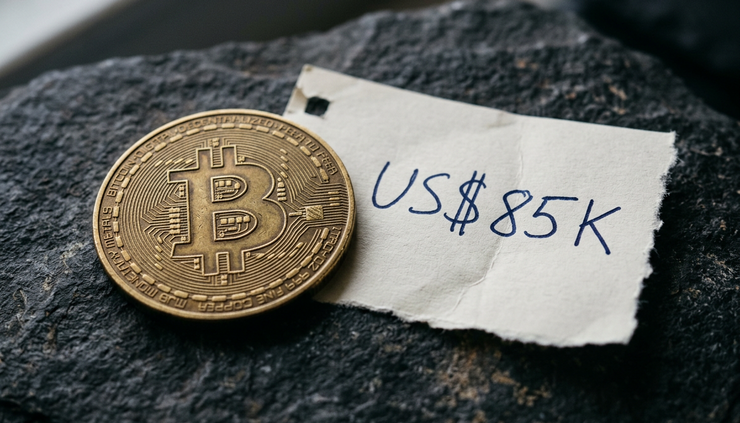
Why US$85,000 changes the conversation
At lower prices, Bitcoin often attracts buyers who believe the market has been unfairly pessimistic. At US$85,000, the psychology changes. Investors start asking different questions.
Has the market already priced in the good news? Are new buyers chasing momentum? Are long-term holders preparing to sell into strength? These questions matter because Bitcoin does not move only on fundamentals. It also moves on emotion, liquidity, and crowd behaviour.
A price near US$85,000 can create a powerful feedback loop. Rising prices bring more attention. More attention brings more buyers. More buyers can push the price higher, at least for a time. The problem is that this loop can reverse quickly.
When Bitcoin rises fast, many buyers focus on what they might miss. When it falls fast, they focus on what they might lose. That shift can happen in hours, not months.
This is why Bitcoin at US$85,000 is not just a price level. It is a sentiment test.
It tells us that demand has been strong enough to support a major move. It also tells us that expectations may be stretched. Both can be true at the same time.
The case for more upside is not hard to understand
The bullish argument for Bitcoin remains clear. Supply is limited, adoption has grown, and large financial institutions now treat Bitcoin as an investable asset rather than a fringe experiment.
Spot Bitcoin exchange-traded funds have also changed how some investors access the market. They make it easier for certain buyers to gain exposure without holding coins directly. That does not remove risk, but it can widen the pool of potential demand.
There is also the long-running supply argument. Bitcoin’s issuance schedule is fixed by code, and each halving reduces the rate at which new coins enter circulation. Many investors see that scarcity as one of Bitcoin’s strongest features.
Supporters also point to broader concerns about fiat currency, government debt, and monetary policy. In that view, Bitcoin acts as a hedge against long-term currency debasement. Not everyone agrees with that framing, but it remains a central part of the bull case.
The optimistic view looks something like this:
Bullish factor | Why it matters |
Institutional access | More regulated investment products can increase demand |
Limited supply | Scarcity can support value if demand holds |
Strong brand recognition | Bitcoin remains the best-known cryptoasset |
Macro uncertainty | Some investors seek alternatives to traditional assets |
Long-term holders | Reduced selling from committed holders can tighten supply |
The strongest bullish case does not rely on a single headline. It comes from several forces working together. If investor demand stays strong, regulatory conditions remain manageable, and macro liquidity improves, Bitcoin could continue to climb from US$85,000.
Still, a good story can become dangerous when investors treat it as certainty.

Grayscale’s warning highlights the danger of perfect timing
Grayscale has warned investors about the difficulty of market timing in crypto cycles. The message is simple, but easy to ignore: trying to buy the exact bottom and sell the exact top is rarely realistic.
That warning matters more when Bitcoin is already high. At US$85,000, many investors feel pressure to make a move. Some fear missing the next breakout. Others fear buying just before a pullback. The result is often emotional decision-making.
Market timing sounds easy after the fact. Charts make past turning points look obvious. In real time, they rarely are.
A sharp pullback can look like the start of a bear market, then reverse. A breakout can look like the start of a new rally, then fail. Bitcoin has a history of making both bulls and bears look wrong in the short term.
Grayscale’s point is not that timing never matters. Entry price clearly affects returns. The point is that building a strategy around perfect timing can create more risk than it removes.
For many investors, the more useful questions are:
What percentage of the portfolio can withstand deep volatility?
Is the investment thesis short term or long term?
What price decline would trigger panic?
Is there a plan for taking profits?
Would the same decision make sense if the price fell 30% next month?
These questions are less exciting than predicting the next all-time high, but they are more useful.
What could push Bitcoin higher or lower from here
Bitcoin’s next major move will likely depend on a mix of market structure, sentiment, regulation, and macro conditions. None of these factors works in isolation.
Market trends can feed on themselves
Momentum matters in Bitcoin. When price action is strong, traders often follow the trend. Technical breakouts can attract short-term buyers, and rising volumes can strengthen that move.
The opposite is also true. If Bitcoin loses key support levels, traders may reduce exposure quickly. Forced selling, liquidations, and stop-loss orders can turn a normal pullback into a sharper fall.
Crypto markets trade around the clock, which adds another layer of risk. A move can start while traditional markets are closed, and by the time many investors check prices, the market may have already shifted.
Investor sentiment can turn quickly
Sentiment is one of Bitcoin’s strongest drivers. Greed and fear often move faster than fundamentals.
When sentiment is positive, investors may overlook risks. They may assume every dip will be bought. They may treat bad news as temporary noise.
When sentiment weakens, the same investors may become cautious. They may sell into weakness, wait for lower prices, or move money into cash and less volatile assets.
This matters because Bitcoin does not produce cash flow like a company. Its price depends heavily on what buyers are willing to pay and what holders are willing to accept. That makes confidence a key part of valuation.
Regulatory news can reset expectations
Regulation remains one of the biggest swing factors. Clear rules can support confidence, especially for institutions. Harsh enforcement, restrictive legislation, or uncertainty around custody and trading can weigh on prices.
The market does not always react only to the content of regulatory news. It also reacts to tone. A statement that suggests acceptance can lift sentiment. A statement that suggests tighter controls can weaken it.
Investors should watch regulatory developments in major markets, including the United States, the UK, and the European Union. The details can shape how exchanges, funds, banks, and payment providers interact with Bitcoin.
Macro conditions still matter
Bitcoin often trades like a high-risk asset, especially during periods of stress. Interest rate expectations, inflation data, currency movements, and liquidity conditions can all influence appetite for risk.
If investors expect easier financial conditions, speculative assets may benefit. If markets expect tighter conditions or a flight to safety, Bitcoin can come under pressure.
This does not mean Bitcoin only follows traditional markets. It has its own cycles. Yet the idea that Bitcoin is completely separate from macro forces has become harder to defend.

Is US$85,000 a market trap?
A market trap happens when price action pushes investors into the wrong emotional decision. At US$85,000, there are two possible traps.
The first is the fear of missing out trap. This is when investors buy only because the price is rising. They do not have a thesis, a time horizon, or a risk limit. If Bitcoin falls, they have no plan.
The second is the waiting forever trap. This is when investors are interested in Bitcoin but keep waiting for the perfect entry. If the market keeps rising, they may eventually buy later at an even higher price, again from emotion rather than planning.
Neither trap comes from Bitcoin itself. Both come from unclear strategy.
A useful way to think about the market is through scenarios rather than predictions.
Scenario | What it could look like | What it means for investors |
Continued rally | Bitcoin breaks higher on strong demand | Chasing late can increase downside risk |
Healthy correction | Price falls but long-term demand remains | Planned buyers may get better entries |
Sharp sell-off | Sentiment turns and liquidations accelerate | Position size becomes critical |
Sideways consolidation | Price moves in a range for weeks or months | Patience and discipline matter more than excitement |
This kind of thinking helps remove the pressure to be exactly right. The goal is not to predict every move. The goal is to avoid being forced into bad decisions when volatility arrives.
How to think critically before buying
A strong investment strategy starts before the trade. That is especially true with Bitcoin, where gains can be large and drawdowns can be severe.
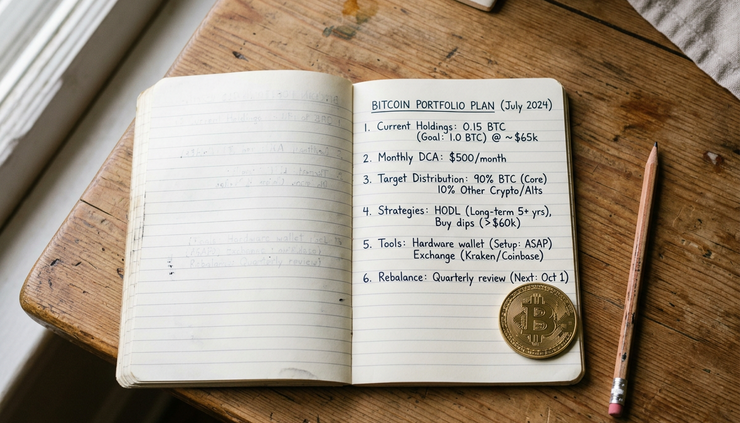
The first step is to define the role Bitcoin would play in the portfolio. Is it a long-term store-of-value bet? A short-term trade? A hedge? A speculative position? Each answer leads to a different approach.
A long-term investor may care less about short-term swings, but still needs limits. A trader may care more about entry points and exits, but must accept that timing risk is high. A cautious investor may decide that Bitcoin exposure should remain small, even if the long-term thesis is appealing.
Position sizing matters more than confidence. A person who invests an amount they can hold through volatility is less likely to panic. A person who invests too much may sell at the worst possible time.
Simple rules can help:
Decide the maximum allocation before buying.
Avoid using borrowed money to buy volatile assets.
Write down the reason for buying.
Set conditions for adding, holding, or selling.
Review the plan when calm, not during a price spike.
The most dangerous Bitcoin investment is not always the one made at a high price. It is the one made without a plan.
The balanced takeaway
Bitcoin at US$85,000 sits in a difficult but fascinating zone. The market has enough strength to justify attention, but enough risk to punish careless buying.
The bullish case remains credible. Institutional access, limited supply, strong recognition, and macro uncertainty can all support further gains. Yet the risks are just as real. Sentiment can fade, regulation can surprise the market, and sharp corrections can happen even during longer bull trends.
Grayscale’s warning about market timing is a useful anchor. Investors do not need to guess the exact top or bottom to make better decisions. They need a clear thesis, sensible position sizing, and the discipline to avoid emotional trades.
If Bitcoin rises from here, a plan helps manage greed. If it falls, a plan helps manage fear. At US$85,000, that may be the real difference between an investment and a trap.


Comments