


VOTE: Who’s Winning the Ballon d’Or? 🤔 Pick Your Champion
- Jun 3
- 6 min read
VOTE: Who's taking home the Ballon d'Or this year?

Every football season eventually produces a familiar debate, one that extends far beyond individual matches, league tables, or trophy celebrations. As the campaign approaches its conclusion, attention increasingly shifts toward the Ballon d'Or, the sport's most prestigious individual honor. Once again, the conversation has become fiercely competitive, with several of world football's biggest names building compelling cases through their performances across domestic leagues, continental competitions, and international tournaments.
This year's shortlist reflects the remarkable depth of elite talent currently shaping the modern game. From established superstars at the peak of their powers to young phenoms redefining expectations, the race appears more open than it has been in recent seasons. The image circulating across social media captures that uncertainty perfectly, presenting nine players whose contributions have defined headlines throughout the year: Harry Kane, Michael Olise, Lamine Yamal, Ousmane Dembele, Kylian Mbappe, Luis Diaz, Khvicha Kvaratskhelia, Declan Rice, and Erling Haaland.
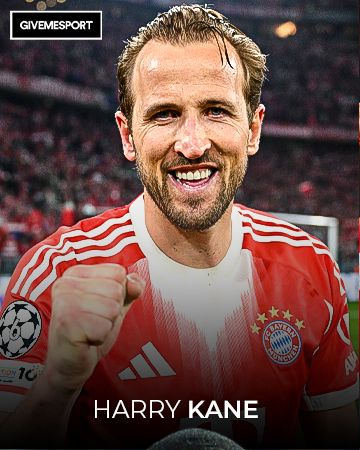
Among the candidates, Harry Kane continues to represent consistency at the highest level. After years of individual brilliance in England, the striker has carried his goalscoring instincts onto the European stage with remarkable efficiency. Kane's game has evolved beyond simply finishing chances. He now influences build-up play, drops deeper to create opportunities, and frequently serves as both scorer and playmaker. Such versatility has strengthened his Ballon d'Or credentials, particularly if his goals are accompanied by major team success. Voters have historically favored players whose statistical output is matched by meaningful trophies, and Kane's season has kept him firmly in that conversation.
Michael Olise, meanwhile, represents one of the most intriguing names on the list. His rise has been characterized by elegance, creativity, and an ability to influence games through moments of technical brilliance. Whether drifting between defensive lines or delivering decisive final passes, Olise has demonstrated the kind of intelligence that coaches value and supporters admire. While Ballon d'Or discussions often revolve around goalscorers, exceptional creators can also attract attention when their influence becomes impossible to ignore. Olise's emergence among football's elite performers illustrates how rapidly reputations can evolve in the modern game.
No player on the shortlist perhaps symbolizes football's future more than Lamine Yamal. At an age when many prospects are still developing within academy systems, Yamal has already established himself as a major figure on some of football's biggest stages. His maturity, confidence, and technical quality have drawn comparisons with legendary talents who transformed the sport before him. What makes his candidacy particularly fascinating is that he combines youth with genuine impact. Rather than merely being a promising youngster, he has become a player capable of deciding major matches against elite opposition.
The excitement surrounding Yamal extends beyond statistics. Football supporters are witnessing the development of a player who appears comfortable carrying extraordinary expectations. Throughout history, Ballon d'Or races have occasionally been shaped by narrative as much as numbers. The story of a teenager competing alongside established superstars naturally captures attention. Whether that narrative ultimately translates into victory remains uncertain, but his presence among the contenders speaks volumes about his influence.
Ousmane Dembele enters the discussion from a different perspective. For years, questions surrounding injuries often overshadowed recognition of his immense talent. This season, however, many observers believe he has finally demonstrated the consistency long expected from him. His pace, unpredictability, and technical ability make him one of the most difficult attacking players to defend against. When operating at his highest level, Dembele possesses the rare capacity to transform matches through individual inspiration.
What strengthens Dembele's case is his growing efficiency. Earlier in his career, critics sometimes argued that his end product failed to match his natural gifts. More recently, however, his decision-making and contribution in crucial moments have improved significantly. Ballon d'Or voters frequently reward players who shine during decisive stages of competitions, and Dembele's performances in major fixtures could prove particularly influential when ballots are cast.
Kylian Mbappe remains one of the most recognizable faces in global football and inevitably occupies a central place in any Ballon d'Or conversation. For several years, he has been viewed as a future winner, if not a multiple winner. His combination of speed, finishing ability, intelligence, and consistency continues to set him apart. Even in seasons when competition is fierce, Mbappe's numbers alone ensure his inclusion among the favorites.
Yet the Ballon d'Or is rarely determined by reputation alone. Mbappe faces the challenge of competing against rivals who have also produced exceptional campaigns. The margins separating elite candidates are often incredibly narrow. Goals, assists, trophies, decisive performances, and overall influence all contribute to the final outcome. Mbappe's supporters will argue that few players impact games with greater regularity, while others may point toward alternative candidates whose collective achievements strengthen their claims.
Luis Diaz offers another compelling narrative. The Colombian winger has become admired for his relentless work ethic, direct attacking style, and ability to deliver in high-pressure situations. His journey to the top level of European football has earned widespread respect, and his performances have frequently reflected both determination and technical excellence. Diaz embodies the modern winger: explosive, versatile, and capable of creating danger from almost any position across the front line.

While Ballon d'Or winners are often associated with overwhelming statistics, Diaz's influence extends beyond measurable numbers. His intensity frequently changes the rhythm of matches, forcing opponents into mistakes and creating opportunities for teammates. Such contributions may not always dominate headlines, but they remain invaluable within elite football environments.
Khvicha Kvaratskhelia continues to captivate supporters with a style of play that blends artistry and effectiveness. The Georgian international has developed into one of Europe's most exciting attacking players, capable of producing moments that shift momentum instantly. His dribbling ability, creativity, and confidence in one-on-one situations make him a constant threat. Few players combine entertainment value and productivity as naturally as Kvaratskhelia.
Ballon d'Or campaigns often benefit from memorable moments, and Kvaratskhelia has produced several throughout the season. Football remains a sport driven by emotion as much as analysis. Spectacular goals, decisive assists, and standout performances in major matches often leave lasting impressions on voters. His ability to create such moments ensures he remains firmly within the wider discussion.
Declan Rice stands out as perhaps the most unique candidate among the group. Unlike many Ballon d'Or contenders, his primary influence comes from controlling matches rather than directly deciding them through goals. Rice has evolved into one of football's premier midfielders, blending defensive security with increasingly sophisticated attacking contributions. His leadership qualities, tactical awareness, and consistency have made him indispensable.

Historically, midfielders have often struggled to receive the same recognition as prolific forwards. Nevertheless, exceptional seasons can alter perceptions. Rice's performances have highlighted the importance of balance, discipline, and intelligence within elite teams. In an era increasingly defined by tactical complexity, players who dominate midfield battles deserve serious consideration.
Then there is Erling Haaland, whose goalscoring record continues to challenge conventional expectations. The Norwegian striker has transformed the art of finishing into something remarkably efficient. Every season seems to produce new milestones, reinforcing his reputation as one of the game's most lethal attackers. His presence alone forces defenses to adjust their entire structure.
Haaland's Ballon d'Or prospects inevitably depend on the relationship between individual numbers and team success. Voters often gravitate toward players whose achievements combine personal brilliance with collective accomplishment. Few candidates can match his scoring output, but the award's history demonstrates that goals alone do not always guarantee victory. The broader context of the season remains crucial.
What makes this particular Ballon d'Or race so fascinating is the absence of a universally accepted frontrunner. In some years, one player's superiority appears obvious months before the ceremony. This season feels different. Multiple candidates possess legitimate claims, and opinions vary dramatically depending on which criteria supporters prioritize. Some value trophies above all else. Others focus on individual statistics, influence, consistency, or performances in major matches.

Social media has amplified these debates considerably. Every goal, assist, trophy celebration, and standout display becomes part of an ongoing argument. Supporters construct detailed cases for their preferred candidate while questioning the credentials of rivals. The Ballon d'Or has evolved beyond a simple award into a global conversation reflecting football's passion and diversity of opinion.
The emergence of younger stars also adds another layer to the discussion. For more than a decade, football's individual awards were largely dominated by a handful of legendary figures. Today's landscape feels more open. New generations are stepping forward, challenging established hierarchies, and redefining expectations. The presence of players like Lamine Yamal and Michael Olise alongside proven superstars reflects that transition.
Ultimately, the Ballon d'Or remains about more than statistics or trophies. It captures a particular moment in football history, recognizing the player whose season most effectively combines excellence, influence, and achievement. Every voter approaches that question differently, which explains why debates continue long after the winner is announced.
For now, the answer remains uncertain. Harry Kane offers relentless consistency. Michael Olise brings creativity and flair. Lamine Yamal represents the future arriving ahead of schedule. Ousmane Dembele has rediscovered his best form. Kylian Mbappe continues to perform at an elite level. Luis Diaz provides energy and decisive moments. Khvicha Kvaratskhelia combines artistry with productivity. Declan Rice controls matches from midfield. Erling Haaland delivers goals at a historic rate.

The race remains open, the arguments continue, and football supporters around the world will keep making their case. Until the final votes are counted, every performance could prove decisive in determining who ultimately takes home the Ballon d'Or this year.


Comments