


Trailing 0–3 but staging a remarkable comeback: Bayern Munich showcase their ‘steel mentality’ under Vincent Kompany.
- Apr 28
- 4 min read
Bayern Munich’s remarkable comeback win in the Bundesliga offered a revealing snapshot of the philosophy instilled by Vincent Kompany, a coach whose influence continues to reshape both the team’s identity and its ambitions. Trailing 3-0 away at Mainz, with a crucial Champions League semi-final first leg against Paris Saint-Germain looming, Bayern could have been forgiven for easing off. Instead, they responded with urgency, intensity, and belief—qualities that have come to define Kompany’s tenure.
“You’re hopelessly behind, you know there’s a big game in Paris on Tuesday. But that doesn’t matter. This game in Mainz is what counts. The coach finds the right words and the team reacts.” The reflection from sporting director Max Eberl encapsulated the mindset within the squad. Even with the Bundesliga title already secured, Bayern approached the match with a seriousness that underlined their internal standards.
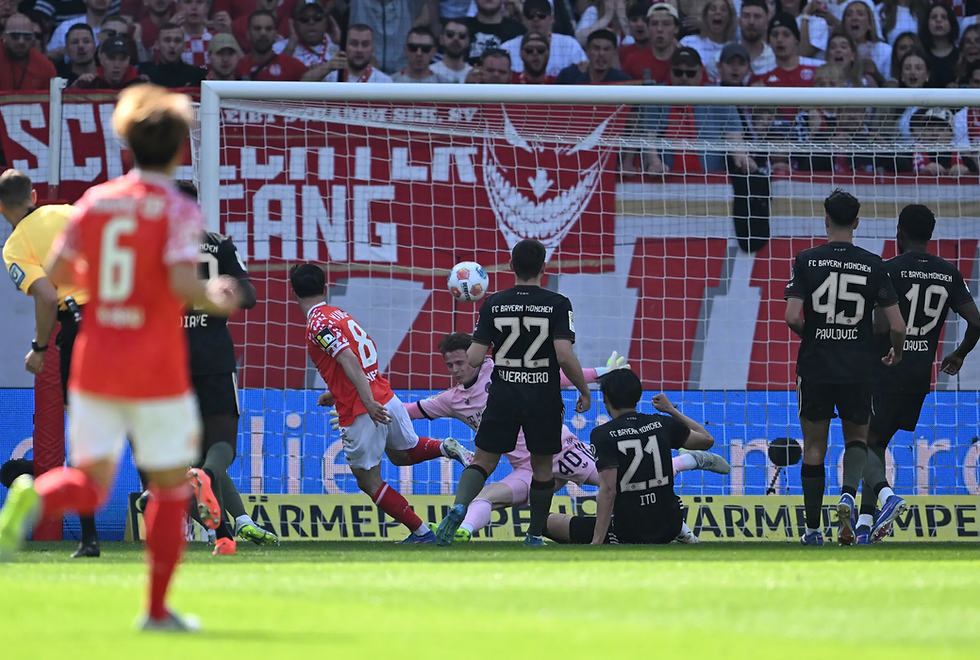
On paper, the result might be interpreted as another statistical milestone in an already extraordinary campaign. The victory preserved the possibility of a record-breaking points tally while extending an astonishing scoring record—113 goals in 31 league matches. Yet, as Eberl emphasized, the significance of the comeback lay not in numbers but in mentality.
At halftime, Bayern faced a daunting deficit. A moment that seemed to seal their fate came when Jonas Urbig produced a superb save, only for the ball to spin back into danger, allowing Sheraldo Becker to make it 3-0. For many teams, such a setback—especially ahead of a European semi-final—would have signaled the end of the contest.
Historically, even Bayern have not always maintained intensity in similar circumstances. During Pep Guardiola’s first season, he famously remarked, “Die Bundesliga ist für uns vorbei,” reflecting a shift in focus after the title had been secured. That period saw a dip in domestic urgency that carried consequences in Europe.
Kompany, however, represents a different approach. His halftime response, described by Harry Kane as containing “some strong words,” demanded accountability. “He had the right to tell us it wasn’t good enough,” Kane admitted. The team’s reaction was immediate and emphatic.
The comeback began with a goal from Nicolas Jackson, before substitutes took center stage. Michael Olise produced a moment of brilliance, while Jamal Musiala added another. Ultimately, it was Kane who completed the turnaround, sealing a victory that, while dramatic, may still become a mere footnote in Bayern’s broader campaign.
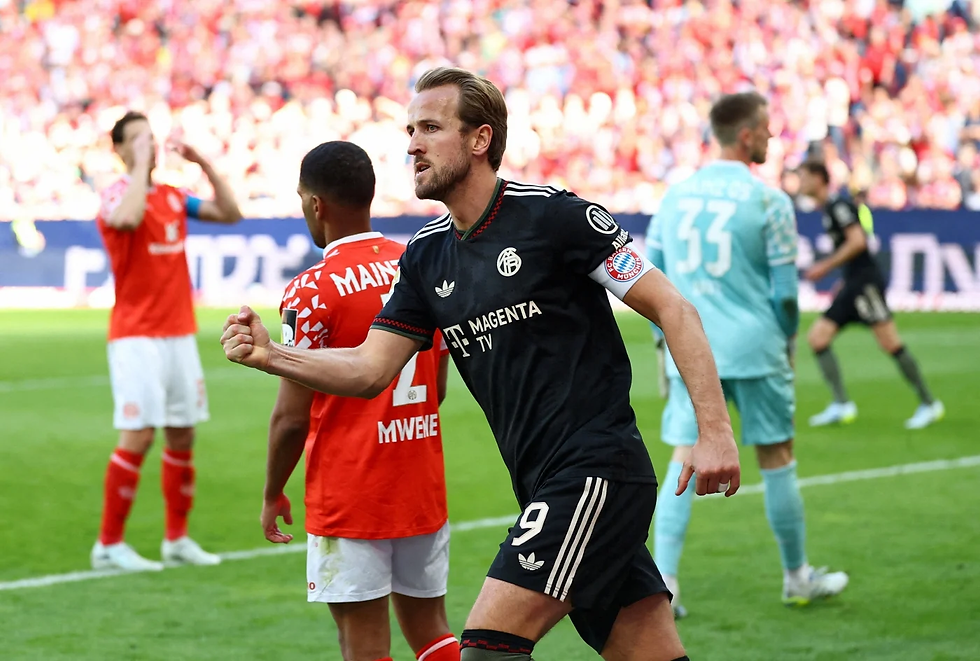
Yet this match distilled the essence of the Kompany method. Tactically, his adjustments demonstrated clarity and decisiveness. Psychologically, his insistence on maintaining standards—regardless of context—has cultivated a team that demands more of itself than ever before.
Kompany’s leadership style stands in contrast to many of his predecessors at Bayern Munich. While the club has long been associated with high expectations and, at times, internal drama, his tenure has been marked by a grounded, holistic approach. He appears largely immune to the pressures that typically accompany the role, instead focusing on consistency and collective responsibility.
This composure reflects his own playing career. As a central defender, Kompany built a reputation for intelligence, leadership, and resilience, most notably during his time at Manchester City. There, he captained the team through a transformative era, securing multiple Premier League titles and establishing himself as one of the defining figures of the club’s modern history.
Off the pitch, Kompany’s life has been characterized by stability. Married to his long-time partner Carla Higgs, he has largely avoided controversy, maintaining a profile that emphasizes professionalism and family life. His post-playing career, including a period in Belgian politics and his early managerial experiences, has further shaped a worldview that extends beyond football.
Back at Bayern, his influence is evident in the team’s preparation and adaptability. A recent victory over Bayer Leverkusen in the DFB-Pokal, described as a dominant performance despite a modest scoreline, reinforced the idea that Bayern operate at maximum intensity regardless of occasion. Such consistency has become a defining trait.

The squad itself reflects a blend of experience and emerging talent. Kane’s leadership and goal-scoring prowess provide a focal point, while Musiala continues to develop into one of Europe’s most exciting young players. The integration of new signings alongside established figures has been managed with notable precision.
As Bayern prepare to face Paris Saint-Germain, questions remain about physical readiness and squad depth. Injuries to players such as Serge Gnabry and Raphael Guerreiro present challenges, particularly against a fully fit opponent. Nevertheless, there is a growing belief within the club that they are equipped to compete at the highest level.
The prospect of a treble remains a motivating factor, though it does not solely define Kompany’s work. His impact extends beyond immediate results, influencing the club’s culture and long-term direction. Comparisons with Guardiola are inevitable, particularly given the latter’s lasting tactical legacy at Bayern.
Guardiola’s tenure, while sometimes viewed as incomplete due to the absence of a Champions League title, set a benchmark for footballing excellence. Kompany’s task is different: to build on that foundation while adapting to the evolving demands of modern football.
Within the Bundesliga, Bayern’s dominance continues, but the broader landscape remains competitive. Clubs such as Borussia Dortmund and RB Leipzig maintain pressure, while others battle for European qualification and survival. This context adds further significance to Bayern’s consistency.
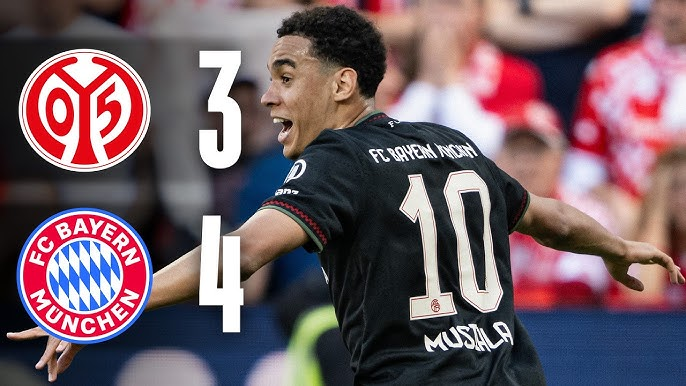
Reflecting on the Mainz match, Eberl noted: “That was a beautiful reflection of what we’ve achieved in recent months.” It is a sentiment that captures both the immediate and the broader narrative. The comeback was not merely about three points; it was a demonstration of identity.
In many ways, this Bayern side embodies the evolution of modern elite football—demanding, relentless, and psychologically resilient. Under Kompany, they have become a team that refuses to accept limitations, regardless of circumstance.
As the season approaches its climax, the defining moments are still to come. Yet performances such as this suggest that Bayern are not only prepared for those challenges but actively shaping them. Whether or not they ultimately secure every available trophy, the transformation underway is already significant, pointing toward a future defined as much by mentality as by success.


Comments