


Thomas Tuchel fires back after England’s World Cup heartbreak as he blames nation's ‘DNA’ for Argentina collapse
- Jul 17
- 3 min read
Tuchel refuses to accept tactical blame after semi-final defeat
England manager Thomas Tuchel has broken his silence following the Three Lions’ painful 2-1 World Cup semi-final defeat to Argentina, insisting he remains fully committed to leading the national team through to Euro 2028.
The German coach has come under intense criticism after England surrendered a 1-0 lead in Atlanta, with many pundits accusing him of making overly defensive substitutions that allowed Lionel Messi’s side to seize control of the match.
Tuchel, however, rejected suggestions that his tactical decisions were responsible for England’s elimination. Instead, he argued the defeat exposed a deeper issue within English football itself.
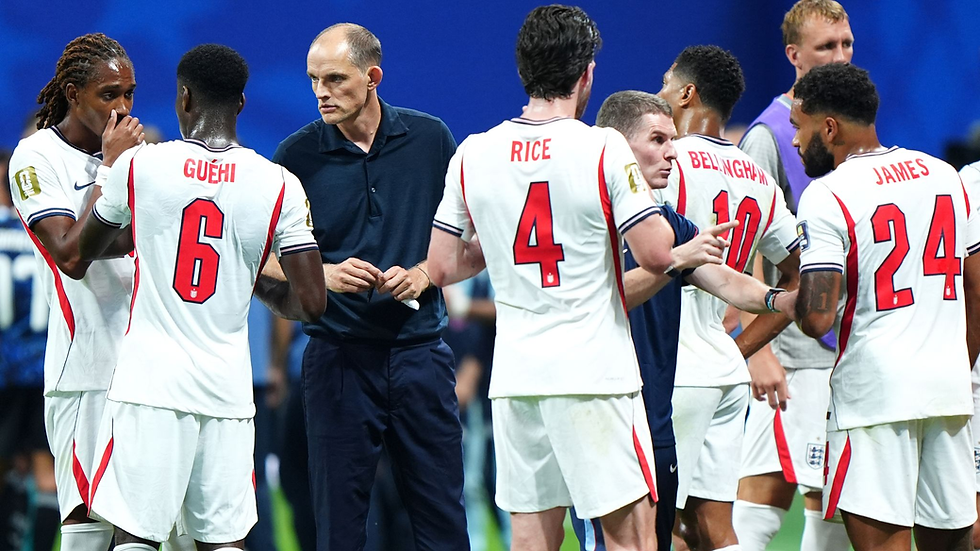
"One hundred per cent, I'm committed," Tuchel said. "There's still enough to improve and I still believe this team can win a major tournament."
'No structure in the world could have helped us'
Tuchel insisted England's problems had little to do with formations.
According to the former Chelsea boss, his players simply failed to cope once Argentina gained momentum after Anthony Gordon opened the scoring.
"In this moment my feeling was no structure in the world could have helped us."
He explained that England became passive, lost physical battles and repeatedly failed to stop Argentina's midfield runners from attacking dangerous areas.
"We were too passive. We weren't physical enough. We couldn't stop runners arriving in our box and their deliveries were outstanding."
Tuchel believes England's inability to regain possession was ultimately the decisive factor.
"When you cannot keep the ball, you cannot break the pressure and you cannot get the momentum back."
The controversial switch to a back five

One of the biggest talking points after the defeat was Tuchel's decision to introduce defender Ezri Konsa and switch to a back five with more than 30 minutes remaining while England were leading.
Many supporters viewed the move as an invitation for Argentina to attack.
Tuchel strongly disagreed.
He insisted the change was designed to make England more aggressive rather than more defensive.
"It was never about becoming passive," he explained.
"We wanted to get quicker to the wingers and close the spaces. The intention was to become more active inside the structure."
Instead, he admitted, England naturally retreated deeper as Argentina increased the pressure.
England's 'DNA' under the spotlight
Perhaps Tuchel's most controversial remark was his claim that England's long-standing football identity is the real issue.
He argued that English players continue to struggle when opponents press aggressively and force them into difficult situations.
"There is something in the DNA. Under pressure we struggle to keep possession."
The comments immediately sparked debate because the Football Association introduced its famous "England DNA" development programme in 2014 to create technically stronger, possession-based players from youth level all the way to the senior national team.
Sky Sports reporter Rob Dorsett questioned whether Tuchel's criticism contradicts more than a decade of player development.
According to Dorsett, either England's DNA programme has failed—or Tuchel is simply wrong.
Questions grow over Tuchel's squad selections

The criticism has also focused on players who barely featured during the tournament.
Manchester United midfielder Kobbie Mainoo, widely regarded as one of England's most composed players under pressure, failed to play a single minute throughout the World Cup despite helping United finish the Premier League season strongly.
Former Manchester City midfielder Phil Foden was left out of the squad entirely.
Analysts believe both players may have offered England the ball control they desperately lacked once Argentina took command.
Instead, Tuchel repeatedly turned to Declan Rice, Jude Bellingham, Jordan Henderson, Reece James, Morgan Rogers and Eberechi Eze in central midfield.
Many observers believe England once again paid the price for lacking midfield composure when protecting a lead.
Heat, altitude and fatigue also played a role
Tuchel also pointed to the difficult conditions throughout the tournament.
England travelled more than 14,000 miles during the World Cup—more than any other nation—and frequently played in extreme heat and altitude.
He believes the physical toll accumulated as the competition progressed.
"We struggled physically over the whole tournament," he admitted.
"Playing in the heat, playing at altitude—it cost us a lot."
Tuchel remains convinced England can win trophies
Despite the criticism, Tuchel insists he has no intention of changing course.
He believes England still possess the quality to lift a major international trophy if they improve technically and become more comfortable controlling games under pressure.
"I still think we can impose ourselves more on the ball."
"I still believe there's another level inside this group."
"Our job now is to reach that next level—and win the big prize."
Whether supporters accept Tuchel's explanation or continue to blame his tactical approach, one thing is certain: the debate over England's identity—and their failure to end nearly 60 years of World Cup disappointment—is only just beginning.



Comments