


Southampton snatch a dramatic 116th-minute victory amid “spy” scandal as Middlesbrough are left heartbroken in the most chaotic night of the season.
- May 13
- 8 min read
The tension surrounding Southampton’s playoff campaign had already transformed the semi-final against Middlesbrough into one of the most emotionally charged fixtures of the Championship season long before the decisive second leg even kicked off at St Mary’s. By the time Shea Charles delivered the extra-time strike that sealed a 2-1 aggregate victory and booked Southampton’s place in the playoff final against Hull City, the evening had become about far more than football. It was a contest shaped equally by controversy, accusation, psychological warfare and moments of individual brilliance that threatened to define careers.
For Southampton, the victory represented another chapter in a season built on resilience and unpredictability. For Middlesbrough and their head coach Kim Hellberg, it was an exit wrapped in bitterness, frustration and lingering questions about the “spygate” controversy that had overshadowed the tie from the moment the English Football League charged Southampton with two counts of misconduct ahead of the first leg. The allegations created an atmosphere in which every challenge, every confrontation and every touchline exchange seemed amplified.

The match itself opened at an unforgiving pace. Middlesbrough immediately demonstrated that they had arrived with little interest in protecting themselves against the hostility of St Mary’s. Barely five minutes had passed when Riley McGree stunned the home crowd with a composed first-time finish after Callum Brittain delivered a dangerous cross into the penalty area. McGree’s strike, spinning low beyond Daniel Peretz, instantly altered the mood inside the stadium. Yet what drew equal attention was the Australian midfielder’s refusal to indulge in any gesture connected to the spying accusations that had dominated the build-up. Instead, he celebrated with the emu-inspired routine he had performed since his days at Adelaide United in the A-League, a small reminder of the personality that has made him one of Middlesbrough’s most distinctive players.
McGree’s path to English football has rarely followed a straightforward script. Born in Australia, he emerged as one of the country’s most technically gifted midfielders before attracting European interest at a young age. His career has included spells in Belgium and the United States, but it was in England that his maturity truly developed. Quiet away from the pitch and rarely involved in public controversy, McGree has cultivated a reputation for professionalism and understated leadership. Teammates frequently describe him as one of the calmest figures in the dressing room, a contrast to the fiery atmosphere surrounding this semi-final.
Middlesbrough looked capable of overwhelming Southampton in the opening stages. Morgan Whittaker soon rattled the side netting, and the visitors carried the same attacking intensity that had seen them dominate large portions of the first leg, where they recorded 21 attempts compared to Southampton’s complete lack of shots on target. Yet as the half progressed, Southampton gradually reasserted themselves through physicality and territorial pressure. Ross Stewart, stretching desperately to meet Ryan Manning’s cross, hooked an effort wide before Casper Jander nearly punished Aidan Morris after stealing possession near the edge of the box.
Stewart’s role in Southampton’s revival carried a particular emotional weight. Injuries have repeatedly interrupted the Scottish striker’s career over recent seasons, threatening to stall the momentum he generated during his prolific spell at Sunderland. Tall, powerful and aerially dominant, Stewart has long been admired for his traditional centre-forward qualities, but his physical setbacks created doubts over whether he could still influence matches at the highest level. Southampton nevertheless maintained faith in him, believing his mentality remained as valuable as his goals.
That trust was rewarded just before half-time. James Bree floated a dangerous free-kick toward the far post where Ryan Manning volleyed the ball into the ground, forcing Sol Brynn into a reflex save. The danger, however, remained alive inside a crowded penalty area. Stewart rose above a cluster of defenders and directed a towering header across goal and into the net. The eruption inside St Mary’s reflected not only relief but recognition of the striker’s persistence through adversity. As “Zombie Nation” echoed around the stadium, Southampton supporters seized the moment to taunt their rivals with chants of “We spy when we want,” an anthem that perfectly captured the provocative atmosphere surrounding the tie.

The controversies extended well beyond terrace humour. During the first half, referee Andy Madley was forced to speak with both managers after allegations emerged that Taylor Harwood-Bellis had made discriminatory comments toward Luke Ayling regarding the defender’s stammer. The accusation added another deeply uncomfortable layer to an already combustible contest. Neither side appeared willing to back away from confrontation. Tonda Eckert and Kim Hellberg repeatedly exchanged heated words near the technical areas, at one point requiring intervention from fourth official Tom Nield.
Hellberg, who has become one of the Championship’s most intriguing young managers, later admitted the defeat “breaks my heart.” The Swedish coach arrived in England with a reputation for tactical innovation and progressive football philosophy, quickly transforming Middlesbrough into one of the division’s most entertaining sides. His emotional reaction after the final whistle illustrated how deeply the occasion had affected him. Beyond tactical preparation, Hellberg had spent days fielding questions about espionage allegations and disciplinary proceedings rather than football itself.
Southampton’s supporters did little to calm the situation. Some arrived at St Mary’s wearing camouflage ghillie suits and carrying binoculars, openly mocking accusations the club had used improper scouting methods. Chief executive Phil Parsons had earlier confirmed Southampton launched an internal review but requested additional time to present their version of events before an independent disciplinary commission. Although the club were not expected to deny the allegations entirely, uncertainty remained over potential consequences should misconduct ultimately be proven.
The hostility was visible from the moment Middlesbrough’s team coach approached the stadium and was reportedly met by thrown objects from sections of the crowd. Once the match began, tempers constantly threatened to boil over. Finn Azaz, himself a former Middlesbrough player, entered the referee’s notebook after a reckless challenge on Matt Targett. Later, Southampton’s bench erupted when Ayling appeared to impede Léo Scienza inside the penalty area by placing a hand on the Brazilian attacker’s chest as he prepared to shoot. Eckert reacted furiously on the touchline, arms spread wide in disbelief, while Madley insisted there had been no foul.
For Shea Charles, however, the night would ultimately become another defining chapter in a remarkably promising young career. The midfielder has developed a growing reputation for decisive interventions in high-pressure moments. Earlier in the season, he scored the late winner that eliminated Arsenal from the FA Cup quarter-finals. In February, his dramatic 96th-minute goal completed Southampton’s astonishing 4-3 comeback against Leicester City. Now, once again, he delivered when tension was at its peak.
Charles’ rise has been watched closely across British football for years. Emerging through Manchester City’s academy system before moving to Southampton for regular first-team opportunities, he has frequently been described as one of the most intelligent midfielders of his generation. Coaches admire his positional discipline and composure under pressure, while supporters increasingly associate him with decisive moments. Unlike many young footballers suddenly thrust into prominence, Charles has maintained a notably private personal life, avoiding the celebrity culture that often surrounds elite prospects. Friends and former academy coaches regularly portray him as intensely focused, almost reserved, with football remaining the central priority of his life.
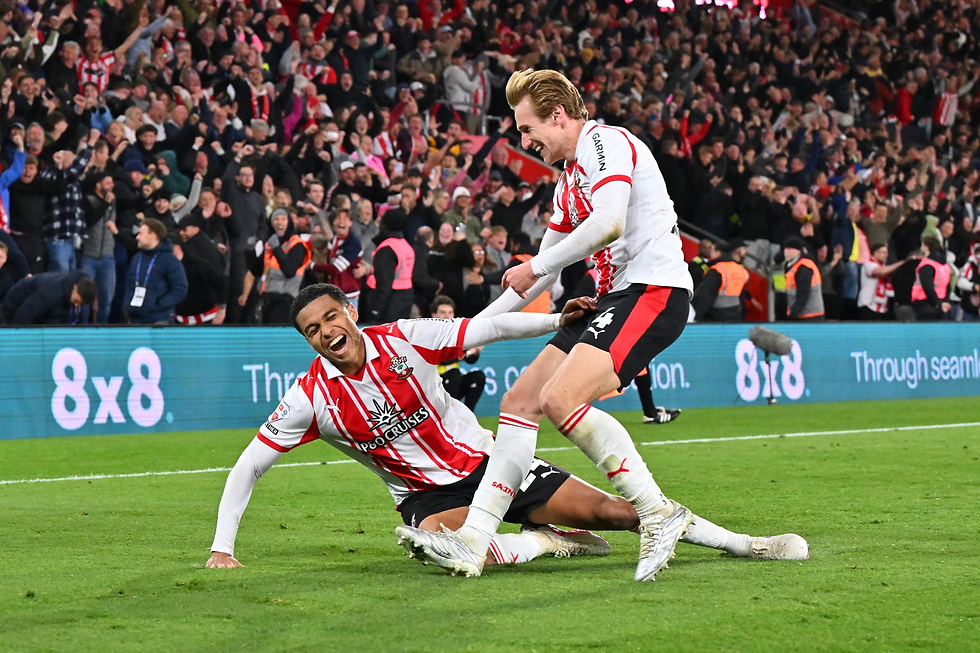
As extra time wore on, Middlesbrough visibly began to fade physically. Cyle Larin forced Brynn into an important save while Sam Edozie repeatedly attacked tiring defenders. Fouls accumulated, mistakes multiplied and the match increasingly resembled a battle of endurance rather than structure. Then came the decisive moment in the 116th minute. Positioned wide on the right flank, Charles appeared to attempt a cross toward the crowded penalty area. Instead, the ball drifted beyond Dael Fry and curled unexpectedly into the far corner. Whether intentional or not mattered little. Charles sprinted away in celebration before throwing himself onto the turf as Southampton’s players and supporters exploded in relief.
Dael Fry’s involvement in the winning goal only deepened the heartbreak for Middlesbrough. A lifelong servant of the club, Fry has spent nearly his entire professional career representing his hometown side. Over the years he has rejected opportunities to leave, choosing loyalty over higher-profile moves. His reputation inside Middlesbrough remains enormous precisely because supporters view him as one of their own. To see the decisive moment slip past him in such cruel fashion only intensified the emotional damage of elimination.
The aftermath of the match continued to reflect the bitterness that had defined the tie. Players confronted each other during the closing stages, while frustrations spilled into incidents involving Southampton ballboys and Middlesbrough substitutes. At one point, Aidan Morris became involved in a heated exchange after a ball was not returned quickly enough to Matt Targett. The accumulation of small flashpoints created an atmosphere closer to a grudge match than a conventional playoff semi-final.
Yet amid the hostility, the fixture also illustrated why Championship football continues to command such emotional investment. The division’s unpredictability, physicality and raw tension often produce narratives more dramatic than those found in more glamorous competitions. Southampton’s journey this season has embodied that volatility. Relegated from the Premier League with questions surrounding recruitment, identity and morale, the club rebuilt around younger players while placing faith in emerging talents such as Charles and Jander alongside experienced figures like Stewart and Manning.

Tonda Eckert himself has become central to that transformation. Though still relatively young for a manager, he has quickly earned admiration for his intense touchline presence and willingness to trust attacking football. Players speak about the emotional energy he injects into training sessions and matches alike. Critics, however, sometimes argue that his confrontational personality contributes to unnecessary tension. The scenes against Middlesbrough did little to soften that perception. His animated disputes with officials and opposing staff reflected a manager entirely consumed by the occasion.
Away from football, Southampton as a club has endured years of instability since the departure of several key executives responsible for their earlier Premier League success. Financial pressures, ownership changes and inconsistent recruitment created periods of uncertainty that left supporters fearing long-term decline. Returning to Wembley now offers the possibility of restoring both prestige and financial stability. Promotion would dramatically alter the club’s trajectory, particularly for younger players whose reputations are rapidly expanding.
For Middlesbrough, the defeat raises equally important questions. Hellberg’s side often produced some of the division’s most attractive football this season, yet inconsistency in crucial moments prevented automatic promotion. The emotional exhaustion visible after extra time reflected not only disappointment but awareness that opportunities like this are never guaranteed to return. Whether key players such as McGree and Whittaker remain at the club next season may depend heavily on the financial consequences of failing to secure Premier League football.
There is also the unresolved issue of the disciplinary investigation hanging over Southampton. Middlesbrough figures privately remain furious about the allegations of improper conduct, and some within the club reportedly believe significant punishment should follow if wrongdoing is confirmed. While it remains highly unlikely that the playoff result itself would be overturned, the mere existence of that conversation reveals how poisoned relations between the clubs became throughout the semi-final.

Still, football ultimately tends to remember defining images more than legal proceedings. The lasting memory of this night will likely be Shea Charles sprinting across the St Mary’s pitch after delivering another improbable winner. At only a young age, he already appears comfortable carrying the emotional burden of decisive moments. Whether through composure, instinct or fortune, he continues placing himself at the centre of matches that shape seasons.
Southampton now move forward to Wembley carrying momentum, controversy and belief in equal measure. Their playoff final against Hull City promises another emotionally charged occasion, though perhaps without the uniquely toxic undertones that surrounded Middlesbrough. For Stewart, Charles and the rest of Eckert’s squad, promotion would complete a remarkable recovery from relegation disappointment. For Hellberg and Middlesbrough, the defeat may linger long after the season ends, not simply because they lost, but because the entire tie evolved into something far more personal than football alone.


Comments