


Sabalenka’s Madrid Open defence ends with shock defeat by 30th seed Baptiste.
- Apr 29
- 5 min read
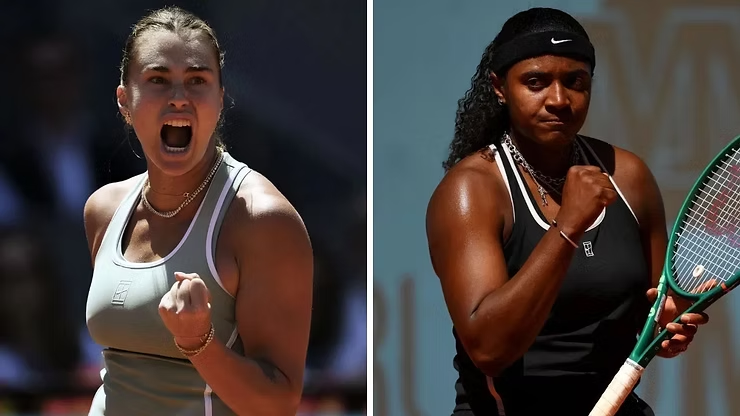
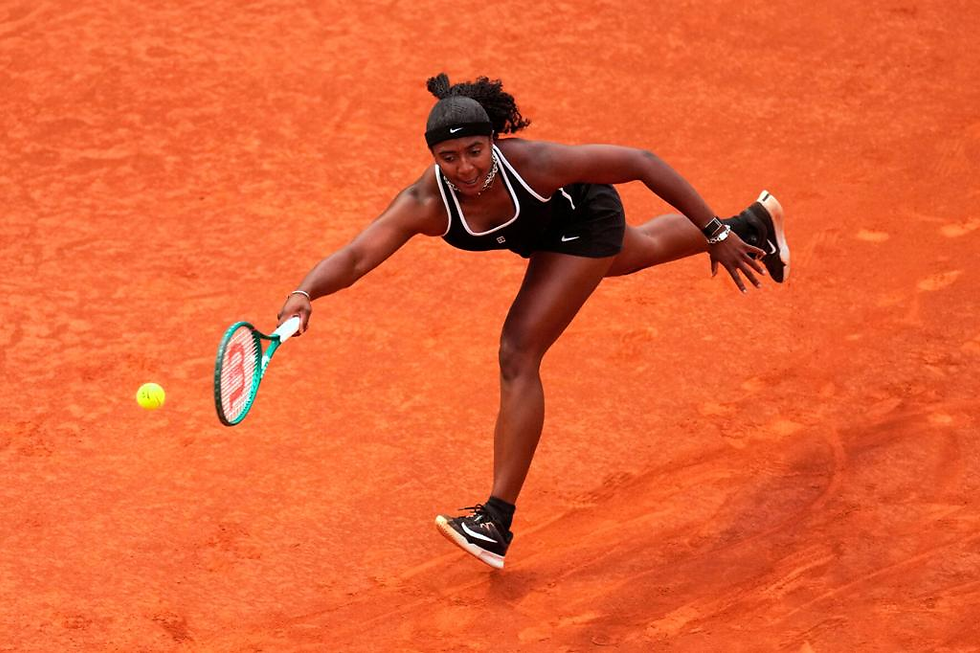
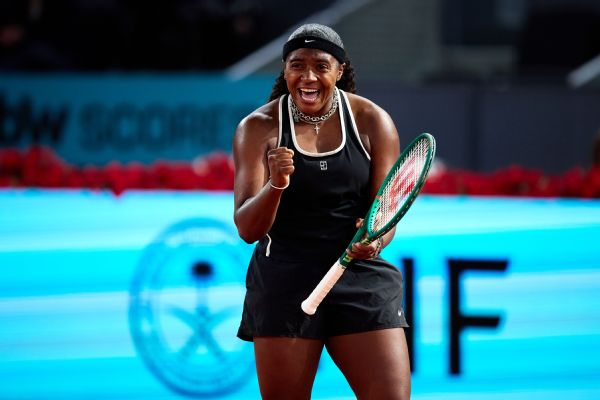
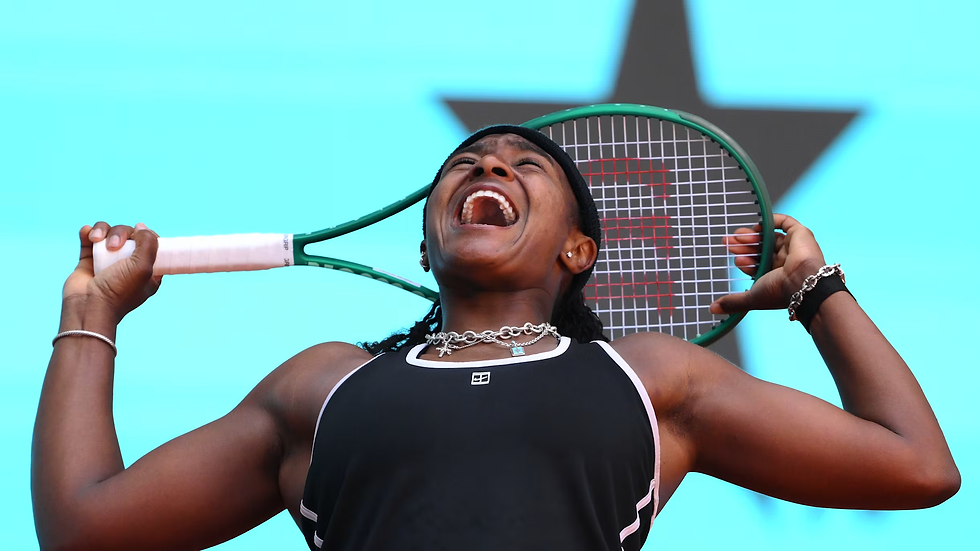
Aryna Sabalenka’s Madrid Open title defence came to a dramatic and unexpected end as she was stunned by 30th seed Hailey Baptiste in one of the biggest shocks of the tournament. The American produced a composed yet fearless performance to win 2-6, 6-2, 7-6 (6), ending Sabalenka’s 15-match winning streak and sending her through to a maiden WTA 1000 semi-final.
The match began in familiar fashion, with Sabalenka asserting her dominance early, using her powerful baseline game to take the opening set 6-2. Known for her aggressive style and ability to dictate rallies, the world No 1 looked in control and appeared on course to extend her remarkable run in Madrid, where she has previously been a three-time champion and consistent finalist.
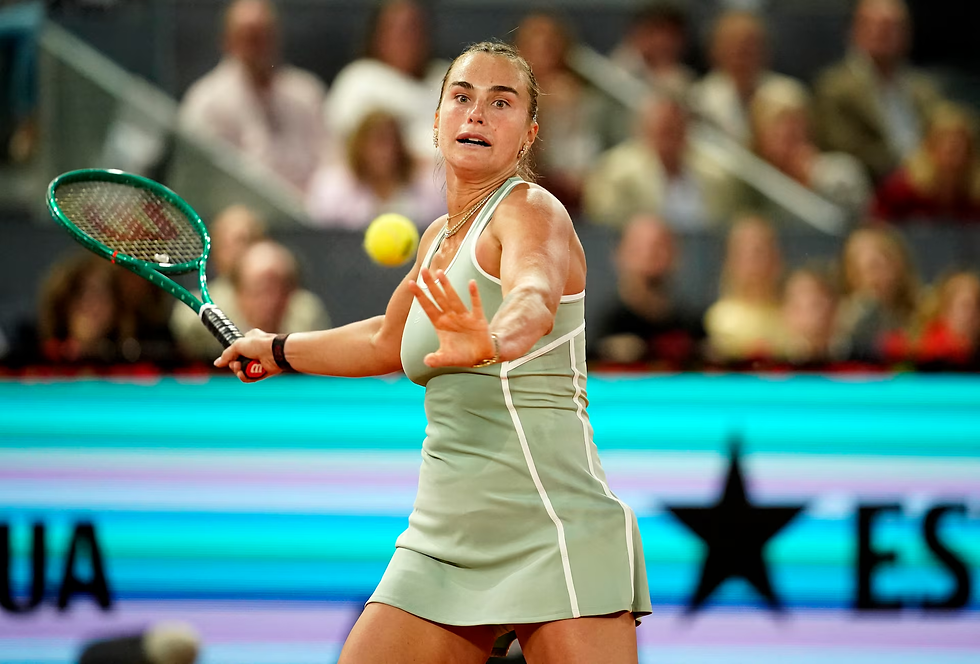
However, the momentum shifted sharply in the second set as Baptiste began to find rhythm on serve and increased her aggression from the baseline. The American’s willingness to take risks paid off as she levelled the match 6-2, forcing Sabalenka into uncharacteristic errors and disrupting her usual flow.
The deciding set became a test of nerves and endurance, evolving into a tense battle that highlighted both players’ contrasting styles. Sabalenka continued to rely on raw power, while Baptiste combined heavy serving with bold shot selection. At 4-5 in the final set, Baptiste saved five match points in a remarkable display of composure, before surviving another in the tie-break to eventually complete the upset after two and a half hours of intense competition.
Baptiste finished the match with 12 aces and 10 double faults, reflecting both the risk and reward of her aggressive approach. One of the defining moments came when she saved a match point with an audacious serve-and-volley play, a decision that ultimately helped shift the psychological balance in her favour.
The defeat marked only Sabalenka’s second loss of the year and her first since the Australian Open final three months earlier. It also ended her bid to retain the Madrid crown, a tournament where she has historically performed at an elite level and built a strong record of deep runs.
For Baptiste, the victory represented a breakthrough moment in her career. The 24-year-old American, long regarded as a promising but inconsistent talent, delivered one of her most complete performances on a major stage. Her ability to withstand pressure situations and execute under extreme tension will likely define her rise in the WTA rankings moving forward.
Her next challenge comes against Mirra Andreeva, the ninth seed, who continues her impressive development on clay. Andreeva, who recently claimed the title in Linz, advanced to the semi-finals with a straight-sets win over Leylah Fernandez and has now compiled an 11-1 record on clay this season. The Russian teenager, who turns 19, is widely considered one of the sport’s brightest emerging stars.
While Sabalenka’s exit dominated headlines, the Madrid Open also saw attention shift to Jannik Sinner, who continued his strong form with a straight-sets win over Britain’s Cameron Norrie. The world No 1 delivered a controlled 6-2, 7-5 victory to extend his winning streak at Masters 1000 level to 25 matches.
Sinner’s performance once again highlighted his consistency and tactical maturity, particularly on serve. He won 81% of his first-serve points and 63% on second serve, underlining his ability to maintain high efficiency under pressure. His upcoming opponent in the quarter-finals will be either Jódar or Vit Kopriva.
Following the match, Sinner also drew attention for his comments regarding the tournament schedule, suggesting that organisers should reconsider late-night match timings. He explained the challenges players face in recovery after matches that finish in the early hours.
“It’s quite unusual for me,” Sinner said. “I don’t know the last time I played at 11. But for me it doesn’t matter what time. I try to do my best. For me, there was a question if it would be me or Jódar to play at 4. But I think it’s right he plays at 4, because he finished very, very late.”
He continued by addressing broader scheduling concerns: “But at the same time, I feel like we need to make some adjustments to the scheduling of the day. Two matches [starting] from 8pm is very late. Even though you have one day in between. But still it’s very, very late. You finish at 1.30am, and you need to eat, you need to have treatment, so it’s very late. But we try to adapt ourselves, our bodies, our minds, so from my side it was a good performance today.”
Sinner’s comments reflect a growing conversation within professional tennis about player welfare and match scheduling, particularly in long-format tournaments where late finishes are increasingly common.
In his analysis of the match against Norrie, Sinner highlighted the tactical familiarity between the two players. “We know each other quite well. We practised a lot in the last tournaments, also. So, we both knew what to expect. I was serving well today in the important moments,” he said.
His dominance in the Masters 1000 series continues to strengthen his position at the top of men’s tennis. He has now become only the second player in history to win his first 20 matches in a single Masters 1000 season, joining Novak Djokovic in achieving that milestone.
Elsewhere in the draw, Arthur Fils continued his impressive rise with a straight-sets win over Tomás Martín Etcheverry. The Frenchman has now reached the quarter-finals in six of seven tournaments this season, reinforcing his status as one of the most consistent young players on tour.
Fils is set to face either Lorenzo Musetti or Jiri Lehecka for a place in the semi-finals, continuing a season that has already established him as a regular presence in the latter stages of major tournaments.
Returning to Sabalenka’s defeat, the result is likely to prompt reflection on the physical and mental demands placed on top players. Her 15-match winning streak had underscored her dominance on hard and clay courts, and her ability to impose herself in high-pressure matches.
Sabalenka’s career has been defined by powerful baseline aggression and an evolving mental resilience that has seen her transition from a volatile young talent into a consistent Grand Slam contender. Her recent success, including multiple major titles and top-ranking stability, has placed her at the centre of women’s tennis.
Off the court, she has often spoken about balancing competitive intensity with emotional control, a theme that has become increasingly important in her development. Her Madrid record, previously among the strongest on tour, makes this defeat particularly notable.
Baptiste’s rise, meanwhile, fits into a broader narrative of emerging American talent in women’s tennis. Having progressed steadily through the rankings, she has often been viewed as a player with potential rather than immediate breakthrough results. This victory may mark a turning point in that perception.
Her fearless approach against the world No 1 suggests a shift in confidence, particularly in high-stakes matches. Saving multiple match points against a dominant opponent also highlights her mental resilience, an attribute often seen as the final step in transitioning from promising talent to established contender.
As the Madrid Open progresses, the women’s draw has opened significantly following Sabalenka’s exit, creating new opportunities for emerging players such as Baptiste and Andreeva to redefine expectations.
On the men’s side, Sinner’s consistency continues to set the standard, while younger challengers like Fils add further depth to an already competitive field.
Together, these developments reflect a broader generational shift across both tours, where established champions are increasingly being tested by a wave of emerging talent capable of producing unexpected results on the biggest stages.


Comments