


Jannik Sinner stuns Alcaraz in a thrilling clash: Claims Monte Carlo title, regains world No. 1, and signals the start of a new era!
- Apr 15
- 5 min read
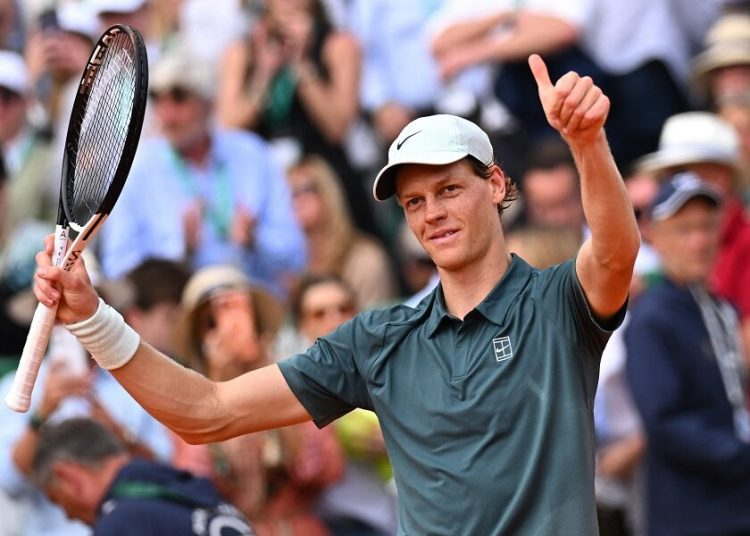
Jannik Sinner delivered a composed and authoritative performance to defeat Carlos Alcaraz in straight sets at the Monte Carlo Masters, securing his first title at the prestigious clay-court tournament and reclaiming the world No 1 ranking. The Italian prevailed 7-6 (5), 6-3 in a match that encapsulated both the intensity of their rivalry and the evolving hierarchy at the top of men’s tennis.
The victory marked Sinner’s third ATP Masters 1000 title of the season, following his triumphs at Indian Wells and Miami, completing what is often referred to as the “Sunshine Double.” In doing so, he extended a remarkable run of form that has seen him win 17 consecutive matches. His consistency across surfaces has become a defining feature of his game, reinforcing his position among the sport’s elite.

This latest achievement places Sinner in rare company. By securing four consecutive ATP 1000 titles—dating back to his victory in Paris at the end of the previous season—he joins the likes of Novak Djokovic and Rafael Nadal as one of only three players to accomplish such a feat. The comparison is significant, not only for its statistical weight but also for what it suggests about Sinner’s trajectory within the sport.
The final itself unfolded as a contest of fine margins. Alcaraz made the stronger start, racing to a 2-0 lead in the opening set with aggressive baseline play and precise shot-making. His early dominance appeared to unsettle Sinner, whose first serve struggled to find its rhythm. However, the Italian responded with resilience, breaking back immediately and gradually imposing his own tempo on the match.
As the first set progressed, both players experienced fluctuations in form, resulting in a series of break points and momentum shifts. Ultimately, the set was decided in a tie-break, where Sinner’s composure proved decisive. Despite a momentary lapse that saw him miss a set point, he recovered to close out the tie-break 7-5, capitalizing on a double fault from Alcaraz.
The second set followed a similar pattern of momentum swings. Alcaraz initially regained the initiative, creating early break opportunities, but his inability to convert proved costly. Sinner, by contrast, demonstrated a growing authority on serve and from the baseline, applying sustained pressure that eventually yielded the decisive break. From that point onward, he maintained control, serving out the match with assurance.
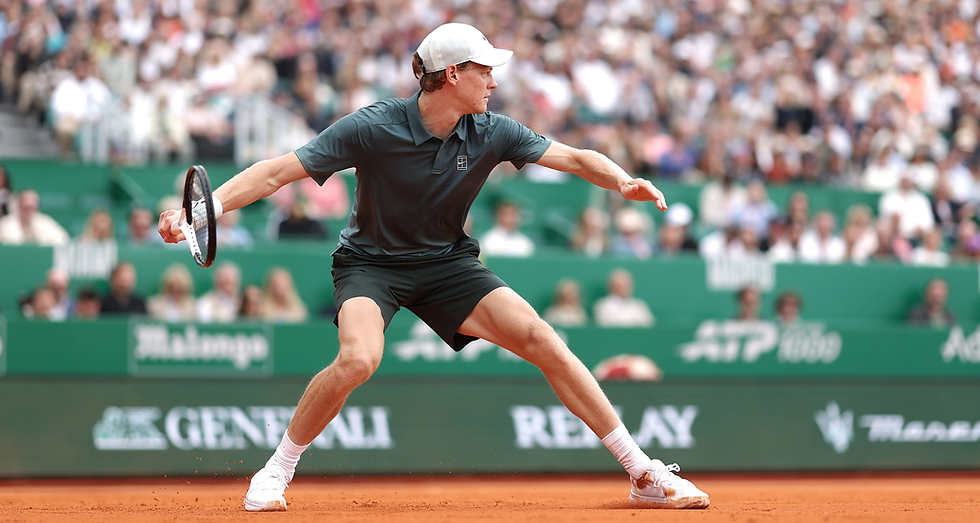
Reflecting on his victory, Sinner emphasized both the quality of the contest and the significance of the achievement. “We came here just trying to get as many matches as possible, having good feedback before other big tournaments coming up. Today was very high-level from both of us. It was a bit windy, breezy, completely different conditions than the tournament until today,” he said. His remarks highlighted the adaptability required to succeed under varying conditions.
He also addressed the importance of reclaiming the world No 1 ranking. “But look, the result is amazing. Getting back to number one means a lot to me. At the same as I always say, the ranking is secondary. I’m very happy to win at least one big trophy on this surface. I haven’t done it before, so it means a lot to me.” The statement reflects a measured perspective, balancing personal ambition with a broader focus on performance.
For Alcaraz, the defeat represents a setback in an otherwise impressive season. At 22, he remains one of the most dynamic players on the tour, known for his explosive athleticism and creative shot-making. His rivalry with Sinner has quickly become one of the defining narratives in contemporary tennis, characterized by contrasting styles and closely contested matches.
Beyond the immediate result, the match underscores the shifting dynamics within men’s tennis. With established figures such as Djokovic and Nadal entering the latter stages of their careers, a new generation is asserting itself. Sinner’s rise to the top of the rankings is emblematic of this transition, signaling the emergence of a new competitive era.

Sinner’s journey to this point has been marked by steady progression rather than sudden breakthrough. Born in San Candido, Italy, he initially pursued skiing before committing fully to tennis during his adolescence. This background is often cited as a factor in his exceptional balance and movement on court, attributes that have become integral to his playing style.
His early success on the ATP Tour was built on a foundation of disciplined training and a willingness to adapt. Over time, he has refined his serve, improved his physical conditioning, and developed a tactical awareness that allows him to compete effectively against a variety of opponents. These incremental improvements have culminated in his current dominance.
Off the court, Sinner is known for his reserved demeanor and focus on his craft. Unlike some of his contemporaries, he has largely avoided controversy, maintaining a low profile in his personal life. This approach has contributed to a public image defined by professionalism and consistency.
Alcaraz, by contrast, embodies a more expressive style, both in his play and his personality. His rapid ascent to the top of the rankings brought with it significant attention, and he has embraced the role of a global ambassador for the sport. His matches often carry an element of unpredictability, driven by his willingness to attempt high-risk, high-reward shots.
The interplay between these two approaches—Sinner’s precision and Alcaraz’s flair—adds depth to their rivalry. Each encounter offers a study in contrasts, highlighting different pathways to success within the modern game. Their head-to-head record, while still developing, reflects the competitive balance between them.
Looking ahead, Sinner’s victory in Monte Carlo positions him strongly for the remainder of the clay-court season. Success on this surface has historically been a key indicator of performance at the French Open, one of the sport’s most prestigious tournaments. His ability to adapt his game to the demands of clay—emphasizing patience, movement, and tactical variation—will be closely watched.

For Alcaraz, the challenge lies in refining his consistency while preserving the creativity that defines his game. Matches such as this provide valuable experience, offering insights into areas for improvement. His resilience and capacity for growth suggest that he will remain a central figure in the sport’s competitive landscape.
The broader implications of this match extend beyond individual achievements. It reflects a period of renewal within tennis, as emerging players redefine the standards of excellence. The presence of multiple contenders at the top of the rankings enhances the unpredictability of major tournaments, contributing to the sport’s global appeal.
Sinner’s current form, characterized by a blend of technical proficiency and mental fortitude, sets a high benchmark. His ability to maintain focus under pressure, particularly in decisive moments such as tie-breaks, distinguishes him from many of his peers. These qualities are likely to play a crucial role in his pursuit of further सफलता at the highest level.
As the season progresses, the rivalry between Sinner and Alcaraz is expected to intensify. Each meeting adds a new chapter to their shared narrative, shaping perceptions of both players. Their contrasting styles, combined with their competitive spirit, ensure that their encounters will remain among the most anticipated in the sport.

Ultimately, the Monte Carlo final served as a microcosm of contemporary tennis: dynamic, competitive, and evolving. Sinner’s victory not only secured a prestigious title but also reaffirmed his status as the world’s leading player. In doing so, he has positioned himself at the forefront of a new era, one defined by emerging talent and shifting hierarchies.


Comments