


Byron Allen Is Determined to Break the One Thing That Made Stephen Colbert Famous
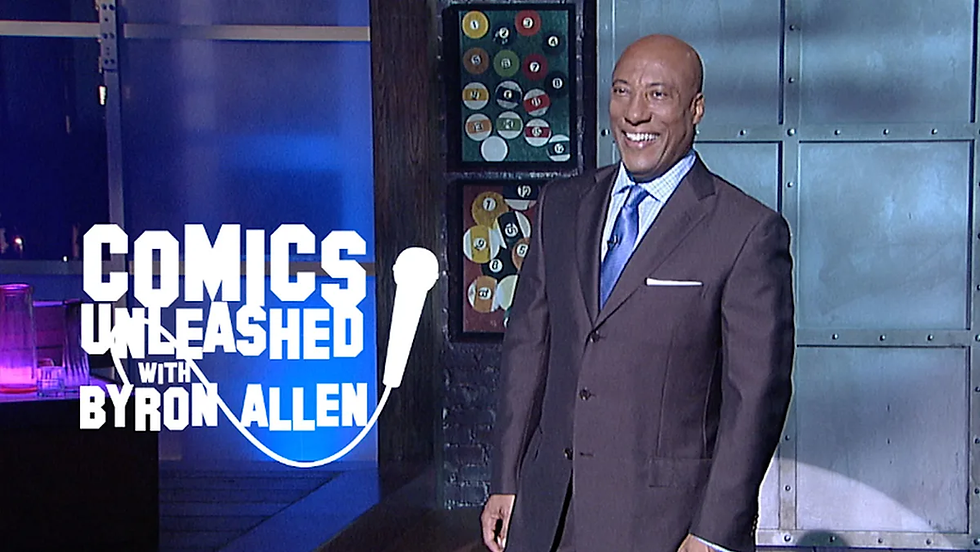
The shake-up in CBS’ late-night schedule has become one of the most talked-about stories in American television. After the network decided to end “The Late Show with Stephen Colbert” due to financial pressures, media mogul and comedian Byron Allen will bring his show “Comics Unleashed” into the familiar time slot beginning May 22, 2026.
But what has people talking is not simply who is replacing Colbert — it is how Allen says he wants to remake late-night television: no politics, no hot-button news, no partisan attacks — just comedy.
For years, American late-night television has become a space where famous hosts use comedy to comment on politics, mock social issues, and react to breaking news. Stephen Colbert became one of the clearest examples of that style.
Since taking over the franchise from David Letterman in 2015, Colbert turned “The Late Show” into a brand closely associated with political monologues, especially sharp criticism of Donald Trump. For many viewers, that was exactly why they loved him. But for others, late-night TV had become too heavy, too divided, and too far removed from simple entertainment.
Byron Allen seems to understand that gap clearly. In recent interviews, he emphasized that “Comics Unleashed” will not follow the path of politicized comedy. Allen said the show will not talk about politics, will not chase topical stories, and will not use material that is racist, sexist, antisemitic, or homophobic. According to him, the basic rule for comedians is simple: be funny, but don’t offend.
It sounds like a gentle statement, but in today’s media climate, it carries a clear contrast. In an era when almost every comment can be dragged into a culture war, Allen’s insistence that he “doesn’t care who you vote for” quickly became a notable message. To him, viewers can support any party and vote for whoever they want — but when they sit down to watch comedy, they deserve to laugh without feeling like they are being lectured.
Allen compares his approach to an apolitical business model: serve everyone. He says his job is not to change anyone’s vote, nor to tell audiences what they should think. His job is to create an entertainment space where people can put real-world arguments aside and laugh about life, family, relationships, and everyday experiences. That is also why “Comics Unleashed” is built as evergreen comedy — content that does not depend too heavily on current events and can still work when watched again later.

From a business perspective, the move is also significant. According to Allen, CBS could save more than $150 million a year in production and marketing costs because Allen Media Group will fully fund the program and buy the airtime directly. That is a very different model from traditional late-night talk shows, which are often expensive to produce because they require large teams, writers, guests, daily production, and constant promotion. With “The Late Show” reportedly operating at an annual deficit of around $40 million, the one-year deal with Byron Allen is being viewed as an important test for the future of CBS late-night programming.
However, Allen is not entering the time slot with hostility toward Stephen Colbert. In fact, he has repeatedly praised his predecessor. Allen called Colbert a “wonderful human being,” a “super talent,” and even an “American treasure.” Notably, after learning about the change, Colbert personally texted Allen to congratulate him. The two later met for a conversation that stretched from breakfast into lunch, discussing comedy, classic television, and Johnny Carson — the legendary figure of American late-night TV.
The Johnny Carson connection also gives the premiere date of “Comics Unleashed” special meaning. Allen chose May 22 intentionally. The date is tied to Carson’s final broadcast in 1992. For Byron Allen, Carson was not just a television icon, but also a personal hero. Allen appeared on Carson’s show when he was only 18, a major milestone in his comedy career. So instead of waiting until September for a traditional launch, Allen wanted to begin on a date with historical meaning. He described it as the moment when “Johnny stepped down” and he is now “stepping up.”
Still, the decision to bring a non-political comedy show into Colbert’s old slot will certainly spark debate. Fans of Colbert’s style may see it as a softening of late-night television, or even a step backward at a time when they believe comedy should speak truth to power. But for viewers tired of everything being politicized, “Comics Unleashed” may feel refreshing: a show that does not try to preach, does not try to start a fight, and does not force the audience into two opposing camps.
The big question is whether this formula can succeed in 2026. Late-night television has changed dramatically since the Johnny Carson era. Younger viewers are no longer loyal to traditional broadcast schedules. Viral clips on social media can matter just as much as television ratings. In that environment, a show without politics may struggle to create explosive viral moments. On the other hand, avoiding constant controversy could help the program last longer, rerun better, and stay out of the daily outrage cycle.
Byron Allen is betting that audiences still need something very basic: laughter without political sides. While many shows try to win attention by shocking, mocking, or taking a position, Allen wants to win through durability, everyday comedy, and the feeling that anyone can watch without being pushed away. It is a major gamble, especially as he takes over a time slot once defined by one of the most politically recognizable voices on American television.

In the end, the launch of “Comics Unleashed” is not just about one show replacing another. It reflects a larger experiment: will American late-night television continue to survive on politics, or is there still room for a more neutral, lighter, less divisive kind of comedy?
Byron Allen believes the world can never have enough laughter. And in an age when audiences have grown used to outrage, perhaps the real question is this: can non-political comedy still be powerful enough to keep people watching?

Comments