


A True Warrior William Saliba Plays Through Injury in UCL Final, Now Faces Uncertain Future
- Jun 2
- 6 min read
Below is a long-form feature article in the style you requested, preserving the core information while expanding it into a polished entertainment-sports magazine narrative.
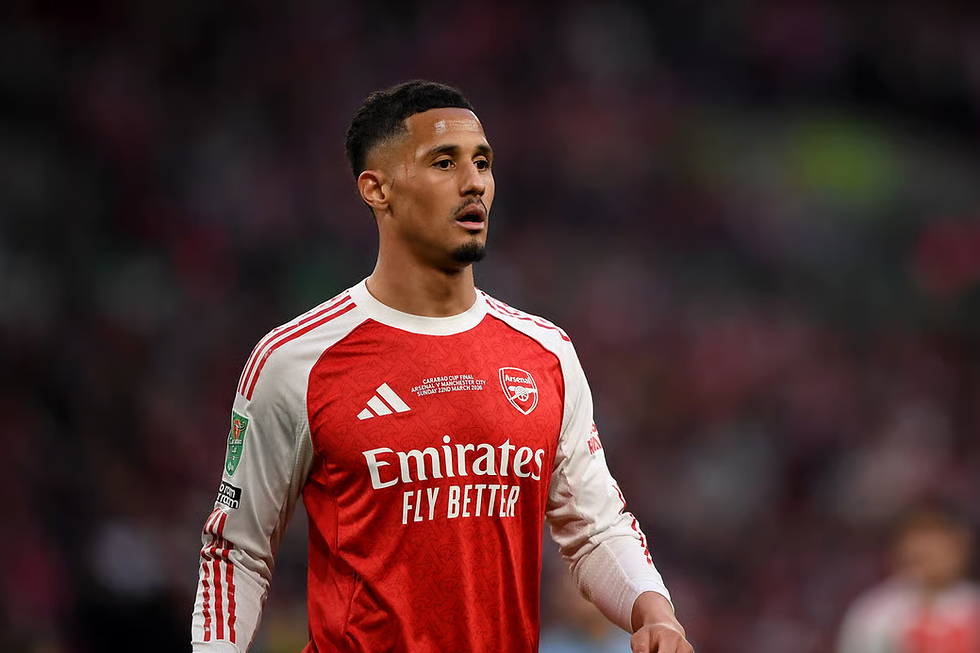
William Saliba reportedly played through significant pain during Arsenal’s Champions League final against Paris Saint-Germain, delivering a performance that now appears even more remarkable in light of recent reports surrounding his physical condition. According to claims emerging in the aftermath of the final, the French defender completed all 120 minutes despite carrying a back injury, refusing to leave the field during one of the most important matches of his career. While Arsenal ultimately fell short against PSG, attention has increasingly shifted toward the extent of Saliba’s sacrifice and the potential consequences that may follow in the months ahead.
Reports suggest the injury may have worsened after the final, raising concerns not only for Arsenal’s preparations ahead of the new season but also for the player’s international ambitions with France. Some accounts have gone as far as suggesting that an extended absence cannot be ruled out, with fears that his participation in future major tournaments could potentially be affected if the recovery process proves more complicated than initially anticipated.
For Arsenal supporters, the revelation has added another emotional layer to an already painful evening. The Champions League final represented the culmination of a season defined by ambition, growth, and the belief that the club could finally secure European football’s most prestigious prize. Learning that one of the team’s most influential players may have been battling significant discomfort throughout the contest has inevitably reshaped perceptions of the match and reinforced admiration for the defender’s commitment.
Saliba has become one of the central pillars of Arsenal’s modern project. Since establishing himself as a regular starter, he has evolved into one of the most highly regarded defenders in European football, combining composure in possession with physical dominance and tactical intelligence. His partnership at the heart of Arsenal’s defense has frequently been cited as one of the foundations upon which the club’s resurgence has been built.
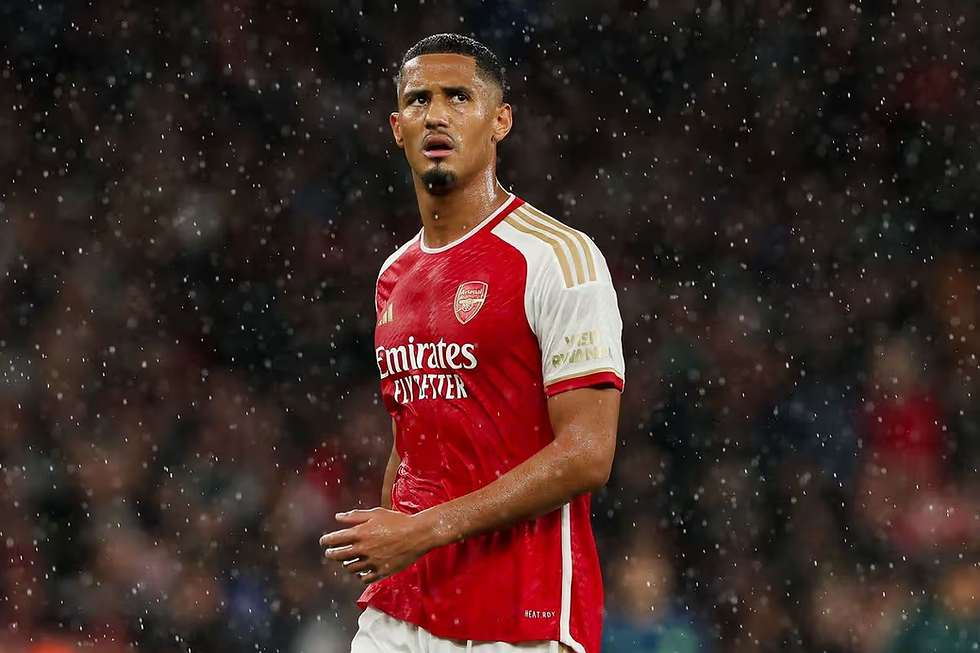
That importance was evident throughout the Champions League campaign. While attacking players often dominate headlines, Arsenal’s progress to the final was equally dependent on defensive consistency. Saliba played a crucial role in helping the team navigate difficult knockout ties, regularly producing performances that demonstrated why many observers consider him among the elite defenders of his generation.
The revelation that he reportedly carried a back injury into the final has therefore generated considerable discussion. Back injuries can be particularly challenging for footballers because they affect multiple aspects of performance simultaneously. Movement, balance, acceleration, aerial duels, and even basic comfort during physical exertion can all be impacted. For a central defender tasked with managing elite forwards on the biggest stage in club football, such a condition represents a significant obstacle.
Yet those watching the final were largely unaware of the extent of any issue. Throughout the match, Saliba continued to compete aggressively, contest aerial challenges, organize the defensive line, and attempt to keep Arsenal in the contest. Like many elite athletes, he appeared determined not to allow physical discomfort to become a visible distraction from the task at hand.
Football history is filled with stories of players performing through injury during defining moments. Finals often create unique circumstances where athletes are willing to push beyond normal physical limits because opportunities to compete for major trophies are so rare. The Champions League final, in particular, occupies a special place in the sport. For many players, it represents the pinnacle of club football, a stage that may only be reached once or twice in an entire career.

Within that context, Saliba’s reported decision to continue playing becomes easier to understand. Athletes at the highest level frequently accept risks that would seem extraordinary to outsiders. The desire to help teammates, fulfill professional responsibilities, and compete for historic achievements often outweighs personal concerns in the moment. Only afterward do the full consequences sometimes become apparent.
Arsenal manager Mikel Arteta has consistently praised the mentality and professionalism displayed by his squad throughout the club’s rebuilding process. Saliba is frequently viewed as embodying many of those qualities. Calm under pressure, disciplined in preparation, and fiercely competitive on the pitch, he has emerged as one of the leaders within a relatively young team that continues striving for major honors.
The timing of the injury concern is particularly unfortunate because Saliba had enjoyed another
outstanding season. His performances helped Arsenal remain competitive across multiple competitions, while his development continued to attract admiration from supporters, pundits, and former players alike. At an age when many defenders are still refining their game, he already appears capable of operating at the highest level against the strongest opposition.
For France, the reports will also be monitored closely. Saliba has become an increasingly important figure within the national team setup, offering depth, quality, and reliability in a position where international football’s finest teams often build their foundations. The possibility that an injury could impact his availability for future international commitments naturally raises concerns among French supporters and coaching staff.
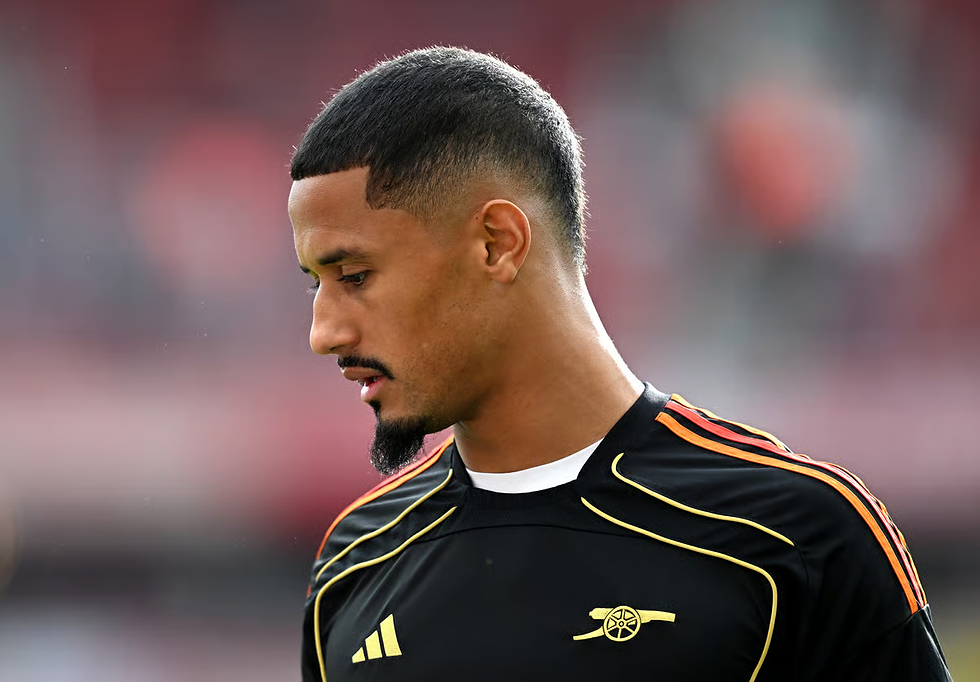
International football places unique demands on elite players. Modern stars frequently move between domestic competitions, continental tournaments, and national team duties with very little recovery time. As a result, managing fitness has become one of the most important challenges in contemporary football. Clubs and national federations must constantly balance short-term objectives against long-term player welfare.
The broader conversation surrounding Saliba’s situation has also reignited debate about fixture congestion and the physical demands placed on modern footballers. Top-level players are now expected to compete in increasingly crowded calendars featuring domestic leagues, domestic cups, European competitions, international qualifiers, international tournaments, and commercial commitments. Critics argue that the cumulative effect inevitably increases injury risk.
Defenders, in particular, often receive less public attention for the physical toll their role entails. While forwards are celebrated for goals and attacking flair, central defenders routinely engage in physically demanding battles that place significant strain on their bodies. Repeated aerial contests, tackles, sprints, changes of direction, and collisions all contribute to long-term wear and tear over the course of a season.
What has perhaps impressed Arsenal supporters most is the image of resilience associated with Saliba’s reported decision to remain on the field. In an era when athletes are often scrutinized relentlessly, stories of players continuing through adversity tend to resonate strongly with fans. Such moments reinforce the emotional connection between supporters and players, highlighting the personal sacrifices that frequently remain hidden behind professional performances.
At the same time, modern sports medicine has increasingly emphasized the importance of caution. Playing through injury can sometimes create additional complications that extend recovery periods and increase future risks. For that reason, Arsenal’s medical staff will undoubtedly prioritize a comprehensive evaluation before determining the appropriate course of action moving forward.
The club’s immediate focus will be understanding the severity of the issue and developing a recovery plan that protects both the player and the team’s long-term interests. Arsenal have invested heavily in building a squad capable of competing at the highest level, and Saliba remains one of its most valuable components. Ensuring his return to full fitness will therefore represent a significant priority.
Supporters, meanwhile, have responded with a mixture of concern and appreciation. Across social media and fan communities, many have praised the defender’s commitment while expressing hope that he avoids a prolonged absence. The reaction reflects the respect he has earned during his time in North London, where he has grown from a highly rated prospect into a cornerstone of the club’s ambitions.
The emotional impact of the Champions League final itself should not be underestimated either. Defeat in such circumstances naturally leaves players disappointed, and dealing with injury concerns simultaneously can make the aftermath even more challenging. Professional athletes often speak about the psychological difficulty of processing major losses while managing physical setbacks, particularly when both occur at the same time.
Nevertheless, Saliba’s reputation has arguably been strengthened rather than diminished by the reports surrounding his condition. Even in defeat, stories of perseverance tend to become part of a player’s legacy. Supporters remember not only trophies and victories but also demonstrations of character during difficult moments. Competing through pain in a Champions League final is precisely the kind of narrative that remains attached to a player long after the result itself fades into history.
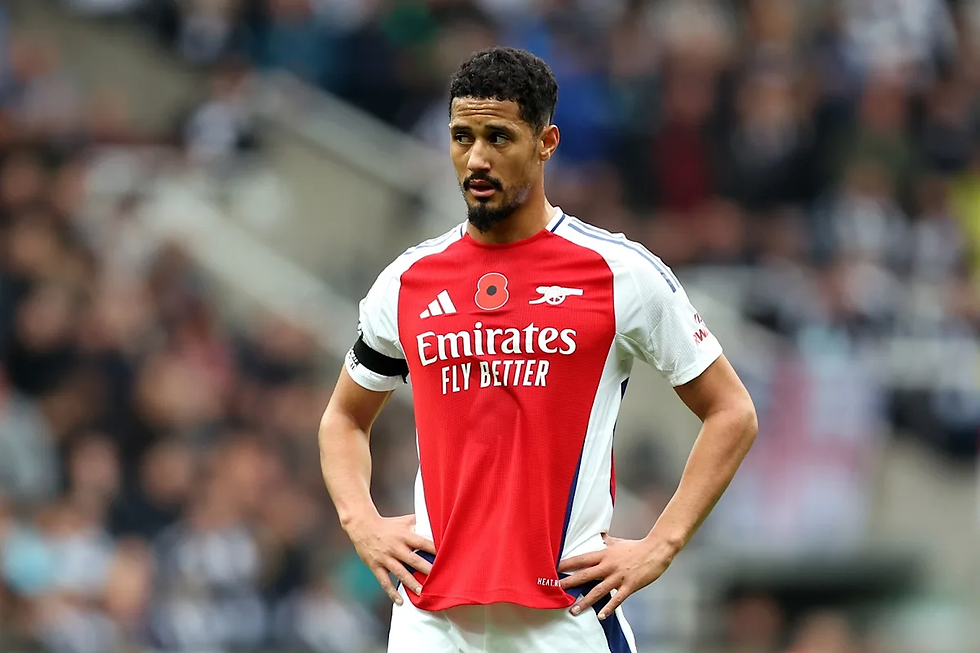
Ultimately, the coming weeks will determine the full extent of the situation. Medical assessments, rehabilitation plans, and recovery timelines will provide greater clarity regarding both Arsenal’s preparations and France’s future plans. Until then, uncertainty remains. What is already clear, however, is the level of commitment Saliba reportedly displayed on one of football’s biggest stages.
Whether viewed through the lens of professional dedication, personal courage, or simple determination, his willingness to complete all 120 minutes despite discomfort has become one of the defining stories to emerge from the final. Arsenal may have fallen short in their pursuit of European glory, but the reports surrounding Saliba have offered a powerful reminder of the sacrifices elite athletes often make in pursuit of success.
For now, supporters can only hope that the defender’s recovery proceeds smoothly and that one of the game’s premier young center-backs returns to action sooner rather than later. If recent years have demonstrated anything, it is that William Saliba remains central to Arsenal’s ambitions and an increasingly important figure within French football. His absence would undoubtedly be felt, but his determination throughout the final has only deepened the respect he commands across the sport.


Comments